
In the rapidly evolving landscape of quantum information science, the primary focus for much of the last decade has been a race toward "scaling up"—the pursuit of packing more qubits into a single, increasingly complex refrigerated unit. However, Cisco Systems, through its specialized research and development incubator, Outshift, is championing a different philosophy. The networking giant contends that the true path to a "Quantum Internet" and functional large-scale quantum computing lies not just in the size of individual processors, but in the ability to "scale out" through sophisticated, automated networking.
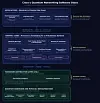
For several years, Outshift has been methodically assembling the architectural components required to transform quantum computing from a series of isolated experiments into a distributed, cloud-like infrastructure. This vision mirrors the historical evolution of classical computing, which transitioned from massive, standalone mainframes to the hyper-connected global networks that define the modern digital era. Cisco’s latest breakthroughs, centered on a new Quantum Network Controller and a Network-Aware Quantum Compiler, aim to provide the critical software and control layers needed to manage the inherent volatility of quantum states at machine speed.
The Shift Toward Distributed Quantum Power
The fundamental premise driving Cisco’s investment is that the massive number of qubits required for commercially viable applications—such as drug discovery, materials science, or complex financial modeling—may be too difficult to house within a single physical system. Environmental noise, thermal fluctuations, and the sheer physical footprint of dilution refrigerators create diminishing returns for single-machine scaling.
To solve this, Cisco envisions a future where multiple quantum computers are linked via a quantum network, allowing them to share entanglement and work in concert. This "scaling out" approach requires a quantum networking stack that can handle the unique properties of quantum mechanics. Unlike classical networking, which transmits bits as pulses of light representing zeros and ones, quantum networking relies on entanglement—a phenomenon where particles become inextricably linked, such that the state of one instantly influences the state of another, regardless of the distance between them.
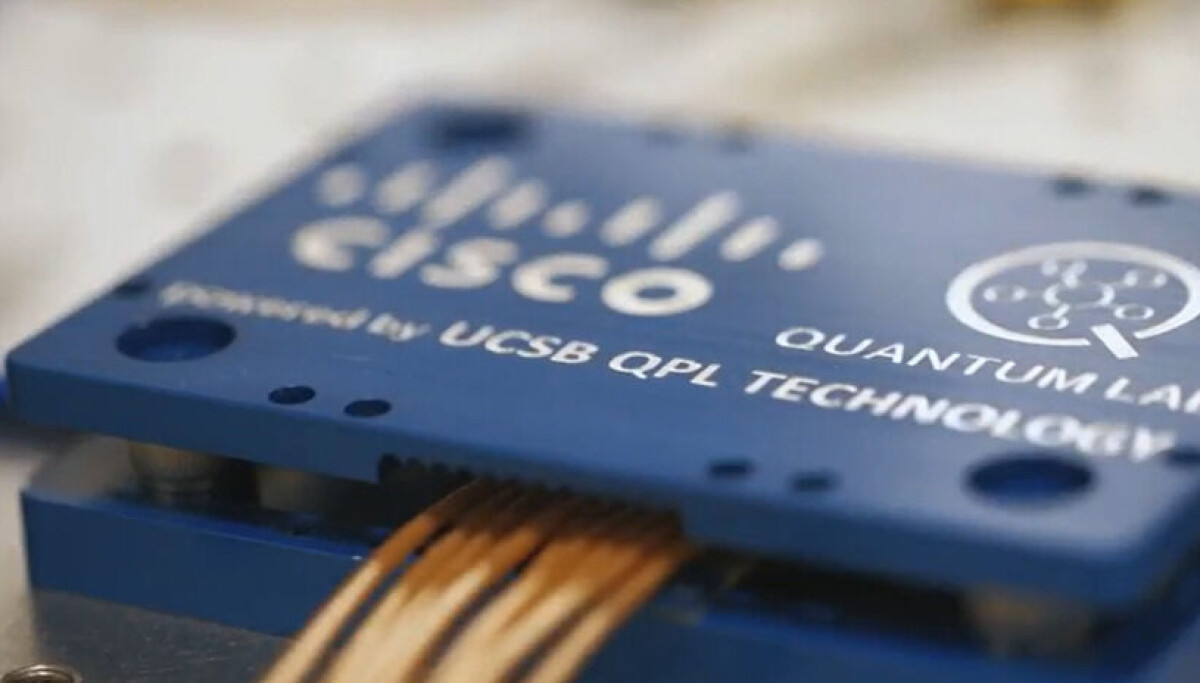
Early in 2024, the Outshift group was tasked with the ambitious goal of building this quantum networking stack. This effort led to the unveiling of a prototype quantum network entangling chip. This hardware is designed to generate entangled pairs of photons and distribute them over significant distances, providing the raw "fuel" for quantum communication. Because this process is fundamentally different from classical data transmission, it requires entirely new hardware and protocols to ensure that the delicate quantum states are not lost to environmental decoherence.
Interoperability and the Universal Quantum Switch
One of the most significant challenges in the current quantum ecosystem is the lack of a standardized hardware modality. Leading firms and research institutions are currently pursuing a variety of different methods to create and control qubits. IBM and Google have leaned heavily into superconducting circuits; others, like IonQ, utilize trapped ions; QuEra focuses on neutral atoms; and companies like QuiX are pushing the boundaries of photonics.
In April, Cisco addressed this fragmentation with the introduction of its Universal Quantum Switch. The prototype is designed to be modality-agnostic, meaning it can connect quantum sensors and computers regardless of the underlying technology used by the vendor. By facilitating connections between, for example, a superconducting system and a trapped-ion system, Cisco is positioning itself as the neutral fabric of the quantum era—much as it did for the classical internet.
However, hardware alone is insufficient. As the number of connected nodes grows, the complexity of managing those connections increases exponentially. This realization led to the most recent announcement at Cisco’s Quantum Summit: the Quantum Network Controller.
Automation at Machine Speed
The current state of quantum networking is largely characterized by manual configuration. Researchers and engineers must "hand-stitch" point-to-point connections, a process that is slow, prone to error, and entirely unscalable. Ramana Kompella, the head of Cisco Research, highlights that while manual configuration might work for a laboratory setup with two or three nodes, it collapses under the weight of a true network.
 Enterprise Tech & Infrastructure
The Pillars of Data Infrastructure: A Comprehensive Evaluation of the Top Enterprise Hard Drives for 2023
In the modern landscape of digital infrastructure, the demand for robust, high-capacity...
 Enterprise Tech & Infrastructure
Understanding the Architecture of Modern Storage: Decoding the Relationship Between Flash Technology and Solid-State Drives
In the rapidly evolving landscape of data storage, the terminology used to...
 Enterprise Tech & Infrastructure
Navigating the Hidden Complexities of Amazon S3 Cost Management
For many enterprise IT departments, the monthly Amazon Web Services (AWS) bill...







