
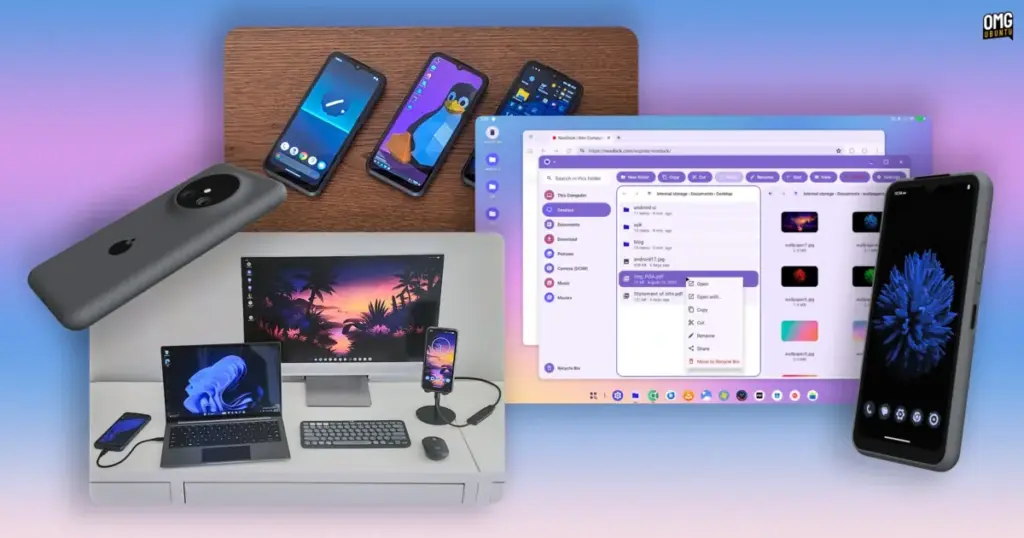
The NexPhone, an ambitious multi-operating system smartphone designed to bridge the divide between mobile mobility and full desktop computing, has encountered a production setback that pushes its anticipated launch window into early 2027. Following an official pre-order launch at the start of 2026—arriving roughly fourteen years after the foundational concept was first publicized—the device will no longer meet its targeted shipping window later this year. Nex Computer has confirmed that units will now begin reaching backers in March 2027, as engineering teams work to resolve unexpected mechanical and industrial design complications discovered during the development cycle.
Nex Computer Chief Executive Officer Emre Kosmaz shared the revised timeline, attributing the postponement to complex issues involving antenna placement and device casing integration. In contemporary smartphone design, housing a high-performance system within a sleek and durable chassis requires exceptional precision, particularly when internal components must be arranged to prevent radio frequency interference. Antenna arrays require precise physical isolation and chassis clearance to ensure reliable cellular, Wi-Fi, and peripheral connectivity. When combined with the thermal and structural demands of a device engineered to handle desktop workloads, addressing chassis tolerances and radio frequency behavior often necessitates comprehensive physical revisions, making a shipping adjustment unavoidable.
For followers of the hardware project, the revised delivery window of March 2027 represents a familiar chapter in a protracted development saga. The concept originally emerged onto the technology landscape back in 2012, during an era when the wider industry was just beginning to explore the viability of running desktop-grade software environments from pocket-sized hardware. Having spent fourteen years transitioning from an aspirational piece of conceptual design and lingering in community discussions as potential vapourware, the project finally coalesced into a tangible commercial offering when pre-orders opened in early 2026. Given the extensive history behind the handset, an added delay shifting delivery from the third quarter of 2026 into the first quarter of 2027 is viewed by long-time enthusiasts as a comparatively minor interval in the grand scheme of the product’s timeline.
While the engineering division focuses on resolving the physical casing and antenna snags, Nex Computer is utilizing the extra time to advance the smartphone’s software capabilities. The central selling proposition of the NexPhone has always been convergence: the capacity for a single mobile device to seamlessly adapt its computing persona depending on the display and peripherals connected to it. Software developers are currently refining the software environment, with the company noting that the handset may now ship out of the box running Android 17. The development team is concentrating significant effort on modifying Android’s underlying desktop mode interface, tailoring its behavior to more faithfully emulate a conventional personal computer desktop with intuitive windowing, taskbar behaviors, and workflow management suited for larger screens.
The underlying software architecture of the NexPhone is built around a versatile multi-operating system environment designed to cater to diverse computing demands. In its current iteration, the handset is engineered to support an ecosystem featuring Android 16 as its base mobile platform, Debian Linux executing directly through an integrated Android application layer, and Windows 11 compiled for ARM architecture. This multi-layered software ecosystem stands in contrast to the phone’s earliest iterations; when the NexPhone concept was initially formulated in 2012, the project had targeted Ubuntu as its primary Linux flavor of choice, mirroring the early open-source push toward mobile-desktop convergence that defined that period.
 Linux & Open Source Solutions
Ex-Microsoft dev builds a new task manager for Linux
For millions of personal computer users over the past three decades, Plummer’s...
 Linux & Open Source Solutions
Canonical Releases Official Ubuntu Desktop Images for RISC-V Hardware Ahead of Ubuntu 26.10
Installing Ubuntu on RISC-V hardware is poised to become significantly more straightforward...
 Linux & Open Source Solutions
Kagi Halts Development of Orion Browser for Linux and Windows, Plans to Open Source Codebase
Kagi has officially announced that it is ending the internal development of...







