
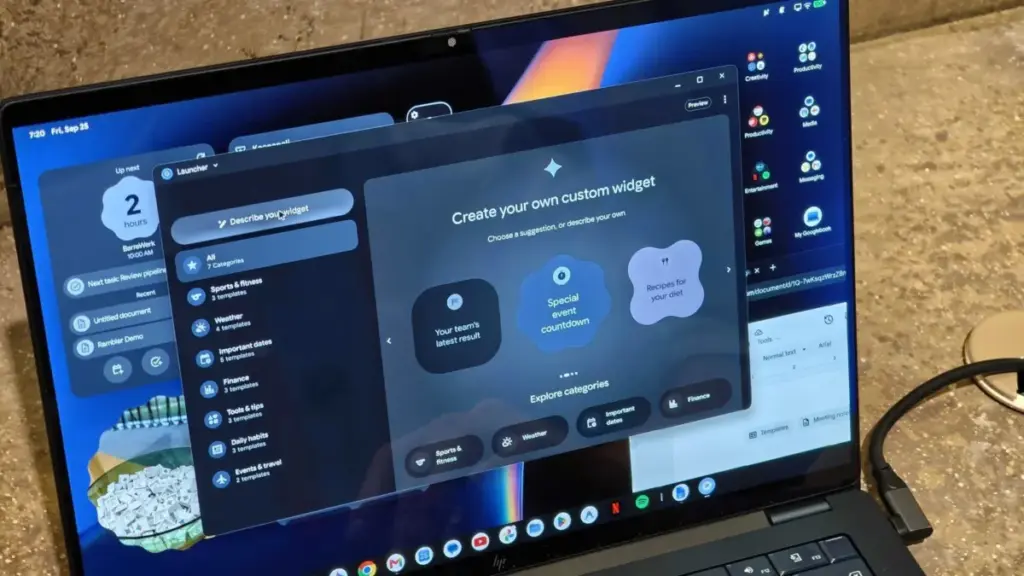
The landscape of portable computing is undergoing its most significant transformation in over a decade. For years, the Chromebook served as the reliable, web-centric alternative to traditional Windows and macOS machines, carving out a dominant niche in education and budget-friendly consumer sectors. However, Google’s recent strategic pivot to the "Googlebook" brand signifies a fundamental shift in how the company views the intersection of mobile and desktop computing. As this new ecosystem begins to take shape, a major new player appears ready to enter the fray.
Recent reports and social media leaks suggest that Samsung, a long-time partner of Google and a dominant force in the Android smartphone market, is preparing its first entry into the Googlebook series. This development, if confirmed, would represent a significant vote of confidence in Google’s revamped laptop strategy and could provide the high-end hardware muscle needed to elevate the platform’s status among professional users.
The Geekbench Leak: A Glimpse at Samsung’s Vision
The news first broke via the social media platform X, where noted tipster Abhishek Yadav shared details of a Samsung-branded device passing through the Geekbench database. The listing, which has since circulated through outlets like Android Headlines, points toward a device that is not merely a budget-friendly alternative, but a high-performance machine designed to compete with premium ultrabooks.
According to the leaked specifications, Samsung’s first Googlebook is powered by Qualcomm’s Snapdragon X Elite System-on-Chip (SoC). This choice of processor is particularly telling. The Snapdragon X Elite has been the centerpiece of the recent "Copilot+" PC movement in the Windows world, praised for its impressive power-to-watt ratio and its ability to handle intensive AI tasks. By utilizing this same architecture for the Googlebook, Samsung and Google are positioning these devices as legitimate productivity tools capable of handling more than just web browsing and document editing.
The Geekbench listing provides a granular look at the chip’s architecture, detailing a 12-core configuration. The cluster appears to be divided between four high-performance cores clocked at 3.42GHz and eight efficiency cores reaching up to 4.01GHz. This robust core count, paired with the listed Adreno X1-85 GPU, suggests a device capable of smooth multitasking, high-definition media consumption, and perhaps even moderate creative workloads that were previously the Achilles’ heel of the ChromeOS ecosystem.
Perhaps the most intriguing detail in the leak is the mention of 16GB of RAM and the software version. The listing indicates the device is running on Android 17. Given that Android 15 is only just reaching the public, the mention of Android 17 suggests that this Samsung Googlebook is a forward-looking project, likely intended for a release window that aligns with Google’s future software roadmap.
What You Need to Know: The Convergence of Android and Desktop
 Mobile Device Management (MDM) & Mobile OS
RayNeo GT Arrives to Shake Up the Competitive $300 Smart Glasses Market with Enhanced Ergonomics and 3DoF Tracking
The landscape of augmented reality and wearable displays is moving at a...
 Mobile Device Management (MDM) & Mobile OS
Google Photos Users Report Crippling App Freezes on Pixel Devices Following Latest AI Update
The Google Pixel ecosystem has long been celebrated for its seamless integration...
 Mobile Device Management (MDM) & Mobile OS
Xreal One Pro Receives Significant Price Cut During Prime Big Deal Days as the Market for Wearable Displays Expands
The landscape of personal entertainment and mobile productivity is undergoing a quiet...







