

The journey toward a practical, large-scale quantum computer has long been defined by a fundamental tension between the theoretical requirements of error-correction codes and the physical realities of quantum hardware design. While researchers have developed sophisticated mathematical frameworks to protect fragile quantum information, implementing these frameworks on actual silicon and superconducting circuits often requires a level of architectural rigidness that can stifle hardware innovation. However, recent developments from Quantum Elements, a three-year-old startup specializing in AI-driven quantum simulation, suggest that this gap may be closing.
By leveraging advanced digital twin technology and a newly validated approach to error correction, the company is demonstrating that the path to fault tolerance may be more flexible than previously imagined. Central to this breakthrough is the realization that the industry’s most promising error-correction methods do not necessarily need to be "hard-wired" into the physical layout of a quantum processing unit (QPU).
Virtualizing the Quantum Frontier
Founded on the premise that quantum development should mirror the sophisticated design cycles of the classical semiconductor industry, Quantum Elements has spent the last three years building its Constellation platform. The platform is designed to provide developers with a comprehensive suite of tools, including AI agents and natural language capabilities, to model and simulate quantum systems before they ever touch physical hardware.
The core of the company’s value proposition lies in its use of AI-based digital twins. These are high-fidelity virtual prototypes of quantum systems that allow organizations to observe how their algorithms and hardware designs might behave as they scale. In the classical world, engineers do not build a new microprocessor or an experimental aircraft wing without first running exhaustive simulations. Cadence, Ansys, and Synopsys have built multi-billion-dollar businesses providing the software that virtualizes transistors and airflow. Quantum Elements aims to provide that same foundational layer for the quantum era.
Izhar Medalsy, co-founder and chief executive officer of Quantum Elements, notes that virtualization is essential for predicting the performance of next-generation systems. Just as flow simulators predict how air moves over a wing, quantum digital twins allow developers to see the evolution of a system without the prohibitive costs of running tests on actual quantum chips. This virtualization is particularly critical given the "multi-modality" challenge—the fact that quantum systems are incredibly sensitive to environmental noise, gate speeds, and the specific physical arrangement of qubits.
Addressing the Noise: The Orbit Toolset
While simulation provides the blueprint, the most significant hurdle in quantum computing remains noise. Qubits are notoriously unstable, susceptible to errors from heat, electromagnetic interference, and even the very operations intended to control them. To combat this, Quantum Elements introduced Orbit, a quantum error-suppression tool, earlier this year.
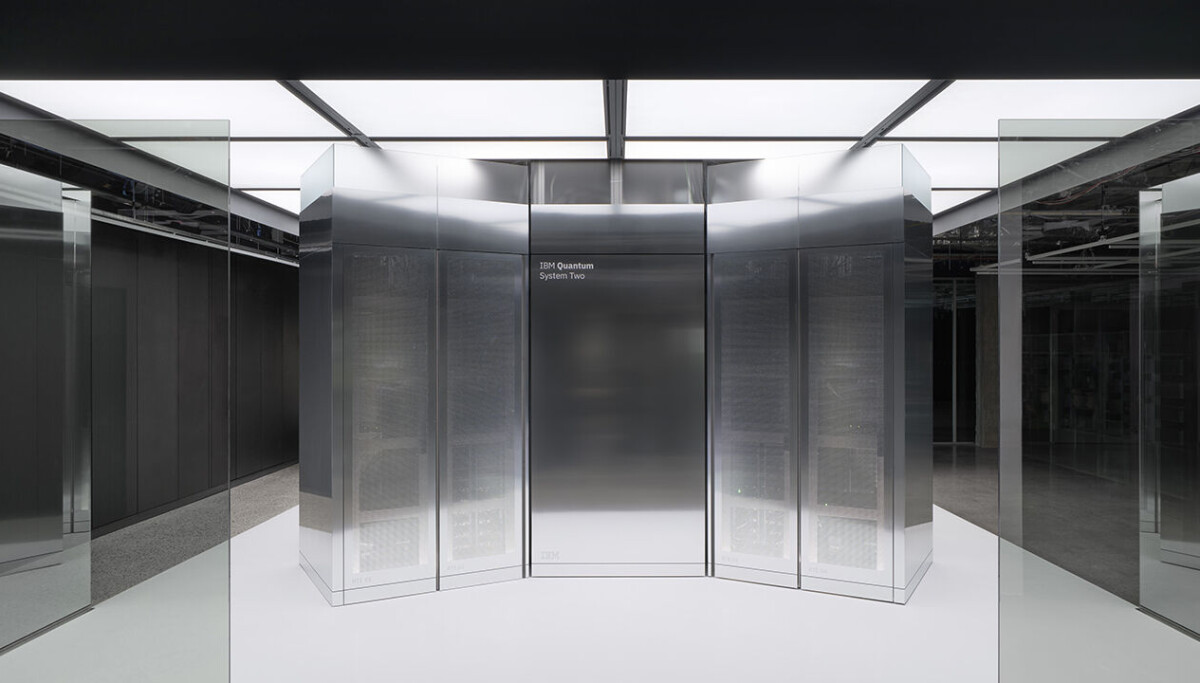
Orbit was designed to integrate directly into existing research workflows, most notably through its availability in IBM’s Qiskit Functions Catalog. This catalog serves as a managed cloud software platform, allowing researchers and enterprise teams to access pre-built tools that streamline the development of quantum software. By making Orbit available through Qiskit, Quantum Elements provided a way for teams to improve circuit performance without requiring the "deep specialization" typically needed for manual error mitigation.
The tool focuses on reducing the friction associated with error suppression. Traditionally, mitigating errors required extensive processing overhead and extended compiling times, which could slow down the research cycle. Orbit aims to automate these processes, improving the execution of quantum circuits while keeping costs and time-to-result within manageable limits for enterprise users.
 Enterprise Tech & Infrastructure
The Strategic Role of RAID 10 in Modern Enterprise Storage Architecture
In the high-stakes world of enterprise data management, the choice of a...
 Enterprise Tech & Infrastructure
Protecting the Enterprise Perimeter: The Evolving Security Challenges of DAS and NAS Storage
In the modern enterprise landscape, data is often described as the new...
 Enterprise Tech & Infrastructure
Navigating the Hidden Complexities of Amazon S3 Cost Management for the Enterprise
The financial management of cloud storage has evolved into a discipline that...







