

The journey toward a practical, large-scale quantum computer has long been defined by a fundamental tension between the theoretical requirements of error-correction codes and the physical realities of quantum hardware design. While researchers have developed sophisticated mathematical frameworks to protect fragile quantum information, implementing these frameworks on actual silicon and superconducting circuits often requires a level of architectural rigidness that can stifle hardware innovation. However, recent developments from Quantum Elements, a three-year-old startup specializing in AI-driven quantum simulation, suggest that this gap may be closing.
By leveraging advanced digital twin technology and a newly validated approach to error correction, the company is demonstrating that the path to fault tolerance may be more flexible than previously imagined. Central to this breakthrough is the realization that the industry’s most promising error-correction methods do not necessarily need to be "hard-wired" into the physical layout of a quantum processing unit (QPU).
Virtualizing the Quantum Frontier
Founded on the premise that quantum development should mirror the sophisticated design cycles of the classical semiconductor industry, Quantum Elements has spent the last three years building its Constellation platform. The platform is designed to provide developers with a comprehensive suite of tools, including AI agents and natural language capabilities, to model and simulate quantum systems before they ever touch physical hardware.
The core of the company’s value proposition lies in its use of AI-based digital twins. These are high-fidelity virtual prototypes of quantum systems that allow organizations to observe how their algorithms and hardware designs might behave as they scale. In the classical world, engineers do not build a new microprocessor or an experimental aircraft wing without first running exhaustive simulations. Cadence, Ansys, and Synopsys have built multi-billion-dollar businesses providing the software that virtualizes transistors and airflow. Quantum Elements aims to provide that same foundational layer for the quantum era.
Izhar Medalsy, co-founder and chief executive officer of Quantum Elements, notes that virtualization is essential for predicting the performance of next-generation systems. Just as flow simulators predict how air moves over a wing, quantum digital twins allow developers to see the evolution of a system without the prohibitive costs of running tests on actual quantum chips. This virtualization is particularly critical given the "multi-modality" challenge—the fact that quantum systems are incredibly sensitive to environmental noise, gate speeds, and the specific physical arrangement of qubits.
Addressing the Noise: The Orbit Toolset
While simulation provides the blueprint, the most significant hurdle in quantum computing remains noise. Qubits are notoriously unstable, susceptible to errors from heat, electromagnetic interference, and even the very operations intended to control them. To combat this, Quantum Elements introduced Orbit, a quantum error-suppression tool, earlier this year.
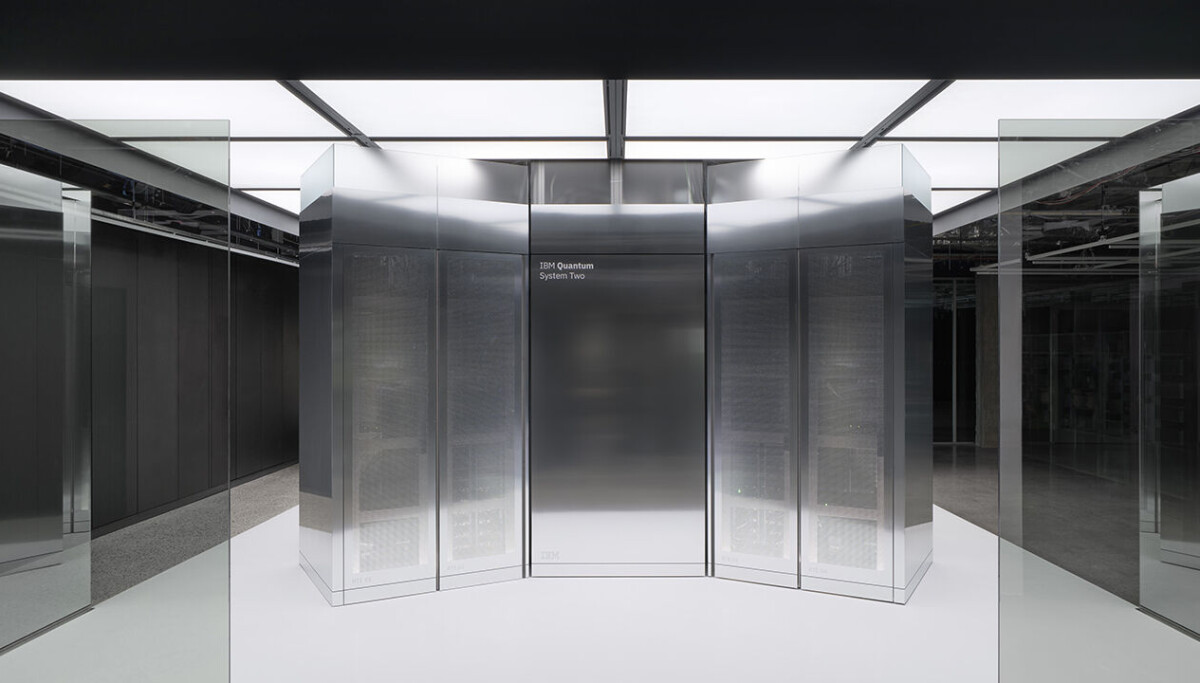
Orbit was designed to integrate directly into existing research workflows, most notably through its availability in IBM’s Qiskit Functions Catalog. This catalog serves as a managed cloud software platform, allowing researchers and enterprise teams to access pre-built tools that streamline the development of quantum software. By making Orbit available through Qiskit, Quantum Elements provided a way for teams to improve circuit performance without requiring the "deep specialization" typically needed for manual error mitigation.
The tool focuses on reducing the friction associated with error suppression. Traditionally, mitigating errors required extensive processing overhead and extended compiling times, which could slow down the research cycle. Orbit aims to automate these processes, improving the execution of quantum circuits while keeping costs and time-to-result within manageable limits for enterprise users.
Breaking the Grid: A New Approach to Error Correction
The true power of the Orbit tool and the broader Quantum Elements philosophy was recently put to the test in a collaborative research project with the University of Southern California (USC). The results of this study, published this month in the journal Nature, address one of the most persistent bottlenecks in quantum architecture: the relationship between the "surface code" and the physical layout of the QPU.
The surface code is widely considered the most practical avenue for achieving large-scale, fault-tolerant quantum computing. It functions as a topological quantum error-correction code, typically envisioned as being laid out in a two-dimensional grid. For years, the prevailing wisdom suggested that to run the surface code efficiently, a quantum chip needed to physically mirror that 2D grid connectivity.
However, the research conducted by Quantum Elements and USC proves that the surface code can scale effectively even when used with a QPU that does not share a similar grid-like layout. This finding has profound implications for how quantum computers are designed. It suggests that engineers no longer need to be "hemmed in" by the requirement to match a chip’s physical layout to the specific structure of the error-correction code.
Medalsy characterized the research as a demonstration of the power of hybrid approaches. By showing that error-correction codes can be mapped onto diverse hardware topologies, the study provides engineers with much-needed "breathing room" in the design process.
The Challenge of the Heavy-Hex Lattice
The research specifically utilized the "heavy-hex" architecture found in IBM’s Heron quantum processor. First released in 2023 and currently deployed in IBM System Two and upgraded System One units, the Heron processor comes in configurations of 133 and 156 qubits.
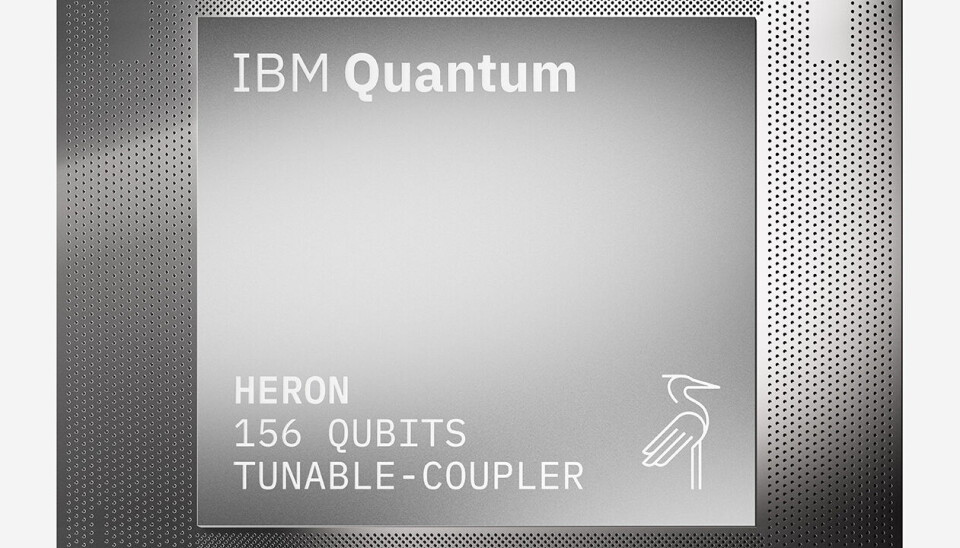
The heavy-hex layout is a hexagonal, honeycomb-like lattice. IBM chose this architecture for several practical reasons: it prevents crowded connections and reduces "collisions" between neighboring qubits. In quantum hardware, frequency crowding and crosstalk are significant issues; if qubits are packed too tightly in a square grid, the signals used to control one qubit can inadvertently affect its neighbor. The hexagonal layout eases these constraints and simplifies the lithographic fabrication process, making thermal management more manageable.
The problem, however, is that a hexagonal lattice has lower connectivity than a traditional square grid. When mapping a 2D surface code onto a heavy-hex lattice, the reduced connectivity can lead to delays. Moving a quantum state between non-neighboring qubits requires "routing," which takes time. During this "idle time," qubits are exposed to environmental noise, which can cause them to lose their quantum nature (decoherence). As the code scales up, these errors can accumulate, potentially negating the benefits of the error correction itself.
Engineering the Hybrid Solution
To overcome the mismatch between the surface code and the heavy-hex architecture, the researchers employed several strategic technical decisions.
First, they utilized "depth-efficient" error-correction codes. Because traditional surface codes can involve long chains of sequential gate operations, they naturally introduce more idle time. Depth-efficient codes are designed to reduce the number of sequential layers, thereby shortening the time the qubits remain idle and vulnerable to noise.
Second, the team integrated "dynamical decoupling" through the Orbit Qiskit function. Dynamical decoupling is a technique used to protect qubits from noise by applying a series of pulses that effectively "average out" the environmental interference. This was combined with SWAP-based embedding on the Heron QPU. In this context, SWAP gates—which exchange the states of two qubits—were used to map the logical qubits of the surface code onto the physical hardware of the hexagonal lattice.
The result of this sophisticated mapping was "directional subthreshold scaling." This is a critical metric in error correction, indicating that as the size of the code increases in a specific direction, the corresponding type of error is successfully reduced. It proves that the error correction is working as intended, even on a non-native hardware layout.
Validating a Long-Term Vision
The success of this research also serves as a validation of a strategy IBM proposed five years ago. When Big Blue first announced that the heavy-hex lattice would be the foundational topology for its quantum devices, the company argued that the connectivity of other lattices, such as the square lattice, could be simulated on the heavy-hex lattice with only a "constant overhead."

IBM’s researchers had theorized that by introducing swap operations within specific unit cells, the vertices of a virtual square lattice could be mapped onto the physical vertices of the heavy-hex lattice. They contended that the additional cost of these two-qubit gates would be negligible compared to the overall encoding costs of the error correction itself. The recent paper in Nature provides the empirical evidence to back up those theoretical claims, showing that the "mismatch" is a solvable engineering problem rather than a fundamental barrier.
The Road Ahead for Quantum Design
The implications of this work extend beyond just IBM’s hardware. For the broader quantum industry, the ability to run hybrid code for error correction means that QPU design can be driven by a wider range of considerations. Engineers can prioritize thermal management, reduced crosstalk, and ease of fabrication—factors that are essential for moving from experimental lab units to reliable, mass-produced quantum processors.
As Quantum Elements continues to refine its Constellation platform and Orbit tools, the focus remains on lowering the barriers to entry for quantum development. By providing the simulation tools necessary to predict how these complex, hybrid systems will behave, the startup is positioning itself as a vital intermediary between the mathematical ideals of quantum theory and the gritty realities of hardware engineering.
While the march to a fully fault-tolerant quantum computer is far from over, the ability to decouple the logical structure of error correction from the physical layout of the chip represents a significant step forward. It suggests a future where quantum systems are not just powerful, but also flexible and manufacturable—a necessary evolution for the technology to reach its full potential in the enterprise.
 Enterprise Tech & Infrastructure
The Great Storage Divide: Navigating the Evolving Performance Landscape of SSDs and HDDs
In the modern enterprise data center, the choice between solid-state drives (SSDs)...
 Enterprise Tech & Infrastructure
Optimizing Amazon S3: How Enterprises Navigate the Hidden Complexities of Cloud Storage Costs
The primary catalyst for overspending on Amazon Simple Storage Service (S3) is...
 Enterprise Tech & Infrastructure
Micron and the High Bandwidth Memory Revolution: A Profit Engine Surpassing the Mainframe Era
In the sweeping six-decade history of commercial information technology, certain milestones stand...







