
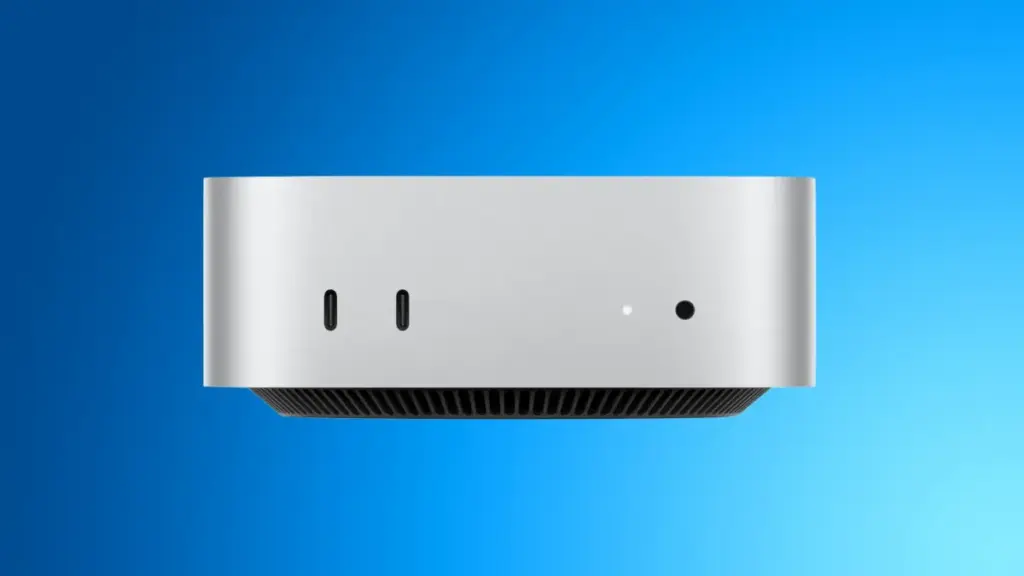
Apple’s latest update to the Mac mini line brings a significant architectural shift that will directly impact budget-conscious consumers and hardware enthusiasts alike. Detailed hardware analyses of the new Mac mini models equipped with the M6 and M5 Pro chips confirm that Apple has reverted to soldering NAND flash storage directly to the main logic board. The change effectively eliminates the possibility of aftermarket SSD upgrades, bringing an end to the modular storage design that was unexpectedly introduced in the previous generation of M4 and M4 Pro desktops.
The hardware change was uncovered and confirmed by hardware outlet "Expand Mac mini," an aftermarket specialist site that closely monitors Apple’s desktop internal architecture. During its technical teardowns of the newly released M6 and M5 Pro machines, the group verified that the solid-state storage chips are permanently affixed to the system board, returning the lineup to the non-upgradable status that characterized earlier Apple silicon desktops, including those powered by the M1, M2, and M2 Pro chips.
For buyers of the short-lived M4 and M4 Pro Mac mini models, storage flexibility had briefly returned. Those previous-generation systems utilized proprietary, socketed storage modules that, while not standard off-the-shelf M.2 NVMe drives, could still be physically removed and replaced. That design allowed third-party companies like "Expand Mac mini" to manufacture plug-and-play replacement SSD modules. These third-party drives matched the read and write performance of Apple’s official storage configurations while costing hundreds of dollars less than the premium upgrade fees charged on Apple’s online store.
Under the M4 generation, cost-conscious buyers could purchase a base-model Mac mini equipped with the minimum 256GB storage capacity directly from Apple and subsequently upgrade the internal storage to 1TB or 2TB using cheaper third-party modules. With the arrival of the M6 and M5 Pro configurations, that financial workaround has been completely shut down. Customers seeking additional onboard storage must once again pay Apple’s upfront configuration pricing at the time of purchase, as post-purchase internal upgrades are no longer physically possible.
Addressing the hardware change on its official blog, "Expand Mac mini" acknowledged the technical roadblock posed by Apple’s latest manufacturing decisions. The team noted that while they will continue looking for any potential openings or hardware workarounds, support for the M6 and M5 Pro models now looks unlikely. Apple, as is typical regarding internal component choices and hardware revisions, has offered no public comment on why it decided to abandon the modular storage design after just one hardware generation. The brief availability of removable storage on the M4 lineup appears to have been a temporary architectural anomaly rather than the beginning of a permanent trend toward repairability.
In addition to the return to soldered storage, benchmark testing reveals another critical difference in the entry-level Mac mini models that affects performance. Hardware testing indicates that all base 256GB configurations of the new Mac mini rely on a single NAND flash memory chip, rather than splitting the capacity across two 128GB chips.
 macOS & Apple IT Support
Apple Updates Free Invites App for iPhone With Full-Resolution Shared Albums, Photorealistic AI Backgrounds, and Simplified Email Verification
CUPERTINO, Calif. — Apple on Wednesday released a substantial software update for...
 macOS & Apple IT Support
Apple Leaks Reveal New Hardware Pipeline as $250 Million Siri AI Settlement Portal Opens
The ecosystem surrounding Apple moves at a relentless pace, with hardware leaks,...
 macOS & Apple IT Support
Anthropic Updates Usage Policy to Ban Cruel and Abusive Treatment of Claude AI Models
Artificial intelligence safety startup Anthropic has officially updated its Acceptable Use Policy,...







