
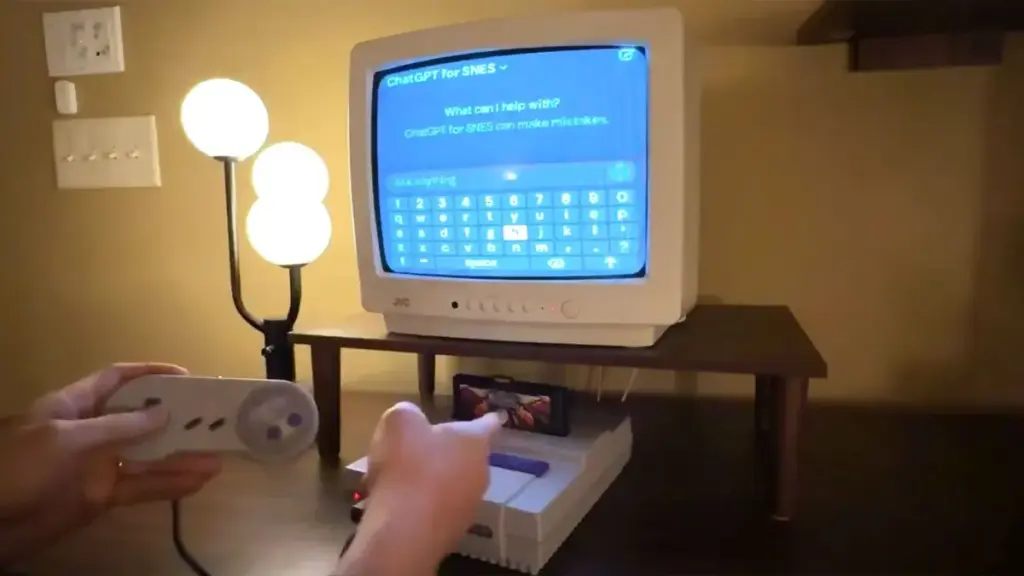
The initiative is the work of Benj Edwards, a prominent journalist and blogger at Vintage Computing, who sought to push the limits of what 1990s hardware could achieve in the era of generative AI. Because the SNES operates on hardware that is orders of magnitude less powerful than the modern smartphones typically used to access AI services, the project required a significant amount of creative engineering. The resulting chatbot is not a direct port of the massive, resource-heavy models like GPT-4, which require vast server farms and specialized high-end GPUs to operate. Instead, the project utilizes a highly distilled version of an open-source model, specifically a 2.2-million-parameter distillation derived from GPT-OSS-120b.
In the context of modern artificial intelligence, a model with 2.2 million parameters is considered exceptionally small. For comparison, the industry-leading models that power modern commercial chatbots often boast hundreds of billions, or even trillions, of parameters. However, for a console that debuted in the early 1990s with a primary CPU clock speed of just 3.58 MHz and a mere 128 KB of onboard RAM, a 2.2-million-parameter model represents a staggering computational challenge. To make the interaction fluid and prevent the console from stalling under the weight of the mathematical operations required for text generation, Edwards turned to one of the most famous pieces of "enhancement" hardware in gaming history: the Super FX 2 chip.
The Super FX 2 chip is a legendary component in the annals of Nintendo history. Originally developed by Argonaut Games, the Super FX series was a RISC (Reduced Instruction Set Computer) math coprocessor that lived inside specific game cartridges rather than the console itself. This allowed the SNES to perform complex calculations that its base hardware could not handle, most notably enabling the 3D polygon rendering seen in titles like Star Fox and the advanced sprite manipulation in Super Mario World 2: Yoshi’s Island. By leveraging the Super FX 2, Edwards was able to offload the heavy lifting of the chatbot’s inference process to a chip designed specifically for high-speed mathematical throughput. This choice is a poetic nod to the chip’s original purpose; just as it once accelerated the birth of 3D gaming on a 2D system, it is now being used to accelerate the birth of AI on a system built before the internet was a household staple.
The technical execution of this project highlights a growing trend in the tech community known as "demascene" or hardware hacking, where enthusiasts attempt to run modern software on hardware that was never intended to support it. The process of "distillation" used for the SNES chatbot is a crucial part of this achievement. In AI development, distillation involves taking the knowledge and capabilities of a large, complex model and "teaching" them to a much smaller, more efficient model. While the smaller model loses the vast breadth of knowledge and the nuanced reasoning of its larger parent, it retains the ability to generate coherent language within a much smaller memory footprint. On the SNES, this allows for a conversational experience that, while prone to errors and limited in its scope, remains a genuine feat of software architecture.
In its current state, the unofficial ChatGPT for the SNES is described as a fun, experimental tool rather than a replacement for modern AI interfaces. Edwards has noted that the model can make mistakes—a common trait even in the most advanced AI systems, often referred to as "hallucinations." However, the novelty of seeing a 16-bit text box, typically reserved for dialogue from games like Final Fantasy VI or Chrono Trigger, populate with real-time responses to user prompts is a significant draw for the retro-computing community. The project was reportedly developed with the assistance of GPT-6 Astra and GPT-OSS, suggesting a collaborative effort between the developer and even more advanced AI tools to refine the code for the vintage environment.
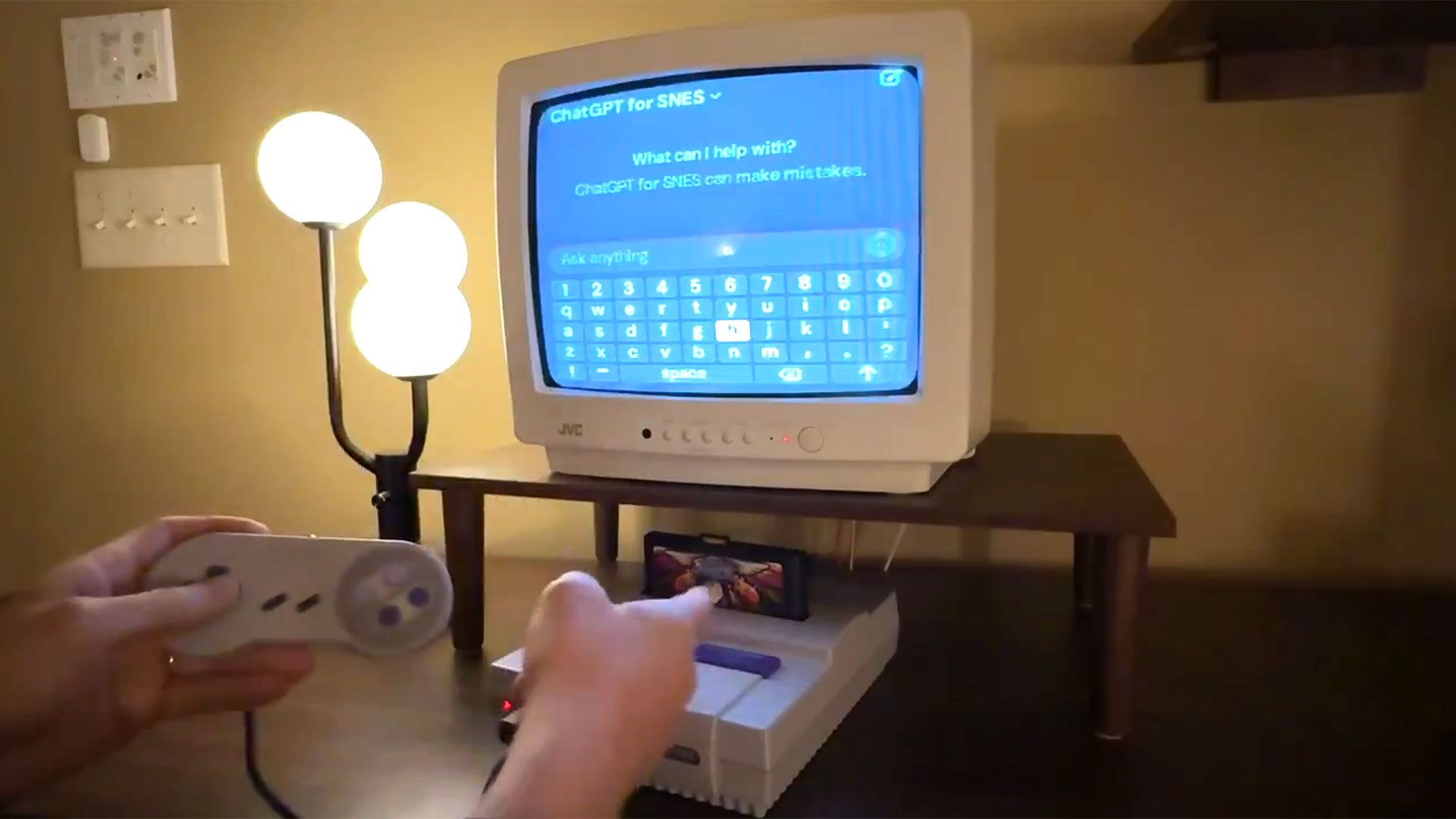
The hardware configuration used for this project involves running the software on a real Super Nintendo console, rather than just an emulator, which adds a layer of authenticity and difficulty to the endeavor. Modern flash cartridges, such as those used to run homebrew software on original hardware, often include FPGA (Field-Programmable Gate Array) implementations of expansion chips like the Super FX 2. This allows developers to utilize the extra processing power while maintaining the physical experience of using a console that is over thirty years old. The ability of the Super FX 2 to handle the matrix multiplications and data processing necessary for a 2.2M parameter model speaks to the forward-thinking design of the chip when it was first conceived in the mid-90s.
This project arrives at a time when the tech industry is increasingly focused on the concept of "local AI" or "edge computing," where AI models are run directly on a user’s device rather than in the cloud. While the SNES chatbot is an extreme and whimsical example of this, it underscores the potential for highly optimized, small-scale models to function in resource-constrained environments. It also serves as a testament to the enduring legacy of the Super Nintendo. While many consoles of its era have faded into obscurity, the SNES continues to be a primary target for developers who enjoy the challenge of working within its strict limitations.
The response from the retro gaming and tech communities has been one of fascination. For many, the SNES represents the pinnacle of a certain era of design, and seeing it interact with the defining technology of the current decade creates a jarring but impressive contrast. The project also raises interesting questions about the longevity of hardware. In an age of planned obsolescence, the fact that a console from 1990 can be adapted to run a rudimentary version of 2024’s most talked-about technology is a powerful statement on the durability and flexibility of well-engineered systems.
As the boundaries between different eras of technology continue to blur, projects like Edwards’ SNES chatbot serve as both a technical proof of concept and a piece of digital art. They remind us that the history of computing is a continuous thread, where the innovations of the past provide the foundation for the breakthroughs of the future. The Super FX chip, once used to help a fox fly through an asteroid belt, has now found a second life helping a 16-bit console "think" for itself. While we may not be using our Super Nintendos for professional productivity or complex research any time soon, the successful implementation of an LLM on such a platform proves that with enough ingenuity, no piece of hardware is ever truly obsolete.
The future of this specific project remains open, as the developer continues to explore the limits of the Super FX 2’s capabilities. There is a possibility for further optimization or even the creation of specialized "AI cartridges" that could theoretically bring more complex logic to the system. For now, the SNES ChatGPT stands as a unique curiosity—a bridge between the tactile, cartridge-based world of the 90s and the ephemeral, data-driven world of today. It is a reminder that the spirit of exploration that drove the early days of the video game industry is still very much alive, finding new ways to make old silicon do things its original creators could only have dreamed of.
 Hardware Reviews & PC Building
GlobalFoundries Unveils FDX Fusion: Aiming for 7nm Performance with Planar Transistors and No EUV by 2030
In a strategic move that reinforces its departure from the traditional "leading-edge"...
 Hardware Reviews & PC Building
Elon Musk’s xAI installs eight converted jet engines to power Mississippi data center — permits allow 25…
The data center, designed to house the immense computing power necessary for...
 Hardware Reviews & PC Building
Save up to $800 on Acer’s ultra-slim RTX 5070 Ti gaming laptop — pay $2225 for the 16GB RAM model or upgrade…
The headline of this promotion is a multi-tier discount structure that targets...







