In the fast-paced world of consumer electronics, it is often easy for technology enthusiasts and "early adopters" to forget that they exist within a specialized bubble. For those who follow every keynote and firmware update, smart home technology is a familiar landscape—one they have been navigating for a decade or, in some cases, since the early days of X10 power-line signaling. To this group, the intricacies of network protocols, IP addresses, and bridge configurations are second nature. However, for the vast majority of the general public, the "smart home" remains a concept that is often more intimidating than it is inviting.
Recently, Apple unveiled its Apple Home Collection, a curated suite of smart home accessories developed in collaboration with industry heavyweights such as LG and Schneider Electric. The announcement was met with a wave of skepticism from the tech-savvy community. Commenters across social media and tech forums have expressed bewilderment, questioning why anyone would opt for these devices when they carry significantly higher price tags than existing alternatives that appear to offer the same basic functionality. On the surface, a smart doorbell or a light switch from this collection might seem redundant in a market already saturated with cheaper options.
Yet, this skepticism may be a byproduct of the "bubble effect." To understand why the Apple Home Collection is a pivotal moment for the industry, one must look past the spec sheets and price points and focus instead on the historical barriers that have kept smart home technology from achieving true mass-market ubiquity.
HomeKit was a start, but not enough
To appreciate where Apple is going, we must look at where the industry began. In its infancy, smart home technology was the exclusive domain of hobbyists. It was an era defined by soldering irons, custom scripts, and complex wiring. The first major shift toward accessibility occurred with the advent of wireless protocols and smartphone integration. Suddenly, users could control a lightbulb via an app rather than a terminal command. However, this convenience was often illusory.
As the market expanded, it became fragmented. A homeowner might have one app for their smart locks, another for their thermostat, and a third for their security cameras. Each manufacturer operated within its own silo, rarely communicating with others. Apple attempted to solve this fragmentation with the introduction of HomeKit. The vision was elegant: a centralized platform where all devices could be configured and controlled through a single "Home" app, protected by Apple’s stringent security standards and accessible via Siri voice commands.
While HomeKit was a significant step forward, the practical reality often fell short of the marketing promise. Even under the HomeKit umbrella, the user experience was frequently marred by "onboarding friction." Many devices required users to first download a proprietary third-party app to perform initial setup or firmware updates before they would even appear in Apple’s ecosystem. For a non-technical user, this process could feel like acting as an unpaid network engineer, troubleshooting 2.4GHz Wi-Fi interference or hunting for elusive eight-digit setup codes.
Furthermore, Apple’s strict hardware certification requirements meant that fewer manufacturers chose to support HomeKit compared to the more permissive ecosystems of Amazon Alexa and Google Home. While Apple focused on privacy and security, its competitors focused on volume and ease of entry for manufacturers, leading to a much wider array of compatible devices at lower price points.
Matter and Thread helped
The industry recognized these hurdles, leading to the development and launch of the Matter and Thread standards. Matter was designed as a universal language for smart devices, promising that a product would work seamlessly across Apple, Google, and Amazon ecosystems. Thread, meanwhile, provided a robust, low-power mesh networking protocol to improve the reliability and speed of device communication.
These standards undoubtedly improved the landscape. They reduced the "silo" effect and simplified the underlying technology, making it easier for manufacturers to build products that worked for everyone. For the tech-savvy user, Matter and Thread were the "holy grail" of interoperability. However, even with these advancements, the mass-market consumer remained largely on the sidelines.
The issue was not just whether a device could connect, but how much mental energy was required to make it connect. Even a Matter-enabled device often requires a series of steps—scanning QR codes, ensuring the phone is on the right network frequency, and waiting through several "connecting" progress bars. For a "normie"—the average consumer who just wants their house to work—any friction is a deterrent. If a smart device is harder to install than a traditional one, the perceived value often fails to outweigh the frustration.
Apple Home Collection
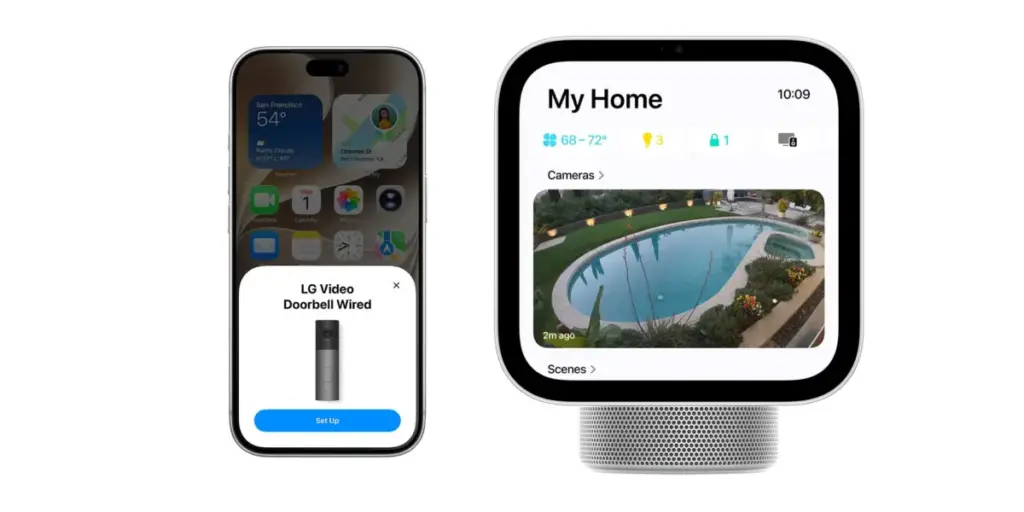
This brings us to the Apple Home Collection. The primary criticism leveled against this new initiative is that it doesn’t introduce any "new" product categories. We already have smart doorbells, cameras, and energy management systems. However, this critique misses the fundamental innovation: the elimination of setup friction.
For the first time, Apple is bringing the "AirPods experience" to the smart home. When Apple released AirPods, the magic wasn’t just in the audio quality; it was in the pairing process. You simply opened the case near your iPhone, a card slid up on the screen, and with one tap, you were finished. There was no digging through Bluetooth settings or holding down buttons until a light flashed a certain color.
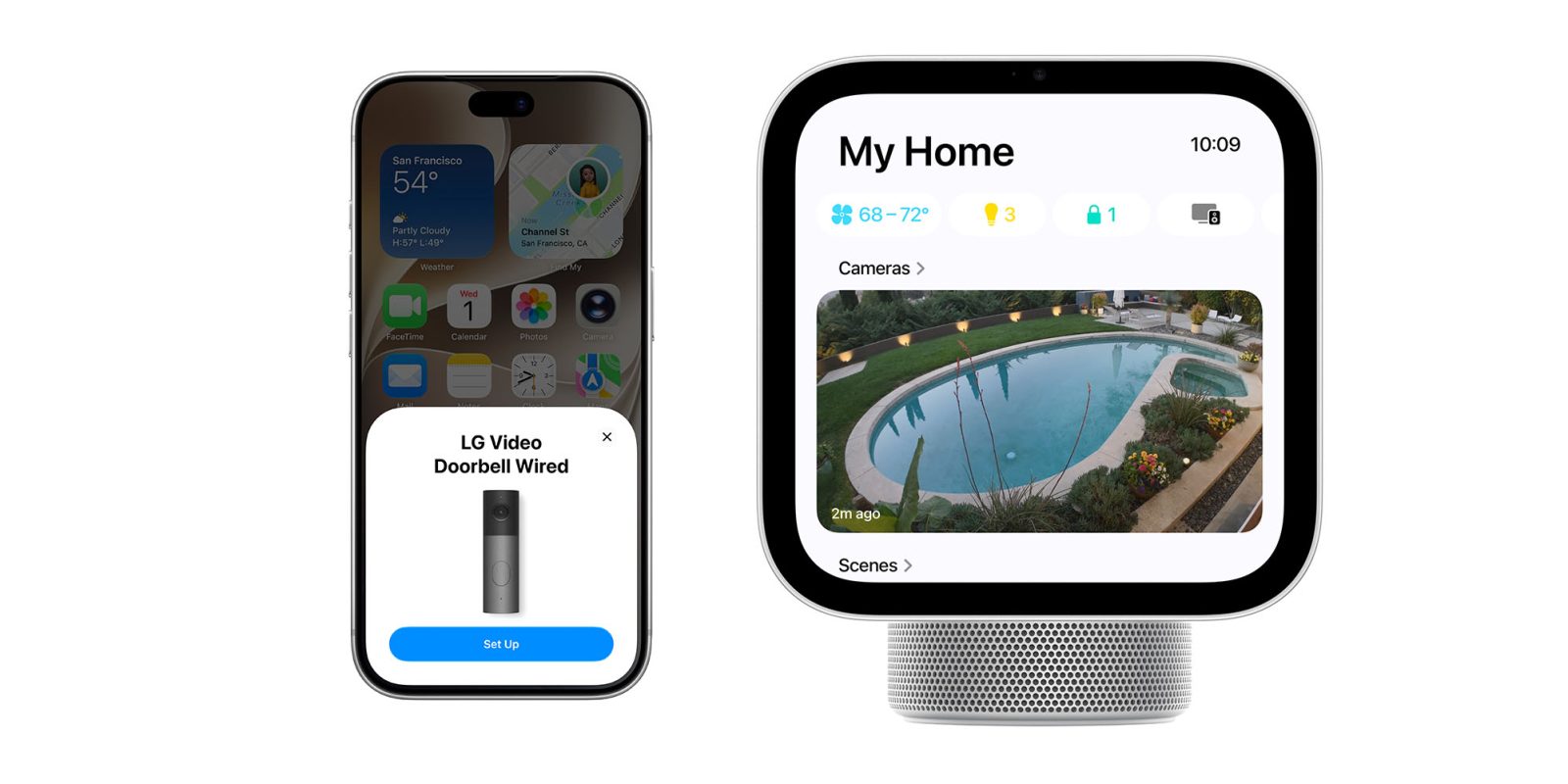
The Apple Home Collection aims to replicate this exact experience for home hardware. Reports from those who have seen the devices in action, such as Ajay Kumar of CNET, suggest that the setup is transformative. Kumar observed an Apple representative pairing and registering a new smart home device on both an iPhone and a "HomeView" display almost instantaneously. The process occurred in the background of a casual conversation, requiring no dedicated "tech time."

This level of intuitive design is what has been missing from the smart home industry. For a non-geek, the difference between a five-minute setup involving three apps and a five-second setup involving one tap is not just a minor convenience—it is the difference between buying the product and leaving it on the shelf.
The Apple Home Collection is not targeting the person who enjoys configuring a Home Assistant server on a Raspberry Pi. It is targeting the homeowner who likes the idea of a video doorbell but is terrified of the prospect of it not working or requiring a weekend of troubleshooting. By partnering with trusted brands like LG and Schneider Electric, Apple is providing a "gold standard" of hardware that carries the weight of Apple’s user-experience philosophy.
We should not underestimate the psychological impact of this simplicity. Many consumers have visited a "smart" home and been impressed by the ability to dim lights or check a camera from a phone, but few have been inspired to deal with the perceived complexity of setting it up themselves. The Apple Home Collection removes that psychological barrier. It transforms the smart home from a "project" into a "purchase."
If the price of entry for a truly seamless, "it just works" experience is higher than the DIY alternative, history suggests that a significant portion of the market is more than willing to pay it. Apple has built its empire on this exact premise. Whether it is the Mac, the iPhone, or the Apple Watch, the company’s success has always been rooted in taking complex technology and making it accessible to the "normie."
As we look toward the future of the domestic environment, the Apple Home Collection may very well be remembered as the moment the smart home finally left the tech bubble and entered the mainstream. For those who have been waiting for the technology to catch up to their desire for simplicity, the leap has finally become easy enough to take. The conversation is no longer about what the devices can do, but about how effortlessly they can become a part of a user’s daily life. For the mass market, that effortlessness is the most valuable feature of all.
 Smart Home & IoT Solutions
Abode Expands Apple Home Ecosystem with New Ruggedized Garage and Outdoor Security Sensors
The landscape of DIY home security continues to evolve as homeowners move...
 Smart Home & IoT Solutions
Apple Poised for Major Smart Home Overhaul as Apple Intelligence Breaks Siri Development Bottleneck
For several years, Apple’s presence in the smart home market has felt...
 Smart Home & IoT Solutions
Philips Hue Enhances Smart Home Ecosystem with Launch of SpatialAware and New Video Doorbell Features
The landscape of smart home lighting has undergone a significant transformation today...