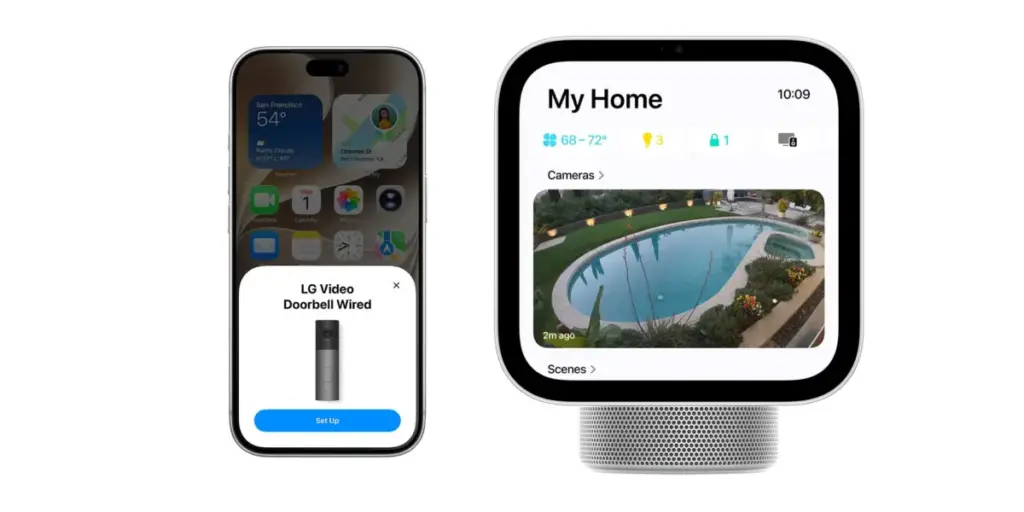
The Apple Home Collection aims to replicate this exact experience for home hardware. Reports from those who have seen the devices in action, such as Ajay Kumar of CNET, suggest that the setup is transformative. Kumar observed an Apple representative pairing and registering a new smart home device on both an iPhone and a "HomeView" display almost instantaneously. The process occurred in the background of a casual conversation, requiring no dedicated "tech time."

This level of intuitive design is what has been missing from the smart home industry. For a non-geek, the difference between a five-minute setup involving three apps and a five-second setup involving one tap is not just a minor convenience—it is the difference between buying the product and leaving it on the shelf.
The Apple Home Collection is not targeting the person who enjoys configuring a Home Assistant server on a Raspberry Pi. It is targeting the homeowner who likes the idea of a video doorbell but is terrified of the prospect of it not working or requiring a weekend of troubleshooting. By partnering with trusted brands like LG and Schneider Electric, Apple is providing a "gold standard" of hardware that carries the weight of Apple’s user-experience philosophy.
We should not underestimate the psychological impact of this simplicity. Many consumers have visited a "smart" home and been impressed by the ability to dim lights or check a camera from a phone, but few have been inspired to deal with the perceived complexity of setting it up themselves. The Apple Home Collection removes that psychological barrier. It transforms the smart home from a "project" into a "purchase."
If the price of entry for a truly seamless, "it just works" experience is higher than the DIY alternative, history suggests that a significant portion of the market is more than willing to pay it. Apple has built its empire on this exact premise. Whether it is the Mac, the iPhone, or the Apple Watch, the company’s success has always been rooted in taking complex technology and making it accessible to the "normie."
As we look toward the future of the domestic environment, the Apple Home Collection may very well be remembered as the moment the smart home finally left the tech bubble and entered the mainstream. For those who have been waiting for the technology to catch up to their desire for simplicity, the leap has finally become easy enough to take. The conversation is no longer about what the devices can do, but about how effortlessly they can become a part of a user’s daily life. For the mass market, that effortlessness is the most valuable feature of all.
 Smart Home & IoT Solutions
Schlage Set to Launch Sense Pro Smart Deadbolt with Ultra Wideband Support for Apple Home Users
The landscape of the smart home security market is poised for a...
 Smart Home & IoT Solutions
Report: Apple ‘HomeView’ smart home hub will ship in November, come in four colors, A18 chip
While the announcement is imminent, consumers may have to wait a few...
 Smart Home & IoT Solutions
SwitchBot Unveils Lock Vision Series Featuring 3D Facial Recognition and Native Matter Integration
In the rapidly evolving landscape of smart home security, the transition toward...