
Furthermore, the GR14BU boasts a dense 2880 x 1800 resolution, commonly referred to as 3K. On a 14-inch screen, this resolution results in a high pixel-per-inch (PPI) count, ensuring that text remains razor-sharp and fine details in images are preserved without the "screen door effect" often seen on lower-resolution mobile displays. This resolution also utilizes a 16:10 aspect ratio, which has seen a resurgence in popularity among productivity enthusiasts. The extra vertical real estate compared to a standard 16:9 widescreen display is particularly useful for coding, writing, and web browsing, as it allows more of a document or timeline to be visible at once.
Performance is further bolstered by a 120 Hz maximum refresh rate. In the world of portable monitors, 60 Hz has long been the ceiling for all but the most expensive "gaming-branded" models. By doubling the refresh rate, UPERFECT ensures that motion on the screen—from the simple movement of a mouse cursor to high-speed action in a video game—is rendered with fluid smoothness. When paired with the near-instantaneous response times inherent to OLED technology, the GR14BU effectively eliminates the ghosting and motion blur that plague many mobile displays. This makes it an attractive option not just for office work, but as a legitimate secondary screen for a gaming laptop or a handheld console like the Steam Deck or ROG Ally.
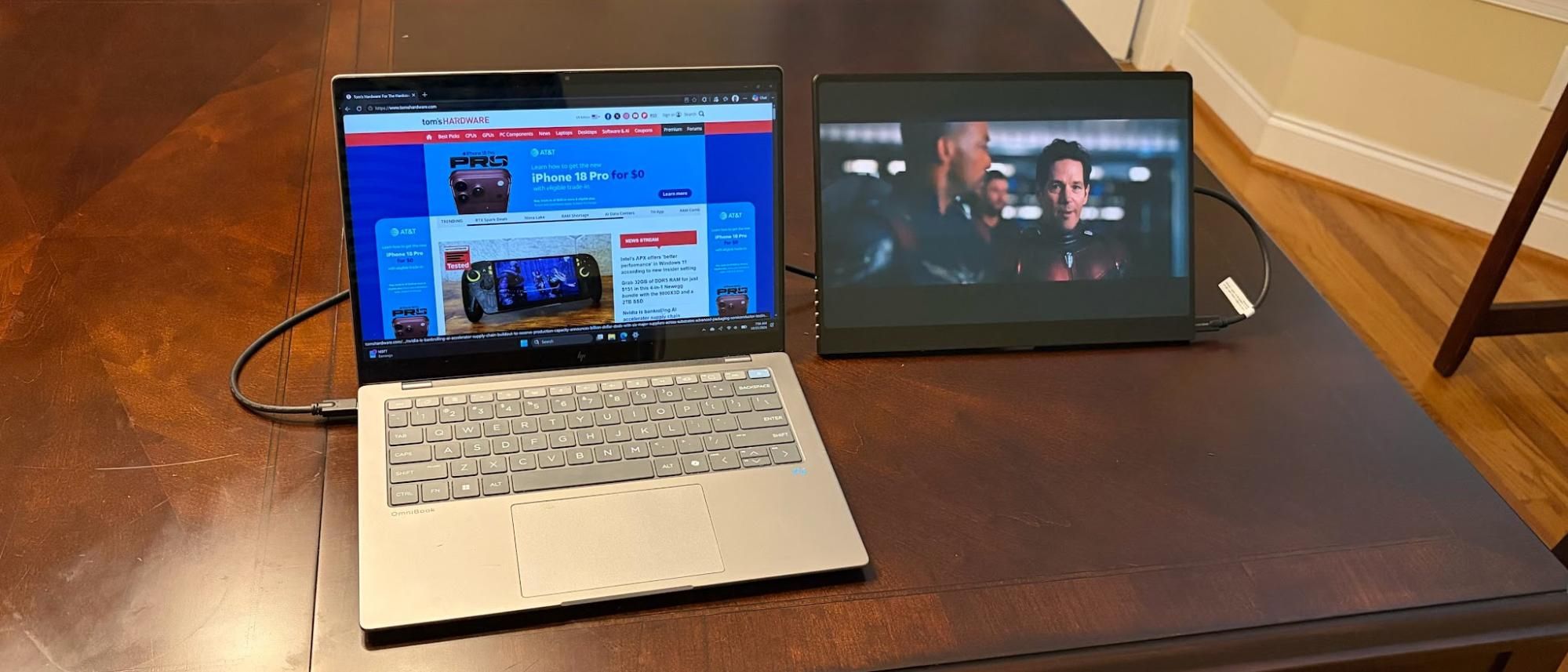
Beyond the raw specifications of the panel, the GR14BU integrates modern functionality through its support for touch input, specifically optimized for Windows 11. As Microsoft’s operating system has become increasingly touch-friendly, having a secondary screen that responds to gestures, taps, and swipes can significantly streamline workflows. Whether it is scrolling through a long PDF, using a digital pen for annotations, or simply navigating the UI more intuitively, the touch capability adds a layer of versatility that transforms the monitor from a passive viewing device into an interactive tool.
The arrival of the GR14BU comes at a time when the "prosumer" segment of the market is looking for more than just a screen; they are looking for a device that fits seamlessly into a mobile lifestyle. The 14-inch form factor is a deliberate choice that balances screen real estate with portability. It is large enough to be a primary workspace for many, yet compact enough to slide into a standard laptop sleeve alongside a 13-inch or 14-inch Ultrabook. This makes it an ideal companion for the modern "digital nomad" or the hybrid worker who moves frequently between a home office, a corporate headquarters, and third spaces like coffee shops or airport lounges.
However, as noted in the Tom’s Hardware verdict, the pursuit of high performance at a value-oriented price point often necessitates certain compromises. While the GR14BU excels in the areas that matter most to visual enthusiasts—resolution, contrast, and speed—it is not without its flaws. These minor drawbacks are often found in the physical execution or the software interface of devices from younger manufacturers. Whether it is the placement of ports, the stability of the integrated stand, or the complexity of the on-screen display (OSD) menu, these are the areas where established giants like ASUS or Dell often have a more polished, albeit much more expensive, edge.
 Hardware Reviews & PC Building
Grab the award-winning Bambu Lab P1S 3D printer with AMS for $70 off — save $70 on one of the best 3D printers for…
The significance of this deal lies not just in the dollar amount...
 Hardware Reviews & PC Building
GlobalFoundries Unveils FDX Fusion: Aiming for 7nm Performance with Planar Transistors and No EUV by 2030
In a strategic move that reinforces its departure from the traditional "leading-edge"...
 Hardware Reviews & PC Building
BiWin Unveils CL100 Mini NVMe SSD to Address Storage Constraints in Next-Generation Gaming Handhelds
The modern landscape of PC gaming has undergone a radical transformation over...







