
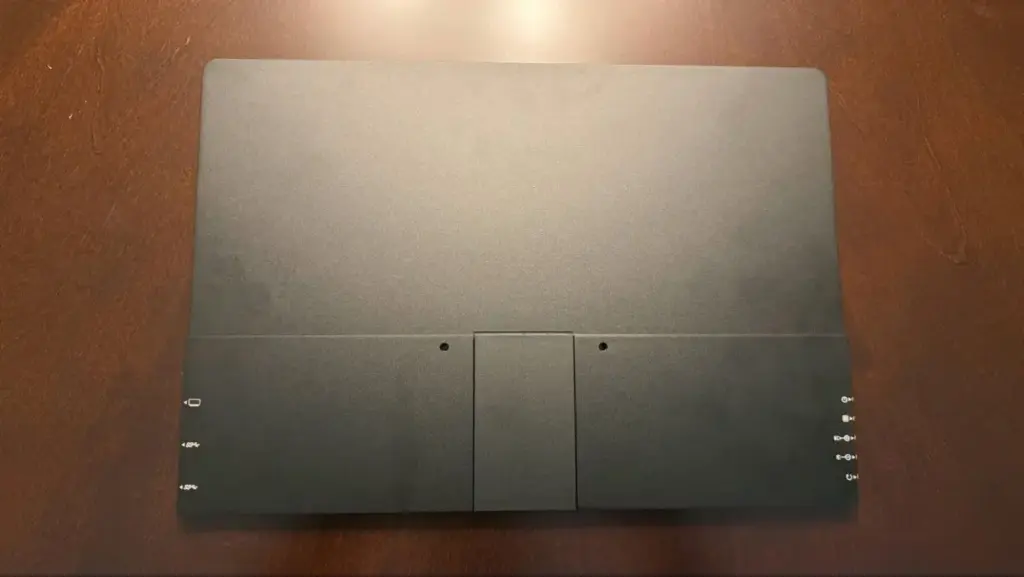
The portable monitor industry has undergone a radical transformation over the last several years. What began as a niche category defined by dim, low-resolution panels intended primarily for traveling business professionals needing a secondary spreadsheet has evolved into a vibrant and highly competitive market. Today, these devices are sought after by gamers, creative professionals, and remote workers who demand the same level of visual fidelity from their mobile setups as they do from their primary desktop workstations. As this category continues to mature, the barrier to entry for new brands has risen significantly, requiring newcomers to offer more than just basic functionality to capture the attention of a tech-savvy audience.
Among the latest companies to vie for a piece of this expanding market is UPERFECT. While the brand may be a fresh face in the rigorous testing labs of major tech publications, it is making a bold entrance with its latest offering. The UPERFECT GR14BU is not merely another entry-level peripheral designed to sit quietly beside a laptop; rather, it is a high-specification display that challenges the status quo of the portable monitor segment. By eschewing the standard specifications that have long defined this category, UPERFECT is signaling its intent to compete at the highest level of performance and value.
Tom’s Hardware Verdict
Although it has some flaws, the GR14BU excels in value pricing, features, and performance.
Reasons to buy
- High-resolution 3K OLED panel offers exceptional clarity and contrast.
- 120 Hz refresh rate provides a smooth experience for both gaming and general productivity.
- Integrated touch support enhances the Windows 11 user experience.
- Strong value proposition relative to established premium competitors.
Reasons to avoid
- Physical design and build quirks may present minor usability hurdles.
- OLED power consumption and brightness management require user attention.
In many ways, the GR14BU represents the current "state of the art" for portable displays. For years, the market was dominated by 15.6-inch panels, often limited to 1080p resolution and a standard 60 Hz refresh rate using IPS (In-Plane Switching) technology. While IPS panels are known for their decent color accuracy and wide viewing angles, they often struggle with black levels and response times compared to more advanced display technologies. UPERFECT has bypassed these traditional limitations entirely by opting for a 14-inch OLED panel.
The shift to OLED (Organic Light Emitting Diode) is perhaps the most significant feature of the GR14BU. Unlike traditional LCDs that require a backlight to illuminate pixels, OLED pixels are self-emissive, meaning they produce their own light. This allows for "true blacks," as individual pixels can be turned off completely, resulting in an infinite contrast ratio that makes images pop with a level of depth that IPS panels simply cannot replicate. For users who frequently work with high-contrast media, such as video editors or photographers, or for gamers who want to experience the atmospheric shadows of modern titles, the inclusion of an OLED panel at this price point is a game-changer.
Furthermore, the GR14BU boasts a dense 2880 x 1800 resolution, commonly referred to as 3K. On a 14-inch screen, this resolution results in a high pixel-per-inch (PPI) count, ensuring that text remains razor-sharp and fine details in images are preserved without the "screen door effect" often seen on lower-resolution mobile displays. This resolution also utilizes a 16:10 aspect ratio, which has seen a resurgence in popularity among productivity enthusiasts. The extra vertical real estate compared to a standard 16:9 widescreen display is particularly useful for coding, writing, and web browsing, as it allows more of a document or timeline to be visible at once.
Performance is further bolstered by a 120 Hz maximum refresh rate. In the world of portable monitors, 60 Hz has long been the ceiling for all but the most expensive "gaming-branded" models. By doubling the refresh rate, UPERFECT ensures that motion on the screen—from the simple movement of a mouse cursor to high-speed action in a video game—is rendered with fluid smoothness. When paired with the near-instantaneous response times inherent to OLED technology, the GR14BU effectively eliminates the ghosting and motion blur that plague many mobile displays. This makes it an attractive option not just for office work, but as a legitimate secondary screen for a gaming laptop or a handheld console like the Steam Deck or ROG Ally.
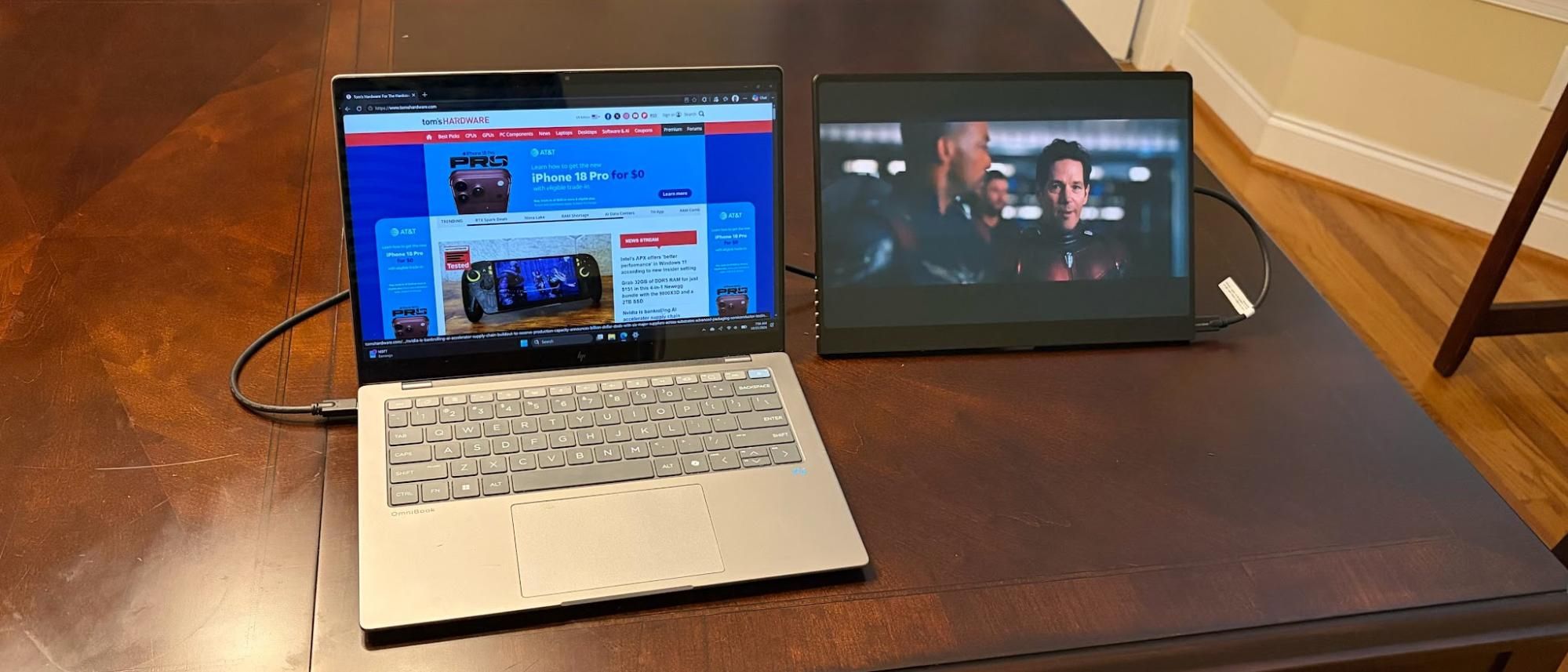
Beyond the raw specifications of the panel, the GR14BU integrates modern functionality through its support for touch input, specifically optimized for Windows 11. As Microsoft’s operating system has become increasingly touch-friendly, having a secondary screen that responds to gestures, taps, and swipes can significantly streamline workflows. Whether it is scrolling through a long PDF, using a digital pen for annotations, or simply navigating the UI more intuitively, the touch capability adds a layer of versatility that transforms the monitor from a passive viewing device into an interactive tool.
The arrival of the GR14BU comes at a time when the "prosumer" segment of the market is looking for more than just a screen; they are looking for a device that fits seamlessly into a mobile lifestyle. The 14-inch form factor is a deliberate choice that balances screen real estate with portability. It is large enough to be a primary workspace for many, yet compact enough to slide into a standard laptop sleeve alongside a 13-inch or 14-inch Ultrabook. This makes it an ideal companion for the modern "digital nomad" or the hybrid worker who moves frequently between a home office, a corporate headquarters, and third spaces like coffee shops or airport lounges.
However, as noted in the Tom’s Hardware verdict, the pursuit of high performance at a value-oriented price point often necessitates certain compromises. While the GR14BU excels in the areas that matter most to visual enthusiasts—resolution, contrast, and speed—it is not without its flaws. These minor drawbacks are often found in the physical execution or the software interface of devices from younger manufacturers. Whether it is the placement of ports, the stability of the integrated stand, or the complexity of the on-screen display (OSD) menu, these are the areas where established giants like ASUS or Dell often have a more polished, albeit much more expensive, edge.
Nevertheless, the value proposition offered by UPERFECT is difficult to ignore. In a market where premium OLED portable monitors can easily fetch prices exceeding five hundred dollars, the GR14BU aims to bring those same "boutique" features to a wider audience. It represents a shift in the industry where high-end specifications are becoming more accessible, forcing larger brands to innovate or lower their margins.
For those who have followed the career of Brandon Hill and other senior editors at Tom’s Hardware, the testing of such a device is a rigorous process. Reviewers spend hours analyzing color accuracy, brightness uniformity, and the real-world durability of the hardware. The fact that the GR14BU emerged from this process with a recommendation for its value and performance speaks volumes about the quality UPERFECT has managed to achieve in its first major outing with the publication.
As we look toward the future of mobile computing, the role of the portable monitor will only continue to grow. With the rise of USB-C Power Delivery and DisplayPort Alt Mode, the dream of a single-cable setup is now a reality for most users. The GR14BU takes full advantage of this, allowing users to power the monitor and transmit a high-resolution video signal through a single connection to their laptop or compatible smartphone. This simplicity, combined with the visual punch of a 3K OLED panel, makes it a formidable tool for anyone looking to expand their digital horizons.
In conclusion, while UPERFECT may be a newer name in the high-end display space, the GR14BU proves that they are capable of delivering a product that meets the demands of modern power users. By focusing on the core pillars of the user experience—visual quality, motion smoothness, and interactive versatility—the company has created a portable monitor that punches well above its weight class. It is a testament to how far the category has come and a preview of the high-performance mobile future that awaits. For those in the market for a secondary display that doesn’t compromise on specs, the GR14BU is a compelling candidate that balances its minor flaws with an overwhelming array of strengths.
 Hardware Reviews & PC Building
GlobalFoundries Unveils FDX Fusion: Aiming for 7nm Performance with Planar Transistors and No EUV by 2030
In a strategic move that reinforces its departure from the traditional "leading-edge"...
 Hardware Reviews & PC Building
Shareholder Lawsuit Alleges Top Supermicro Executive Had Full Knowledge of Massive $2.5 Billion AI Chip Smuggling Operation
The legal storm surrounding Supermicro has intensified as new details emerge from...
 Hardware Reviews & PC Building
Corsair HX1000i Shift Crystal: A High-Performance Digital Power Supply That Puts Its Internals on Display
In the modern landscape of enthusiast PC building, the power supply unit...







