

One of the most telling indicators of this trend, according to Borcherds, is the statistical anomaly found in grading data. He noted a significant and unnatural spike in average scores during online examinations compared to traditional, supervised settings. When the average performance of a class rises sharply without a corresponding change in the difficulty of the material or the quality of instruction, it often points to the use of external aids. For an educator, these inflated scores do not represent a sudden increase in student brilliance, but rather a systemic failure of the assessment method itself.
This creates a multifaceted problem for the university. First and foremost is the issue of academic integrity and the value of a degree. If a student can navigate a rigorous mathematics course at a top-tier university using AI to complete their assignments, the grade they receive ceases to be a reliable indicator of their skill level. Furthermore, the reliance on AI for homework creates a "perverse incentive" structure. Borcherds explained that when grades are based primarily on the correctness of take-home work, students who choose to work honestly are effectively penalized. They may spend hours struggling with a problem only to receive a lower grade than a peer who generated a perfect answer in seconds using a chatbot.
Beyond the ethical concerns, there is a significant financial and administrative burden associated with the current state of AI in academia. Borcherds highlighted the inefficiency of the traditional grading process in this new environment, noting that paying teaching assistants and readers to grade AI-generated answers is a waste of both time and money. In large university systems like UC Berkeley, the infrastructure for grading—which involves hiring graduate students and utilizing specialized software—represents a substantial investment. If the work being graded is not human-produced, that investment yields no educational return. It becomes an exercise in bureaucracy rather than pedagogy, where humans are essentially being paid to review the output of machines.
In response to these challenges, Borcherds has returned to what many might consider an "old school" approach to education. His grading criteria now rely almost exclusively on in-person examinations where the use of electronic devices is strictly prohibited. By returning to the physical classroom for assessments, the professor can ensure a level playing field where the only tools available to students are their own minds, a pen, and a piece of paper. This environment eliminates the possibility of AI intervention and forces students to demonstrate a genuine understanding of the mathematical principles being taught.
This transition reflects a broader debate within the global academic community. Educators across all disciplines are currently grappling with how to handle the integration of large language models and specialized AI tools. Some argue for the complete integration of AI, suggesting that students should be taught how to use these tools as part of their professional development. Others, like Borcherds, argue that the fundamental act of learning—particularly in a field as rigorous as mathematics—requires the kind of independent cognitive effort that AI is designed to replace. If the goal of a university education is to develop critical thinking and problem-solving skills, then the shortcut provided by AI may be fundamentally at odds with the mission of the institution.
 Hardware Reviews & PC Building
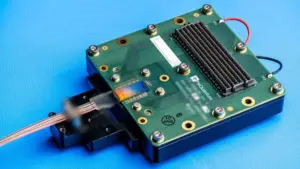
PsiQuantum Leverages Quantum Silicon Photonics to Transform AI Data Center Networking with High-Efficiency Optical Switching
In a strategic move that highlights the growing convergence between quantum computing...
 Hardware Reviews & PC Building
Intel Signals Extended Life for LGA 1700 Platform as Raptor Lake Next Driver and Shipping Data Surface
Intel appears to be moving forward with a strategic extension of its...
 Hardware Reviews & PC Building
Intel Shifts Strategic Focus to Trust Domain Extensions as Software Guard Extensions Era Nears its Conclusion
In a significant realignment of its long-term data center security roadmap, Intel...







