The cryptocurrency security landscape is facing a significant new challenge as Trezor, one of the world’s leading manufacturers of hardware wallets, has officially warned customers of a sophisticated supply chain attack. The company recently confirmed reports of a Trezor Safe 5 device that had been physically tampered with, containing an unauthorized internal component designed to steal sensitive user data. The discovery has sent shockwaves through the digital asset community, highlighting the persistent vulnerabilities inherent in the global distribution and reselling of specialized security hardware.
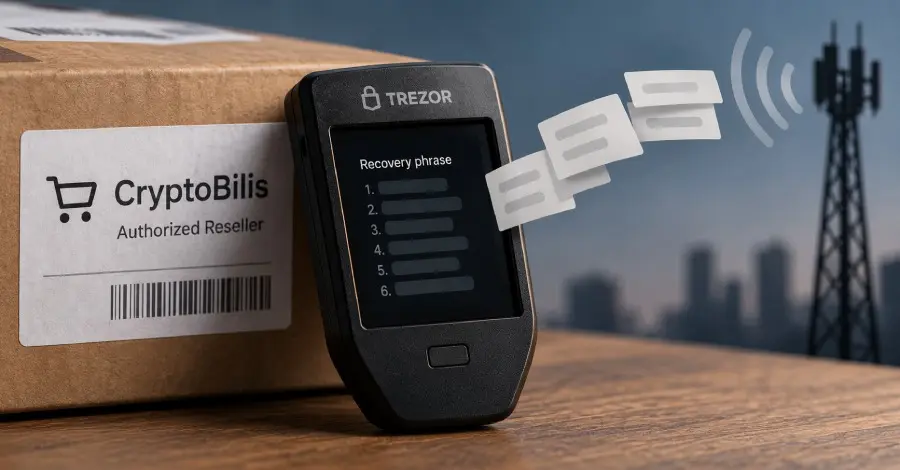
According to a detailed report released by Trezor, the compromised device—a Trezor Safe 5—was purchased through CryptoBilis, a prominent third-party reseller operating in Southeast Asia. The tampering involves a highly advanced hardware implant that allows the device to broadcast a user’s recovery phrase over a mobile network, effectively neutralizing the "cold storage" protections that hardware wallets are designed to provide.
Discovery of the Malicious Implant
The investigation began on October 28, 2026, when a customer in Indonesia reported suspicious physical characteristics in a newly purchased Trezor Safe 5. The user had acquired the device in August through Tokopedia, a major Indonesian e-commerce marketplace, where CryptoBilis maintained an active storefront. Unlike many victims of such attacks, the customer in question possessed a high degree of technical awareness. Before transferring any significant funds to the wallet, they noticed a slight discrepancy in the device’s weight and decided to investigate further.
Upon closer inspection, the user discovered an additional, unauthorized circuit board nested within the device’s internal housing. Trezor’s preliminary analysis of the customer’s photos and descriptions, supplemented by a video interview with the victim, confirmed the presence of a malicious hardware modification. The rogue board was strategically placed between the wallet’s primary logic board and its display screen.
This specific placement is critical to the implant’s function. By sitting between the processor and the screen, the malicious component is capable of "reading" the information displayed to the user. In the context of a hardware wallet, the most sensitive information shown on the screen is the recovery phrase—a sequence of 12 to 24 words that acts as the master key to the user’s private keys. Trezor refers to this as the "wallet backup."
Technical Sophistication of the Attack
The reported implant is remarkably sophisticated, featuring its own cellular module and an integrated antenna. According to the customer’s report, the device is designed to activate whenever it is plugged into a power source, such as a computer or a wall charger. Once powered, the cellular module connects to a local mobile network and transmits the captured recovery phrase to a remote server controlled by the attackers.

This method of exfiltration is particularly dangerous because it bypasses the security of the user’s computer. Traditional hardware wallets are designed to keep private keys and recovery phrases entirely offline, ensuring that even if a computer is infected with malware, the assets remain safe. However, by adding a secondary communication channel—cellular data—the attackers created a "backdoor" that does not rely on the host computer’s internet connection or USB data lines.
Trezor is currently arranging for the physical device to be transported to its primary laboratory for a comprehensive forensic analysis. While the company has not yet had the opportunity to dismantle the device in a controlled environment, the evidence provided by the customer was deemed credible enough to warrant an immediate public warning. "Waiting for lab confirmation would leave CryptoBilis buyers exposed in the meantime," the company stated in a blog post on October 30, emphasizing the need for rapid disclosure in the face of such a high-stakes threat.
The CryptoBilis Supply Chain Breach
The incident has cast a harsh light on CryptoBilis, which until recently served as an authorized reseller for several major hardware wallet brands in Southeast Asia. The relationship between Trezor and CryptoBilis was officially terminated on October 9, 2026. This decision followed a parallel investigation initiated by Ledger, another industry leader, which had also identified suspicious activity and fund losses among customers who purchased devices from the same reseller.
Ledger’s investigation eventually confirmed that at least one of its devices sold by CryptoBilis contained a similar hardware implant. While Trezor and Ledger utilize different internal architectures and security protocols, the methodology of the attack—physical interception and modification at the reseller level—appears to be identical. Trezor has noted the similarities but has refrained from drawing definitive conclusions about the origin of the implants while investigations are ongoing.
The scope of the compromise is significant. Trezor’s current advisory extends to every Trezor model purchased from CryptoBilis or any of its affiliated storefronts (including Tokopedia) since March 2026. This wide window of time suggests that the supply chain may have been compromised for months before the first detection occurred.
To date, no customers have reported a loss of funds directly to Trezor as a result of this specific implant. In the Indonesian case, the vigilant user moved their assets off the device before discovering the board, preventing a potential theft. However, because Trezor does not have visibility into the balances or transactions of its customers’ wallets, the true extent of the damage may not be known for some time.
Guidance for Affected Users
Trezor has issued clear instructions for any user who purchased a device from CryptoBilis within the suspected timeframe. The company advises these users to immediately stop using the device and move their funds to a new, secure wallet. Critically, this must be done using an entirely new recovery phrase generated on a known-secure device. Using the old recovery phrase on a new wallet would be ineffective, as that phrase may have already been transmitted to the attackers.

The company has also warned users against attempting to verify the integrity of their devices by opening them. While the Indonesian customer noticed a weight difference and was able to identify the implant, Trezor warns that such differences can be minute and may be caused by standard manufacturing variances. Opening a device can also damage its security features or lead to false conclusions.
"Owners cannot reliably check a device themselves and should not weigh or open it to try it," Trezor cautioned. The internal components of modern hardware wallets are extremely delicate, and professional lab equipment is often required to identify the microscopic changes made during a sophisticated hardware modification.
Furthermore, Trezor anticipates that cybercriminals will attempt to capitalize on the confusion surrounding this incident. Scammers often use high-profile security breaches as a pretext for phishing campaigns. Users should be on high alert for fraudulent emails, letters, or phone calls claiming to be from Trezor or Ledger "support" and asking for recovery phrases or directing users to malicious websites.
Separate Police Advisory in Singapore
The threat is not limited to Indonesia. On October 28, the Singapore Police Force (SPF) issued its own advisory regarding tampered cryptocurrency hardware wallets. According to the SPF, there have been at least two reported cases since September 10 involving Ledger devices purchased from retail outlets in Singapore that were found to contain malicious hardware.
The Singaporean authorities confirmed that these components were designed to capture recovery phrases or private keys during the initial setup process. Similar to the Trezor case, police investigations in Singapore are currently ongoing, and Ledger is working closely with the authorities to review the affected units. The SPF has urged residents to be cautious when purchasing hardware wallets from non-official sources and to report any suspicious device behavior immediately.
This regional surge in hardware-level attacks suggests a coordinated effort to target the growing cryptocurrency market in Southeast Asia. By compromising an authorized reseller, the attackers were able to leverage the trust that consumers place in "official" distribution channels, making the deception far more effective than traditional phishing or software-based malware.
As the investigation continues, Trezor remains committed to identifying the parties responsible for the breach. For now, the company’s priority is the safety of its user base, emphasizing that the security of a hardware wallet is only as strong as the integrity of the supply chain that delivers it to the customer’s door. Owners of Trezor devices are encouraged to only purchase directly from the official Trezor shop or from highly vetted, long-standing partners to minimize the risk of physical interception.
 Cybersecurity Basics & Security News
ShinyHunters Suspect Rey Reportedly Detained in Jordan, Helping FBI Identify Group Members
Khader, who also operated under the moniker ReyXBF, is far from an...
 Cybersecurity Basics & Security News
Binance Hit by Record-Breaking $6.3 Billion Security Breach Attributed to North Korean Hackers
In what has been characterized as the most significant financial heist in...
 Cybersecurity Basics & Security News
Cybersecurity Researchers Identify New Wave of Targeted Attacks Against Qlik Sense Servers
In a significant escalation of activity targeting enterprise data visualization infrastructure, cybersecurity...