
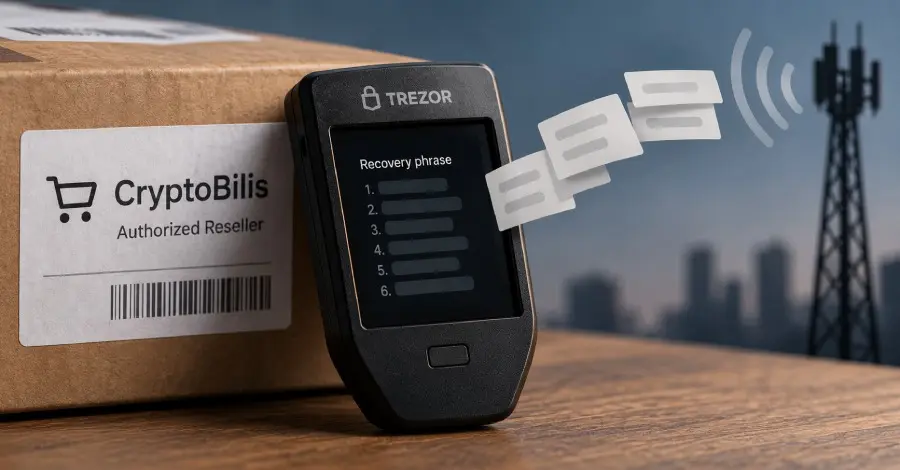
Trezor is currently arranging for the physical device to be transported to its primary laboratory for a comprehensive forensic analysis. While the company has not yet had the opportunity to dismantle the device in a controlled environment, the evidence provided by the customer was deemed credible enough to warrant an immediate public warning. "Waiting for lab confirmation would leave CryptoBilis buyers exposed in the meantime," the company stated in a blog post on October 30, emphasizing the need for rapid disclosure in the face of such a high-stakes threat.
The CryptoBilis Supply Chain Breach
The incident has cast a harsh light on CryptoBilis, which until recently served as an authorized reseller for several major hardware wallet brands in Southeast Asia. The relationship between Trezor and CryptoBilis was officially terminated on October 9, 2026. This decision followed a parallel investigation initiated by Ledger, another industry leader, which had also identified suspicious activity and fund losses among customers who purchased devices from the same reseller.
Ledger’s investigation eventually confirmed that at least one of its devices sold by CryptoBilis contained a similar hardware implant. While Trezor and Ledger utilize different internal architectures and security protocols, the methodology of the attack—physical interception and modification at the reseller level—appears to be identical. Trezor has noted the similarities but has refrained from drawing definitive conclusions about the origin of the implants while investigations are ongoing.
The scope of the compromise is significant. Trezor’s current advisory extends to every Trezor model purchased from CryptoBilis or any of its affiliated storefronts (including Tokopedia) since March 2026. This wide window of time suggests that the supply chain may have been compromised for months before the first detection occurred.
To date, no customers have reported a loss of funds directly to Trezor as a result of this specific implant. In the Indonesian case, the vigilant user moved their assets off the device before discovering the board, preventing a potential theft. However, because Trezor does not have visibility into the balances or transactions of its customers’ wallets, the true extent of the damage may not be known for some time.
Guidance for Affected Users
Trezor has issued clear instructions for any user who purchased a device from CryptoBilis within the suspected timeframe. The company advises these users to immediately stop using the device and move their funds to a new, secure wallet. Critically, this must be done using an entirely new recovery phrase generated on a known-secure device. Using the old recovery phrase on a new wallet would be ineffective, as that phrase may have already been transmitted to the attackers.

The company has also warned users against attempting to verify the integrity of their devices by opening them. While the Indonesian customer noticed a weight difference and was able to identify the implant, Trezor warns that such differences can be minute and may be caused by standard manufacturing variances. Opening a device can also damage its security features or lead to false conclusions.
 Cybersecurity Basics & Security News
Google Issues Global Warning Over Mass Exploitation of Critical Oracle PeopleSoft Vulnerability
Cybersecurity researchers at Google’s Mandiant division have issued an urgent warning regarding...
 Cybersecurity Basics & Security News
Critical Cryptographic Flaw in GoBalance Load Balancer Exposes Dark Web Sites to Takeover Attacks
A significant security vulnerability discovered in GoBalance, a specialized load-balancing tool widely...
 Cybersecurity Basics & Security News
Microsoft Addresses Critical Remote Code Execution Vulnerability in Windows Paint via Microsoft Store Update
Microsoft has officially released a definitive patch for CVE-2026-83844, a significant remote...







