
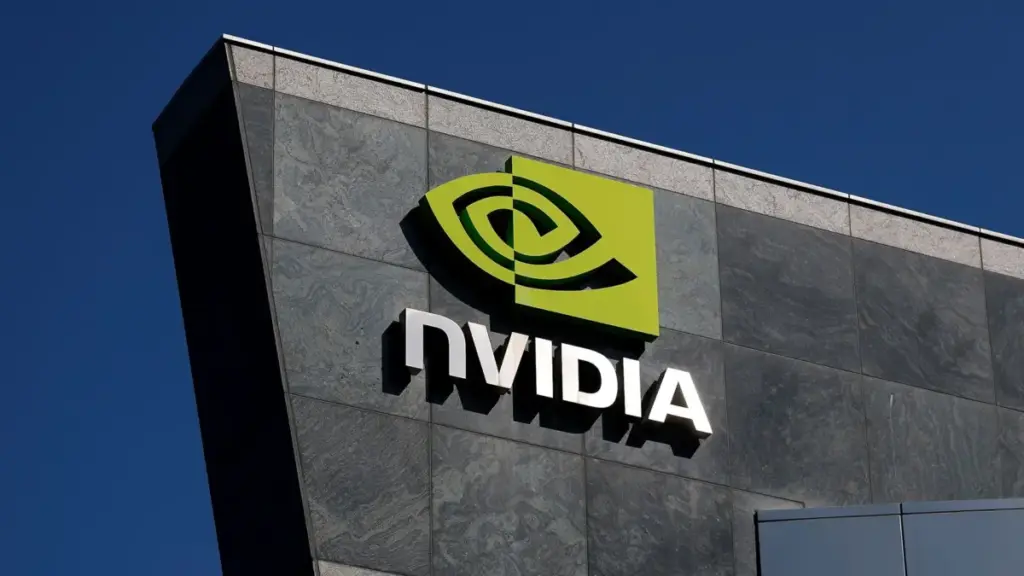
In a significant move aimed at bridging the gap between cutting-edge generative artificial intelligence and the stringent requirements of data privacy, TrendAI, a specialized unit of cybersecurity leader Trend Micro, has announced the integration of Nvidia Nemotron models into its security architecture. The initiative is designed to bring advanced AI capabilities directly into customer-controlled environments, specifically targeting organizations that operate within the Sovereign and Private Cloud (SPC) sectors.
By making Nvidia’s open-weight Nemotron models available within the Trend Vision One platform, the company is addressing a critical hurdle for highly regulated industries: the need for high-performance AI-assisted security operations that do not compromise data residency or operational sovereignty. This development allows organizations to leverage the power of large language models (LLMs) while maintaining total control over their data and the underlying intelligence infrastructure.
The integration is set to redefine how public sector entities and global enterprises in regulated sectors—such as finance, healthcare, and critical infrastructure—manage their cybersecurity posture. As these organizations face increasing pressure to adopt AI to combat sophisticated cyber threats, they must also navigate a complex landscape of local laws and internal policies that often forbid the use of public cloud-based AI services.
Enhancing Security Operations Through Localized Intelligence
The core of this announcement lies in the deployment of Nvidia’s Nemotron models within the Vision One for Sovereign and Private Cloud environment. This localized approach ensures that security reasoning, guided investigations, and agentic Security Information and Event Management (SIEM) capabilities occur within the customer’s own data center or chosen sovereign cloud provider.
TrendAI’s move is a direct response to the evolving needs of the public sector. Government agencies and national defense organizations often operate in "air-gapped" or restricted-connectivity environments where traditional cloud-based security tools cannot function. By utilizing Nvidia’s open-weight models, these organizations can decide exactly where the model resides, which specific version is deployed to meet their compliance needs, and who is authorized to access the system.
Furthermore, the integration utilizes Nvidia’s accelerated computing platform. This allows for the high-speed processing required to analyze vast quantities of security telemetry in real-time. The result is a system that can provide "guided investigation" features, where the AI assists human analysts by suggesting the next steps in a complex forensic process, and "security reasoning," where the AI interprets the intent behind suspicious activities rather than just flagging a technical anomaly.
The inclusion of agentic SIEM capabilities marks another leap forward. Traditional SIEMs often require manual configuration and constant tuning. In contrast, an agentic SIEM can autonomously correlate telemetry across different layers of the IT stack—such as email, endpoints, and servers—to identify patterns that might indicate a coordinated attack chain. Because this intelligence now runs locally, sensitive telemetry never leaves the organization’s secure perimeter.
OpenShell and the Governance of Agentic AI
As AI agents become more autonomous in their ability to detect and respond to threats, the need for oversight becomes paramount. To address this, TrendAI highlighted its continued collaboration with Nvidia on OpenShell, a framework designed to provide an additional layer of security and visibility for AI agents.
In the context of modern cybersecurity, "agents" are AI-driven components that can perform tasks such as querying databases, isolating infected machines, or updating firewall rules. While these agents increase efficiency, they also introduce new risks if their actions are not properly governed. The integration with OpenShell is intended to give security teams granular control over what these agents are doing, ensuring that every action taken by the AI is logged, visible, and subject to human-defined guardrails.
Rachel Jin, CEO of TrendAI, emphasized that the concept of sovereignty has evolved. "Sovereignty extends beyond where data resides," Jin stated. "Enterprises also need control over where the intelligence acting on that data operates, and how it is governed. Organizations shouldn’t have to give up the operational benefits of AI because their security data and operations need to remain within a customer-controlled environment."
Jin’s comments reflect a broader shift in the tech industry toward "Sovereign AI." This philosophy posits that a nation’s or an organization’s AI capabilities should be a part of its own digital infrastructure, rather than a service rented from a third-party provider located in a different jurisdiction. By bringing Nvidia’s intelligence into the Vision One platform, TrendAI is effectively providing the tools for organizations to build and maintain their own "security brains."
What Users Can Expect from the Integration
The practical implications for security operations center (SOC) teams are substantial. Users of Trend Vision One for Sovereign and Private Cloud can expect a suite of tools designed to reduce the "noise" of modern security monitoring and focus on high-impact threats.
One of the primary benefits is AI-assisted threat analysis. This involves the AI reasoning across various security signals to identify complex threat patterns that might be missed by traditional rule-based systems. For instance, the AI can link a suspicious login in one geographic region with a minor configuration change in another, recognizing them as parts of a single, unified attack chain.
Guided security operations will further assist teams by prioritizing response activities. In a typical SOC, analysts are often overwhelmed by a high volume of alerts. The integrated Nemotron models can analyze these alerts in context, providing a prioritized list of actions and explaining the rationale behind each recommendation. This not only speeds up response times but also helps bridge the skills gap for junior analysts who may need assistance in interpreting complex data.
The "agentic" nature of the system also means that the SIEM can assist with the heavy lifting of data correlation. By maintaining team oversight through the OpenShell framework, organizations can benefit from the speed of AI while ensuring that a "human-in-the-loop" remains the final authority on critical security decisions. This balance is essential for maintaining trust in automated systems, particularly in environments where an incorrect automated action could have catastrophic real-world consequences.
A Growing Collaboration in the AI Safety Space
The partnership between TrendAI and Nvidia is not an isolated event but rather the latest step in a deepening relationship between the two technology leaders. Recently, Trend Micro joined Nvidia’s Open Secure AI Alliance, a coalition that includes more than 30 technology companies. The alliance is dedicated to developing open-source tools for AI safety, security, and defense.
This collaboration is particularly relevant as the industry grapples with the dual nature of AI: while it is a powerful tool for defenders, it is also being adopted by threat actors to automate phishing, generate malware, and conduct social engineering at scale. By working within an open alliance, companies like TrendAI and Nvidia aim to establish standards that ensure AI is developed and deployed responsibly.
The decision to use "open-weight" models is a strategic choice in this regard. Unlike "closed" models, where the internal workings are a black box controlled by the provider, open-weight models allow for greater transparency and customization. This is vital for organizations that must conduct their own security audits of the AI models they deploy. It allows them to verify that the AI is not biased and that it does not contain vulnerabilities that could be exploited by attackers.
The Road Ahead for Sovereign Security
As the global regulatory environment becomes increasingly fragmented, with different regions enacting their own data protection and AI governance laws, the demand for localized, sovereign solutions is expected to grow. TrendAI’s integration of Nvidia Nemotron models positions the company at the forefront of this trend, offering a path forward for organizations that have previously been hesitant to adopt AI due to compliance concerns.
The move also signals a shift in the competitive landscape of cybersecurity. As AI becomes a standard component of security platforms, the differentiator will no longer be whether a company has AI, but rather where that AI can run and how much control the customer has over it. By prioritizing sovereignty and private cloud compatibility, TrendAI is targeting a high-value niche of the market that requires both the highest level of security and the highest level of autonomy.
For organizations operating in the public sector, the message is clear: the operational benefits of AI—speed, reasoning, and automation—are now accessible without the need to sacrifice the strict controls that protect national security and citizen privacy. As this technology continues to mature, the collaboration between security providers and hardware manufacturers like Nvidia will likely become the blueprint for how advanced intelligence is delivered to the world’s most sensitive environments.
 Helpdesk & IT Service Management (ITSM)
The Evolution of Service Delivery: Understanding the Strategic Shift Toward Enterprise Service Management
In the modern corporate landscape, the efficiency of an organization is often...
 Helpdesk & IT Service Management (ITSM)
Decoding the Architecture of SAP HANA: A Deep Dive Into the Engine of Modern Enterprise Data
In the rapidly evolving landscape of enterprise resource planning and data management,...
 Helpdesk & IT Service Management (ITSM)
TrendAI Integrates Nvidia Nemotron Models to Enhance Data Sovereignty in Security Operations
In a significant move aimed at bridging the gap between advanced artificial...







