
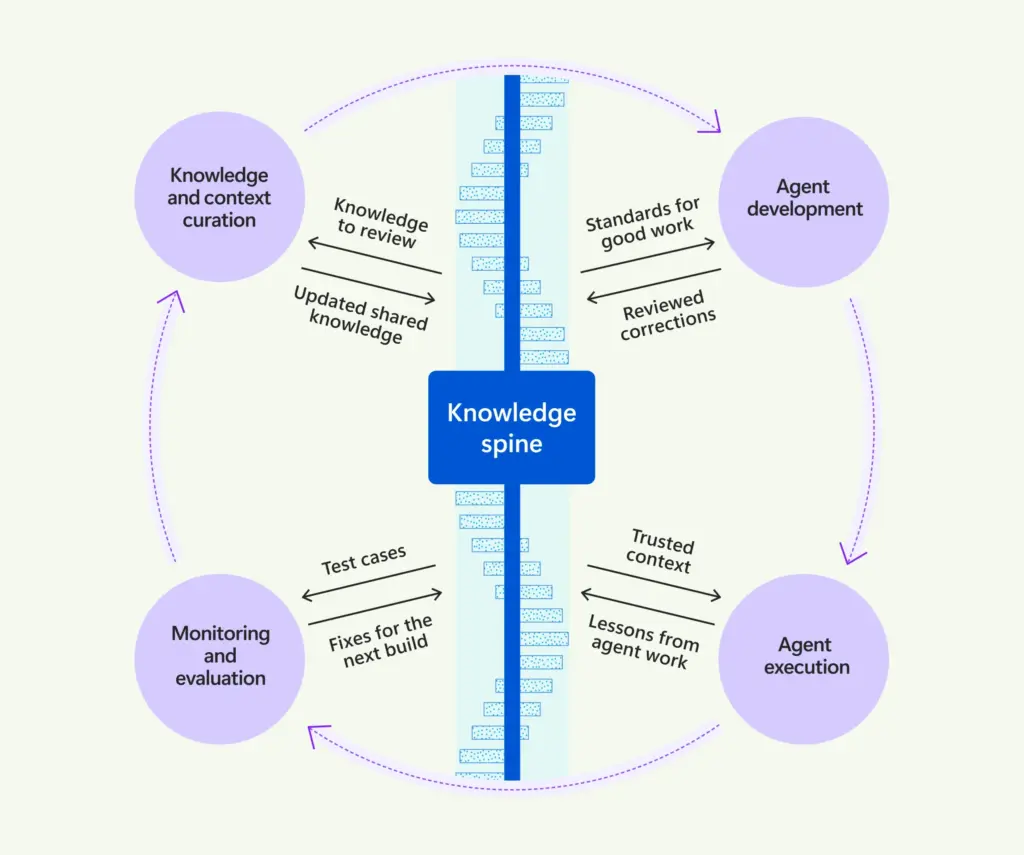
Third, this information must be used to actively shape agent behavior. The goal is not just to fix a single wrong answer, but to change the logic of how the agent handles that specific category of work in the future.
Finally, the knowledge spine must have a designated owner. Accountability is crucial for determining which data sources agents should trust, how to resolve conflicting information, and when to retire outdated documentation.
The Importance of Observability and the ‘Golden Dataset’
Underpinning these practices is the concept of observability. Advanced firms do not simply "deploy and hope." Instead, they create a "golden dataset"—a collection of test cases with clearly defined expected results, often based on past errors. This dataset serves as a benchmark to ensure that any agent, old or new, meets the company’s specific standards.
Later-stage firms also implement detailed operational telemetry. By capturing every action and attempt an agent makes, these companies can identify exactly why a failure occurred and how to remediate it. This evidence-based approach allows companies to grant agents more autonomy over time. When the data proves an agent is consistently accurate, its permissions can be widened; when it falters, it can be pulled back for further training.
A Practical Path Forward
While the prospect of building an enterprise-wide agentic system may seem daunting, the research suggests that few companies succeed by trying to do everything at once. The most effective path is often to start small. By building a knowledge spine for a single team or a handful of connected workflows, a company can prove the concept and refine its processes before scaling.
To determine where they stand, leadership teams can ask themselves three diagnostic questions: When an agent is corrected, does that lesson reach other agents? Is there a shared standard for "good work" that improves every time an error occurs? And finally, is there a clear owner for the knowledge that agents rely on?
If the answer to any of these is "no," the organization has found its starting point. The broader shift in the industry is clear: the focus is moving from the capabilities of individual models to the robustness of the systems that support them. While AI models will continue to evolve and be replaced, the proprietary lessons a company’s agents learn from their own work will remain a permanent asset. Building the infrastructure to capture those lessons is the most critical task for the modern enterprise.
 Productivity Software & Office Suites
Microsoft Reimagines Copilot as a Centralized Engine for the Future of AI-Driven Work
In a major strategic shift aimed at redefining the intersection of human...
 Productivity Software & Office Suites
Microsoft Announces Fifth Annual Power Platform Community Conference to Address the Future of AI-Driven Business Processes
The modern enterprise is defined by its processes. From the simplest internal...
 Productivity Software & Office Suites
Microsoft Unveils Advanced AI Capabilities for Finance Professionals in Excel, Prioritizing Traceability and Real-World Data
The evolution of enterprise technology has historically followed a predictable trajectory. From...







