
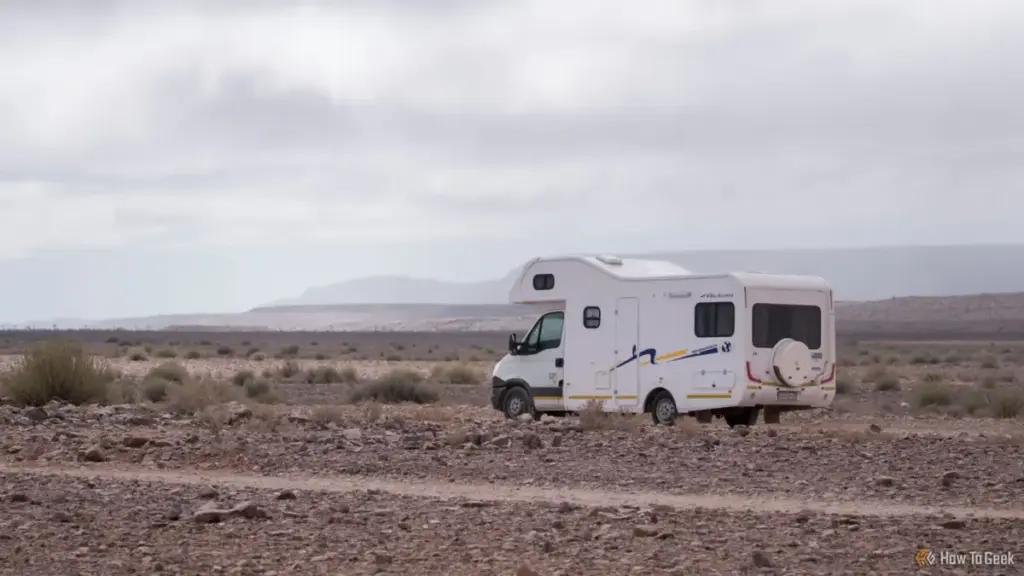
For many technology professionals, the allure of remote work is often tempered by the logistical realities of maintaining a secure, high-speed connection while on the move. Umair Khurshid, a seasoned technology writer and DevOps engineer with an extensive background in Linux, FreeBSD, and cloud automation, has spent years refining a travel philosophy that prioritizes efficiency over bulk. While the modern digital nomad might be tempted to pack a suitcase full of redundant hardware, Khurshid argues that a streamlined approach—relying on three specific networking tools—is sufficient to bridge the gap between a home laboratory and a hotel room.
The challenges of working from the road are well-documented among the tech-savvy. Hotel Wi-Fi, while ubiquitous, remains notoriously unpredictable. Travelers often contend with captive portals that expire at inconvenient times, signal dead zones that seem to exist only at the desk where work must be done, and the inherent privacy risks associated with shared public networks. For someone whose daily tasks involve managing cloud-native systems and sensitive infrastructure, these are not merely inconveniences; they are operational risks. Khurshid’s setup is designed to mitigate these factors without turning a travel bag into a portable server rack.
The GL.iNet Travel Router: Establishing Local Sovereignty
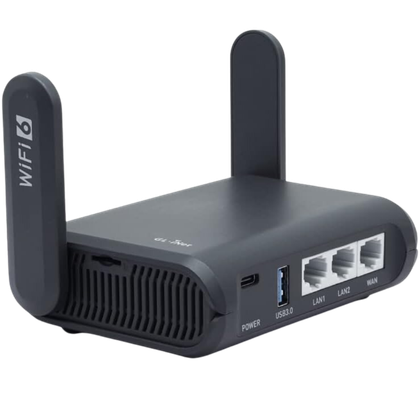
At the heart of this portable networking ecosystem is the GL.iNet Slate AX (GL-AXT1800) router. In a typical hotel environment, a guest is at the mercy of the establishment’s network configuration. By introducing a dedicated travel router into the mix, the user effectively creates a "network within a network." This allows for a level of control and consistency that is impossible to achieve when connecting devices directly to a hotel’s access point.
One of the primary advantages of the Slate AX is its ability to maintain a consistent Service Set Identifier (SSID). When Khurshid travels, his laptop, smartphone, and any other peripherals connect to the same Wi-Fi name and password they use in his home environment. This eliminates the tedious process of reconfiguring multiple devices every time he moves to a new location. Once the router itself is connected to the hotel’s gateway, every device behind it is instantly online.
Furthermore, the Slate AX is built on the OpenWrt platform, providing a robust suite of features that go far beyond what a standard consumer router offers. It supports Wi-Fi 6, ensuring that even in crowded environments with significant signal interference, the local connection remains fast and stable. For the security-conscious professional, the router acts as a hardware firewall and a VPN client, ensuring that all traffic originating from the user’s devices is encrypted before it ever touches the hotel’s infrastructure. This "hardware-first" approach to security is often more reliable than relying on software VPN clients that can occasionally leak data during reconnection cycles.
The device also excels at bypassing the common frustrations of hotel connectivity, such as device limits. Many hotels restrict the number of devices a single guest can connect to the network. By using a travel router, the hotel sees only one connected device—the router—while the user can connect as many devices as necessary to their private subnet.
Sustaining the Ecosystem with Versatile Power Solutions
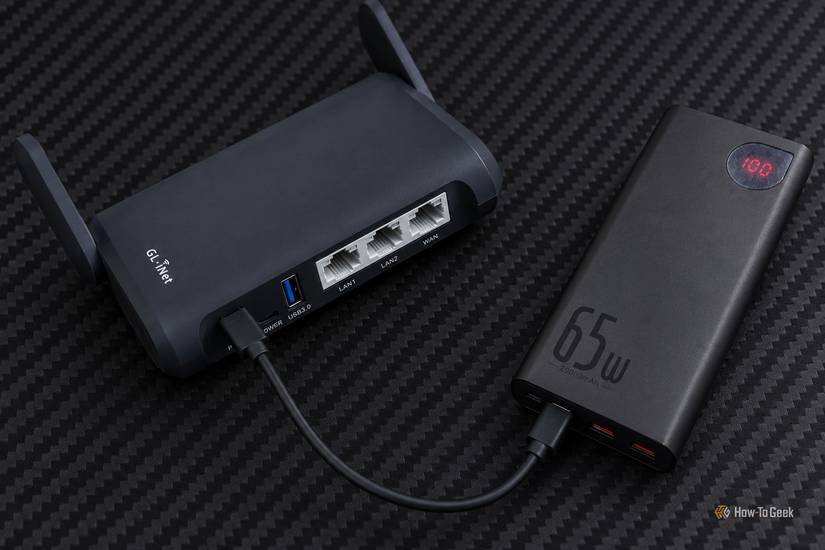
A high-performance travel router is only as useful as the power source that keeps it running. In many travel scenarios, particularly in transit or in older hotels with poorly placed electrical outlets, finding a convenient plug can be a challenge. Khurshid addresses this by integrating a high-capacity power bank into his kit, specifically the Baseus Adaman Metal 22.5W.

The choice of a 20,000mAh power bank is a calculated one. In the world of air travel, lithium-ion batteries are subject to strict regulations. Most airlines and international aviation authorities, such as the FAA and TSA, set a limit of 100 watt-hours (Wh) for batteries in carry-on luggage. The Baseus Adaman, with a capacity of approximately 74Wh, sits comfortably below this threshold, making it a globally compliant choice for frequent flyers.
Beyond compliance, the utility of this specific power bank lies in its ability to serve as a universal hub for Khurshid’s mobile devices. Rather than carrying a dedicated power brick for the router and another for a smartphone, the power bank’s USB-C output can drive the Slate AX directly. This versatility is central to the minimalist philosophy: if one tool can perform two jobs, the second tool stays at home. The 20,000mAh capacity provides enough overhead to keep the router active for several hours during a long layover or a train journey, while still leaving enough reserve power to charge a phone or tablet.
This approach transforms the networking setup from a stationary one to a truly mobile one. Whether in a cafe with no available outlets or in the back of a taxi, the combination of the Slate AX and the Baseus power bank ensures that the user’s private network remains live and secure, regardless of the surrounding environment’s infrastructure.
Headscale: Bringing the Home Lab to the World
While the router and power bank handle the physical and local layers of connectivity, the third tool in Khurshid’s arsenal addresses the need for remote resource access. For a developer and DevOps engineer, "work" often involves interacting with a home lab or private cloud infrastructure that is not exposed to the public internet. To bridge this gap without sacrificing security, Khurshid utilizes Headscale.
Headscale is an open-source, self-hosted implementation of the Tailscale control server. Tailscale itself is a zero-config VPN that builds a secure mesh network (using the WireGuard protocol) between devices, regardless of where they are in the world. While Tailscale offers a hosted coordination server, many technical professionals prefer the autonomy of Headscale, which allows them to manage their own network coordination without relying on a third-party service provider.
The integration of Headscale into this travel setup is particularly elegant because the GL.iNet Slate AX is natively compatible with Tailscale. By configuring a machine at his home base as an "exit node," Khurshid can route all his travel traffic through his home internet connection. This provides several distinct advantages. First, it ensures a high degree of privacy; to the outside world, Khurshid appears to be browsing from his home IP address, even if he is thousands of miles away. This is particularly useful for accessing region-locked services or maintaining a consistent digital identity for security-sensitive logins.
Second, the mesh network created by Headscale allows for seamless access to internal home resources. Whether it is a local file server, a development environment, or a home automation dashboard, these services are available as if the user were sitting in their home office. The system is designed to handle complex Network Address Translation (NAT) configurations automatically. In most cases, the devices establish a direct, encrypted connection. When a direct path is blocked by restrictive firewalls—common in hotels and corporate environments—the system utilizes DERP (Detoured Encrypted Routing Protocol) relays to maintain the connection.
This setup represents the pinnacle of "lightweight" remote work. It avoids the need to carry additional hardware like a dedicated VPN gateway or a secondary laptop. The intelligence is in the software and the configuration, allowing the physical kit to remain small and manageable.
A Philosophy of Practical Utility
The synergy between these three tools—the Slate AX router, the Baseus power bank, and the Headscale network—creates a comprehensive solution for the modern traveler. It addresses the three pillars of remote connectivity: control over the local environment, independence from stationary power, and secure access to remote infrastructure.
Khurshid’s setup is a testament to the idea that professional-grade networking does not require a "portable server rack." By carefully selecting hardware that is multi-functional and leveraging open-source software for remote access, he has created a workflow that is both robust and remarkably light. While different professionals may have varying requirements—such as the need for cellular failover or high-throughput wired connections—this three-tool framework provides a solid foundation for anyone looking to work effectively from anywhere.
Ultimately, the goal of any travel setup should be to remove friction. By solving the recurring problems of hotel Wi-Fi, power availability, and secure remote access, Khurshid is able to leave the complexities of networking in his bag and focus on the work at hand. In the world of remote technology, sometimes the most powerful setup is the one that stays out of the way.
 Tech Tutorials & How-To Guides
Streaming Transitions: Navigating the Major Movie Departures from Netflix This November
The modern streaming landscape is often defined by a sense of abundance,...
 Tech Tutorials & How-To Guides
Pixel 11’s Rambler AI Voice Typing Proven to Run Seamlessly on Older Hardware
The launch of a new flagship smartphone is almost always accompanied by...
 Tech Tutorials & How-To Guides
Best Buy Slashes Price of LG 77-Inch B5 Series OLED TV by Fifty Percent in Early Holiday Sales Push
As the calendar turns and the final quarter of the year approaches,...







