
In the rapidly evolving landscape of software supply chain security, the industry has long relied on a singular gold standard for protecting CI/CD pipelines: SHA pinning. By locking GitHub Actions to a specific, immutable 40-character commit hash rather than a mutable version tag, developers believed they had built an impenetrable wall against unauthorized code changes. For years, this practice was championed by security architects as the definitive defense against the "tag-shifting" attacks that have plagued the open-source ecosystem. However, recent developments in 2026 have revealed a sobering reality: the wall has been breached, and the attackers are already inside the perimeter.
The fundamental premise of SHA pinning is that a cryptographic hash cannot be altered. If a workflow is configured to run a specific version of an action identified by its SHA, the code executed today will be identical to the code executed tomorrow, regardless of whether a maintainer—or a malicious actor—updates the version tag. While this remains technically true, sophisticated adversaries have discovered that immutability is not a substitute for provenance. In a series of high-profile incidents throughout 2025 and 2026, hackers demonstrated that they can inject malicious code into pipelines even when SHA pinning is strictly enforced, exploiting architectural nuances in how GitHub handles repository forks and code sharing.
Immutability Is Not Provenance
To understand the current crisis, one must look back at the event that solidified SHA pinning as a mandatory security control. In March 2025, the popular tj-actions/changed-files utility was compromised. In that instance, attackers gained access to the repository and repointed existing version tags to a malicious commit. The impact was massive, affecting more than 23,000 repositories that relied on the tool. However, the teams that had adopted the best practice of pinning to SHAs remained entirely unaffected. Their workflows continued to pull the original, safe code because the specific commit hashes they referenced remained unchanged.
This success story led to a widespread sense of security. GitHub responded by empowering administrators to enforce SHA pinning as an organization-wide policy, and security leaders across the globe signed off on the problem as "solved." But this focus on immutability ignored a critical question: where did the commit come from in the first place?
The limitation of a pinned SHA is that it only guarantees the code won’t change; it provides no inherent verification of who authored the code or whether that code originated from a trusted branch of the intended repository. This gap between "what" the code is and "who" created it is the focal point of an upcoming industry discussion, "GitHub Actions Security Beyond SHA Pinning." As organizations move toward agentic development—where AI agents generate and push more code through CI/CD pipelines than ever before—these gaps are being exercised at a frequency that manual review processes can no longer sustain.
The Rise of the Fork-Based Impostor
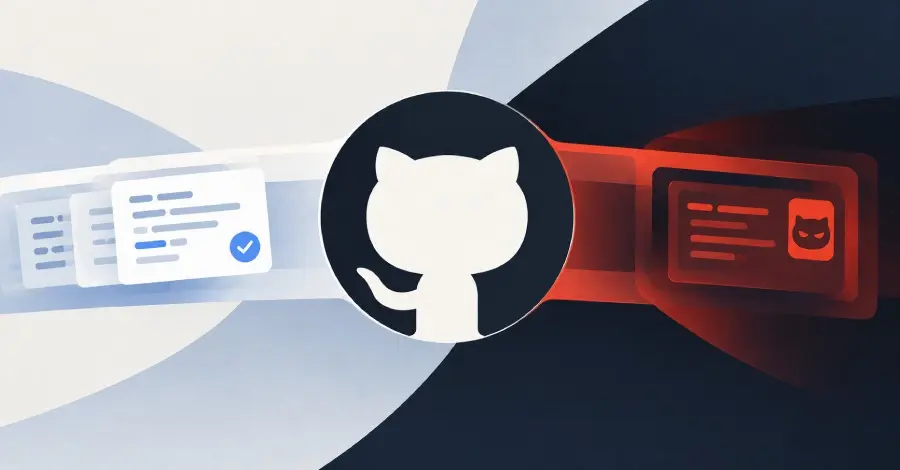
The vulnerability that has neutralized the traditional benefits of SHA pinning lies in GitHub’s internal architecture regarding forks. GitHub optimizes storage by allowing a project and its forks to share the same underlying network of code objects. This means that if an attacker forks a popular repository and pushes a malicious commit to their own fork, that commit hash can often be accessed and executed through the context of the original, "upstream" repository.
The first major realization of this threat occurred in March 2026, targeting Trivy, a widely utilized open-source security scanner. Attackers hijacked the project’s ecosystem not by compromising the main branch, but by planting malicious code that mimicked the appearance of GitHub’s official checkout tool. They went so far as to label the commit as a "security fix," leveraging social engineering to encourage adoption. Because the code appeared to be associated with a trusted repository, teams that pinned to the malicious SHA passed every automated security check. Their systems confirmed the SHA was immutable, but they had no mechanism to verify that the commit was never actually part of the official Trivy codebase.
The technique was refined and deployed again in May 2026, hitting the actions-cool/issues-helper tool. In this case, the attackers didn’t just aim for persistence; they targeted the immediate theft of credentials. By tricking pipelines into running a malicious commit existing in the repository’s "shadow" space, they were able to exfiltrate sensitive secrets and tokens from the environments where the actions were executed. These incidents have proven that an attacker no longer needs to compromise a maintainer’s account to poison a supply chain; they only need to understand how to make their malicious commit reachable.
GitHub’s Lockfiles Help, But They Don’t Finish the Job
In response to these emerging threats, GitHub accelerated its security roadmap. On March 26, 2026, the company announced a shift toward deterministic dependency locking, aiming to bring the same level of rigor found in package managers like npm or Cargo to the world of GitHub Actions.
The rollout was swift. Workflow lockfiles entered public preview on October 14 and reached general availability on October 28, 2026. These lockfiles are designed to tie every workflow run to recorded commits for both the primary actions and their transitive dependencies. This is a significant technical milestone because it ensures that even if a tag is moved or a dependency is altered downstream, the workflow remains tethered to a known state.

Crucially, GitHub’s locking mechanism requires that locked commits exist on a branch of the source repository. This feature is specifically designed to blunt the effectiveness of fork-only impostors. If a commit hash only exists in a malicious fork and has never been merged or pushed to a branch in the legitimate repository, the lockfile mechanism should, in theory, prevent it from being utilized.
However, even GitHub’s own documentation acknowledges that this is not a complete solution. In the official changelog for the lockfile release, the company noted that while locking provides deterministic execution, it "does not determine whether the dependency itself is safe." The core issues of commit authorship and the security of runtime builds remain open. Furthermore, the adoption of these tools is not yet universal; for instance, lockfiles are currently unsupported on GitHub Enterprise Server, leaving a significant portion of the corporate world without these advanced protections.
The reality is that lockfiles solve the problem of "consistency," but they do not solve the problem of "trust." A malicious commit that is successfully merged into a repository through a compromised account or a flawed pull request process will be "locked" just as securely as a legitimate one.
Redefining the Standard for Pipeline Security
As the industry grapples with these findings, the conversation is shifting from simple configuration rules to a more holistic view of pipeline integrity. This transition is being led by experts like Erika Heidi, Staff Developer Relations Engineer at Chainguard, who has been vocal about the need to distinguish between immutability and provenance.
In the upcoming session, "GitHub Actions Security Beyond SHA Pinning," Heidi is expected to outline a new framework for DevSecOps teams. The session draws a hard line between the technical act of pinning and the strategic requirement of verifying the origin of code. For platform and DevOps engineers who own the CI/CD infrastructure, the message is clear: the "set it and forget it" mentality of SHA pinning must be replaced with active monitoring and more sophisticated policy enforcement.
The challenge for modern AppSec teams is that the volume of third-party actions used in a typical enterprise environment is staggering. Each action represents a potential point of entry, and the automated nature of these tools means that a single compromise can scale across an entire organization in minutes. Security leaders who previously signed off on SHA pinning as a completed task are now being forced to revisit their pipeline policies to account for the "ghost commits" and supply chain poisoning techniques that defined the first half of 2026.
Who Should Attend the Next Wave of Defense?
The shift in the threat landscape has made this information vital for a broad range of professionals. Platform engineers who manage the underlying CI/CD architecture must understand the technical limitations of the tools they provide to developers. Similarly, DevSecOps teams responsible for writing the policies that govern pipeline behavior need to know why a "SHA-only" policy is no longer sufficient to meet modern compliance and security standards.
The incidents involving Trivy and issues-helper serve as a warning. Attackers have demonstrated a sophisticated understanding of CI/CD internals, using the very tools designed for transparency and collaboration to hide their tracks. They have shown that they can disguise a malicious payload as a hardening fix, exploiting the inherent trust that developers place in the tools they use every day.
As the industry moves toward the end of 2026, the goal is no longer just to ensure that code doesn’t change, but to ensure that the code is exactly what it claims to be, written by exactly who it claims to have been written by. For those whose workflows pull in third-party actions, the era of relying solely on a 40-character hash is over. The next phase of supply chain security will require a deeper integration of provenance, identity verification, and continuous monitoring to stay one step ahead of an adversary that has already proven it can bypass the industry’s best defenses.
 Cybersecurity Basics & Security News
ConnectWise Disables Application Identities Following Targeted Exploitation of Microsoft 365 Environments
ConnectWise, a leading provider of software for managed service providers (MSPs), has...
 Cybersecurity Basics & Security News
Critical Vulnerabilities in Danfoss Refrigeration Controllers Leave Global Food Supply Chains at Risk
A series of severe security vulnerabilities discovered in widely used industrial refrigeration...
 Cybersecurity Basics & Security News
Critical Security Flaws in Meta Muse AI Agent Allowed Silent Data Theft and Full System Compromise
A sophisticated security vulnerability discovered in Meta’s personal artificial intelligence assistant, Muse,...







