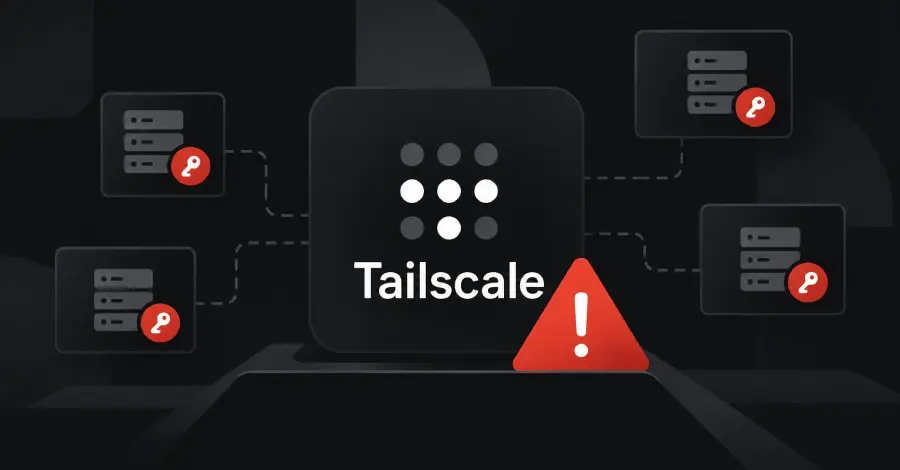
A comprehensive security analysis published this week has sent ripples through the cybersecurity community, detailing how a single compromised device within a Tailscale network could potentially be leveraged to gain unauthorized root access to other connected servers. The report, authored by Erica Windisch of Cyberdione Labs, introduces a series of vulnerabilities and architectural concerns that could allow an attacker to bypass standard security boundaries at "machine speed," effectively turning a secure mesh network into a vector for rapid lateral movement.
The findings, centralized in a report titled "Tailworm," describe a scenario where the very features designed to simplify secure connectivity—specifically Tailscale SSH and its integration with system-level processes—can be subverted. According to Windisch’s research, the attack does not require the theft of traditional credentials, such as passwords or private SSH keys. Instead, it exploits the way Tailscale identifies devices and manages permissions, allowing an attacker who has already gained a foothold on one permitted device to escalate their privileges across the entire "tailnet."
The Mechanics of the Tailworm Vulnerability
The core of the issue lies in the intersection of two specific configurations: the use of Tailscale SSH and the enablement of port forwarding. Unlike traditional SSH implementations that rely on per-user authentication via passwords or cryptographic keys, Tailscale SSH operates on a different philosophy. It identifies the connecting device itself and consults a set of centralized access control rules (ACLs) to determine if a connection should be permitted. If the network’s rules allow a specific device to connect to a target server, Tailscale SSH handles the authentication internally.
This architectural choice, while streamlining the user experience and moving toward a "zero trust" identity model, creates a unique risk profile. If an attacker manages to compromise a single machine—whether through a vulnerable web application, a malicious software package, a phishing campaign, or stolen local login details—they inherit the trust granted to that device by the Tailscale network.
Windisch’s report highlights that Tailscale does not provide the initial entry point. Rather, the mesh network acts as a force multiplier for an existing breach. In a lab environment, Windisch demonstrated that once an attacker controls a "trusted" device, they can exploit the Tailscale SSH process to gain root-level access on target machines. The report notes that this transition from an ordinary user foothold to fleet-wide privileged access can occur in under a second per hop, a characteristic Windisch describes as "wormable."

Experimental Findings and Laboratory Demonstrations
The research was conducted over a three-day period in a controlled lab environment, focusing on Tailscale version 1.104.2 and headscale version 0.29.5. Headscale is a popular open-source, self-hosted implementation of the Tailscale control server, often used by organizations that prefer to maintain full sovereignty over their network coordination rather than using Tailscale’s proprietary hosted service.
Windisch’s experiments progressed through several stages of increasing severity. In the first stage, using standard SSH port forwarding, the researcher showed that an ordinary SSH session could cause the root-level Tailscale process to interact with a system socket. These sockets are typically restricted to the root user for sensitive system tasks. By manipulating this connection, the test environment allowed a non-privileged user to gain root access and read the system’s sensitive password files almost immediately.
 Cybersecurity Basics & Security News
MALFEX Campaign Persists as Researchers Uncover Malicious Native Loader in Popular npm Registry
Cybersecurity researchers have identified a sophisticated new entry in the ongoing software...
 Cybersecurity Basics & Security News
Security Flaw in Anthropic’s Claude Code Exposes Sensitive Developer Secrets on Public GitHub Repositories
The rapid integration of artificial intelligence into the software development lifecycle has...
 Cybersecurity Basics & Security News
Cybersecurity Researchers Identify New Wave of Targeted Attacks Against Qlik Sense Servers
In a significant escalation of activity targeting enterprise data visualization infrastructure, cybersecurity...