
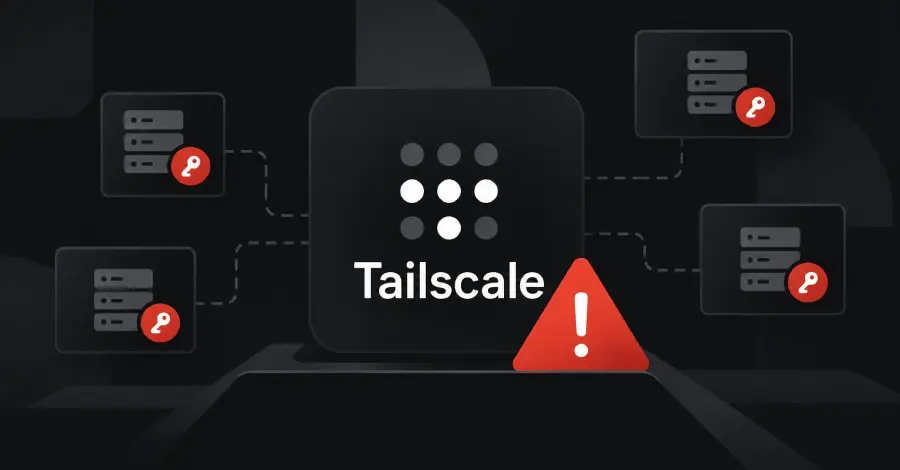
Broader Security Findings and Historical Context
The SSH privilege escalation is only one of 11 findings detailed in the Tailworm report. Other areas of concern include Tailscale’s "app connectors," the "serve" feature, and the DERP (Detoured Encrypted Routing Protocol) relays used to facilitate connections between devices that cannot establish a direct peer-to-peer link.
Windisch specifically pointed to a finding involving an experimental feature known as "conn25," which relates to app connectors. This vulnerability could allow a permitted user to tunnel traffic to unauthorized destinations, such as a cloud provider’s metadata service. Access to these services is a well-known risk in cloud security, as they can often be queried to provide temporary server credentials, potentially leading to a full compromise of an organization’s cloud infrastructure.
This is not the first time Tailscale’s SSH and socket-handling mechanisms have come under scrutiny. Earlier in 2026, the company addressed several similar flaws. In version 1.98.9, Tailscale fixed a vulnerability where SSH Unix socket forwarding could be used to reach a privileged socket, a discovery that bears a strong resemblance to the issues highlighted in the new Tailworm report.

What to Do Now
As of the time of publication, there is no official CVE identifier or a single "fixed" version that addresses all the concerns raised in the Tailworm report. Because the vulnerabilities involve fundamental architectural interactions between the Tailscale client and the host operating system, the primary defense for administrators currently lies in configuration hardening.
Security experts and Tailscale’s own engineering team suggest several immediate steps for organizations to minimize their exposure:
- Audit Tailscale SSH Usage: Organizations should review which devices have Tailscale SSH enabled and whether it is strictly necessary for their workflow. If the feature is not required, disabling it removes the primary vector for this specific escalation.
- Restrict Port Forwarding: On Tailscale’s hosted service, administrators can disable port forwarding on a per-rule basis within the ACLs. For users of headscale version 0.29.5, where this level of granular control may not be available, the report suggests treating every SSH grant as a potential grant of root access.
- Implement Tailnet Lock: Enabling Tailnet Lock is strongly recommended as it provides a critical layer of defense against the unauthorized enrollment of new devices, even if enrollment keys are compromised.
- Utilize Hardware Security: Ensure that device keys are tied to hardware-backed security, such as a TPM or Secure Enclave, whenever possible.
- Enable SSH Check Mode: Tailscale suggests enabling "check mode," which requires a user to re-authenticate or confirm their identity through a web interface before an SSH session begins. While this does not fix the underlying privilege escalation vulnerability, it adds a manual barrier that can stop automated "worm-like" propagation.
- Enforce Strict ACLs: Move away from broad network permissions and implement a policy of least privilege, ensuring that devices can only connect to the specific targets they need to reach.
Tailscale has emphasized the importance of enabling automatic updates to ensure that when official patches are released, they are deployed across the fleet immediately. As the company continues its investigation, the security community remains focused on how "zero trust" networking tools can balance the need for user-friendly connectivity with the rigorous isolation required to prevent lateral movement in the event of a breach.
 Cybersecurity Basics & Security News
Beyond Policy Intent: Why Identity Visibility Has Become the Critical Frontier in Modern Cybersecurity
In the current landscape of enterprise security, the traditional perimeter has not...
 Cybersecurity Basics & Security News
The Rise of the Personal AI Agent: Navigating the Shift from BYOD to BYOAI in the Corporate Security Landscape
The rollout of personal artificial intelligence agents is proving to be a...
 Cybersecurity Basics & Security News
Active Exploitation of Two New Unpatched Zero-Day Vulnerabilities Discovered in Citrix NetScaler Appliances
Security researchers and enterprise IT departments are on high alert following reports...







