
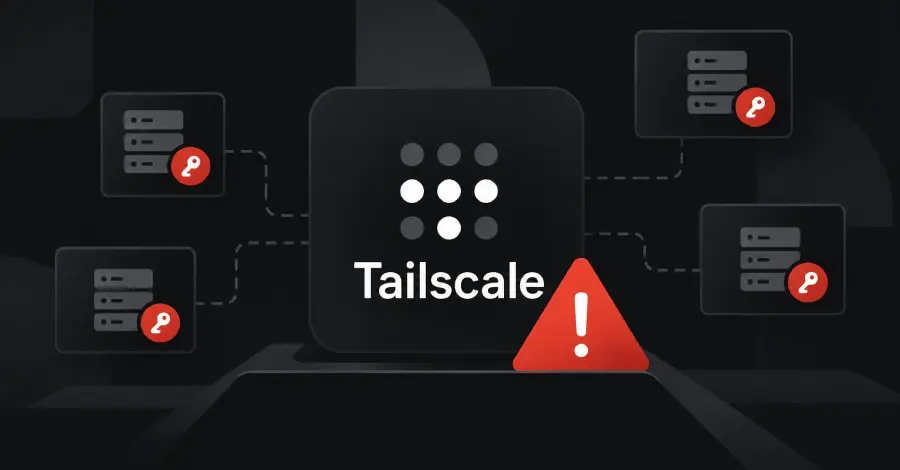
A second, more advanced method involved the replacement of a root-owned socket with one controlled by the attacker. This allowed for the direct execution of commands with root privileges against various system services. The third and perhaps most concerning method involved defeating a safety check intended to restrict which files could be accessed via port forwarding. By utilizing a "race condition"—a timing attack where the system is forced to race between the moment it checks a file path and the moment it uses it—Windisch was able to bypass security limitations.
This chain of exploits led to a significant breakthrough in the lab: the capture of a key used to enroll new devices into the network. With this key, the researcher was able to join a completely new, attacker-controlled machine to the network as a trusted server, effectively embedding a permanent and authorized backdoor into the infrastructure.
Mitigating Factors: Tailnet Lock and Hardware Security
While the report paints a dire picture of potential lateral movement, it also identifies several critical security features that successfully hampered the attack. The most notable of these is "Tailnet Lock." In environments where Tailnet Lock was enabled, the researcher was able to capture secrets in transit, but the final step of joining a rogue machine to the network was thwarted. Tailnet Lock requires that every new device added to the network be signed by an existing, trusted device, creating a cryptographic "web of trust" that is much harder to subvert than standard enrollment keys.
Furthermore, the report noted that the spread of the "worm" was significantly slowed or stopped by two other factors: granular access rules and hardware-backed security. When access rules were written as strict, single source-to-destination pairs rather than broad, "any-to-any" permissions, the attacker’s reach was naturally limited. Additionally, devices that tied their identity keys to hardware security modules, such as a Trusted Platform Module (TPM) or a Secure Enclave, proved much more resilient, as the keys could not be easily extracted or moved to an attacker’s machine.

Industry Response and the Disclosure Debate
The publication of the Tailworm report has sparked a debate regarding responsible disclosure and the definition of "wormable" vulnerabilities. Some researchers who reviewed the findings have questioned the use of the term "wormable," arguing that because the attack requires an initial foothold and specific configurations, it does not meet the traditional definition of a self-propagating worm. However, others have defended the terminology, noting that the speed and automation with which the attack can spread through a mesh network once a foothold is established justify the comparison.
Tailscale has responded to the report through Mike Shaver, the company’s vice president of engineering. In a public statement on Reddit, Shaver acknowledged that the company had received the report and had already been investigating similar areas of the codebase alongside external security specialists. He confirmed that Tailscale had identified issues and is currently working on fixes. Crucially, Shaver noted that the company is still determining exactly which configurations are most at risk and, at this stage, is not recommending that all users disable Tailscale SSH entirely.
The timing and nature of the disclosure have also been a point of contention. Erica Windisch described the disclosure as "reported but not coordinated," a term indicating that while the vendor was notified, the public release did not follow a timeline mutually agreed upon by both parties. Windisch clarified that she provided Tailscale with a copy of the report and proof-of-concept code several days before the public post and had previously raised architectural concerns with the company’s leadership. Despite this, some members of the security community have criticized the move, suggesting that publishing such sensitive findings without a confirmed patch in place could put users at risk.
 Cybersecurity Basics & Security News
Iranian Cyber Espionage Operations Intensify Across Israel and the Kurdistan Region via DarkBlinders Campaign
A series of sophisticated cyber espionage operations orchestrated by Iranian state-aligned threat...
 Cybersecurity Basics & Security News
Critical Memory Corruption Vulnerability in Google’s Brotli Decoder Impacts Node.js, Bun, and Enterprise Infrastructure
A pervasive memory-corruption vulnerability has been identified within Google’s Brotli compression library,...
 Cybersecurity Basics & Security News
OpenAI Dismisses Safety Researchers Following Leak of Confidential Infrastructure Data Amid Growing Security Concerns
OpenAI has terminated the employment of three prominent members of its safety...







