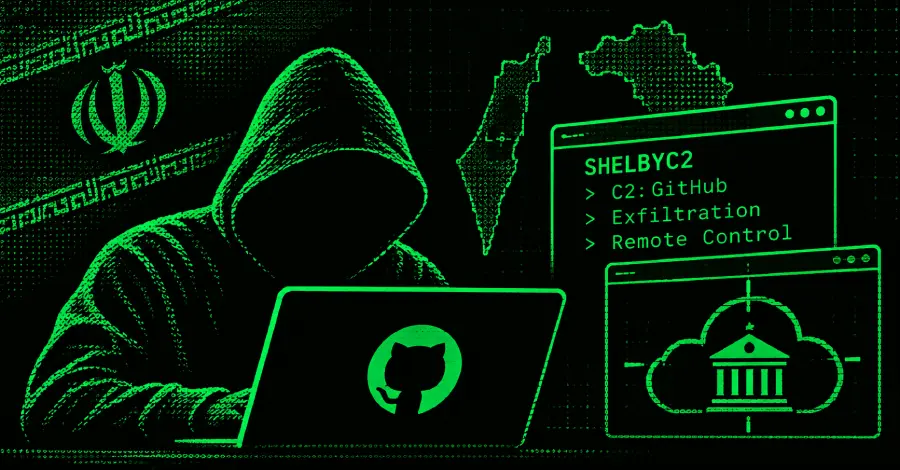
A series of sophisticated cyber espionage operations orchestrated by Iranian state-aligned threat actors has been uncovered, revealing a targeted campaign against high-value entities in Israel and the Kurdistan Region of Iraq. The activity, which occurred between August and October 2026, highlights the evolving technical capabilities and strategic priorities of Tehran’s intelligence-gathering apparatus as it seeks to penetrate critical government and civilian infrastructure across the Middle East.
According to a comprehensive technical analysis released by Dream Research Labs, the campaign is the work of a threat cluster identified as DarkBlinders. This group, assessed to have been active since at least September 2024, has demonstrated a particular interest in aviation, telecommunications, and government sectors. The researchers noted that while the group appears to operate with a degree of autonomy, its infrastructure and malware signatures suggest a significant overlap with established Iranian Advanced Persistent Threat (APT) groups, specifically the well-known APT34, also referred to as OilRig.
The recent wave of attacks has already claimed high-profile victims. In Israel, the group successfully compromised a high-profile individual, potentially gaining access to sensitive personal or professional communications. Simultaneously, in the Kurdistan Region of Iraq, the attackers managed to breach a government-managed cloud environment. The compromise of a cloud infrastructure is particularly concerning for regional security, as such environments often serve as central repositories for sensitive administrative data, citizen records, and internal government communications.
The Evolution of the DarkBlinders Arsenal
The DarkBlinders group distinguishes itself through its reliance on highly tailored social engineering and a modular malware framework. Unlike many threat actors that utilize broad, indiscriminate phishing campaigns, DarkBlinders invests significant effort into researching its targets to ensure its lures are both credible and compelling.
The primary initial access vector identified in this campaign is spear-phishing. The attackers deliver trojanized utilities or direct recipients to attacker-controlled websites that host malicious downloads disguised as legitimate software. Once a victim is enticed into executing these files, the attack chain typically utilizes a sophisticated loading mechanism known as SHELBYLOADER, also tracked by security researchers as HOTAIR.
SHELBYLOADER is frequently deployed via DLL sideloading, a technique that exploits the way Windows applications handle dynamic link libraries to execute malicious code under the guise of a legitimate process. This method is highly effective at bypassing traditional antivirus solutions that may not scrutinize the activities of a trusted, signed executable. Once SHELBYLOADER is active on a system, it serves as a bridge to the group’s primary backdoor, known as SHELBYC2 or AEROSTAT.

SHELBYC2 represents a significant shift in Iranian operational security. The backdoor utilizes GitHub for its command-and-control (C2) operations, data exfiltration, and remote instruction delivery. By routing its traffic through a globally trusted platform like GitHub, the threat actor effectively hides its malicious communications within legitimate web traffic, making detection by network security monitors exceedingly difficult. This "living off the land" strategy allows the group to maintain long-term persistence within a compromised network without triggering the alarms associated with unknown or suspicious domains.
Social Engineering and the "Blinder Tunnel" Campaign
The sophistication of DarkBlinders’ social engineering was further detailed in a recent report by Palo Alto Networks’ Unit 42, which tracked a specific branch of this activity under the moniker "Blinder Tunnel." In this campaign, the threat actor, identified as CL-STA-1178, masqueraded as the Dubai Airports IT department.
 Cybersecurity Basics & Security News
The Invisible Attack Surface: Why Comprehensive Detection is the New Baseline for Credential Security
In the modern enterprise, credentials have become the fundamental currency of operations....
 Cybersecurity Basics & Security News
Microsoft Addresses Critical Remote Code Execution Vulnerability in Windows Paint via Microsoft Store Update
Microsoft has officially released a definitive patch for CVE-2026-83844, a significant remote...
 Cybersecurity Basics & Security News
Google Issues Global Warning Over Mass Exploitation of Critical Oracle PeopleSoft Vulnerability
Cybersecurity researchers at Google’s Mandiant division have issued an urgent warning regarding...