
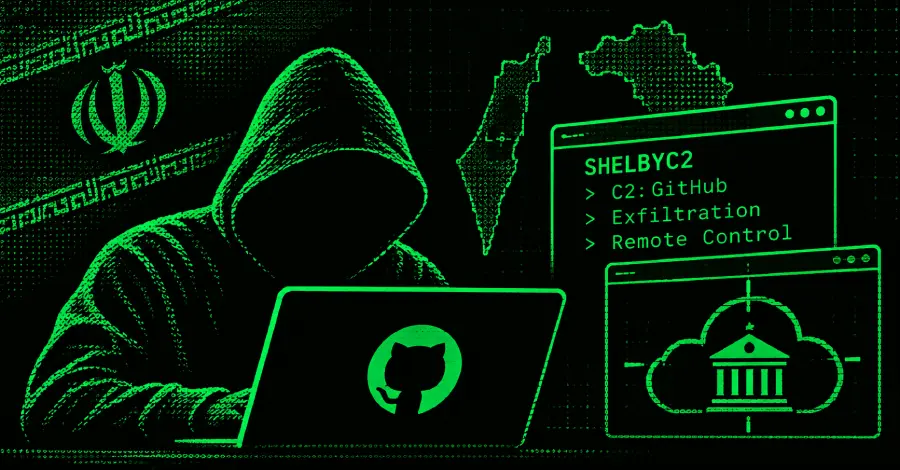
A series of sophisticated cyber espionage operations orchestrated by Iranian state-aligned threat actors has been uncovered, revealing a targeted campaign against high-value entities in Israel and the Kurdistan Region of Iraq. The activity, which occurred between August and October 2026, highlights the evolving technical capabilities and strategic priorities of Tehran’s intelligence-gathering apparatus as it seeks to penetrate critical government and civilian infrastructure across the Middle East.
According to a comprehensive technical analysis released by Dream Research Labs, the campaign is the work of a threat cluster identified as DarkBlinders. This group, assessed to have been active since at least September 2024, has demonstrated a particular interest in aviation, telecommunications, and government sectors. The researchers noted that while the group appears to operate with a degree of autonomy, its infrastructure and malware signatures suggest a significant overlap with established Iranian Advanced Persistent Threat (APT) groups, specifically the well-known APT34, also referred to as OilRig.
The recent wave of attacks has already claimed high-profile victims. In Israel, the group successfully compromised a high-profile individual, potentially gaining access to sensitive personal or professional communications. Simultaneously, in the Kurdistan Region of Iraq, the attackers managed to breach a government-managed cloud environment. The compromise of a cloud infrastructure is particularly concerning for regional security, as such environments often serve as central repositories for sensitive administrative data, citizen records, and internal government communications.
The Evolution of the DarkBlinders Arsenal
The DarkBlinders group distinguishes itself through its reliance on highly tailored social engineering and a modular malware framework. Unlike many threat actors that utilize broad, indiscriminate phishing campaigns, DarkBlinders invests significant effort into researching its targets to ensure its lures are both credible and compelling.
The primary initial access vector identified in this campaign is spear-phishing. The attackers deliver trojanized utilities or direct recipients to attacker-controlled websites that host malicious downloads disguised as legitimate software. Once a victim is enticed into executing these files, the attack chain typically utilizes a sophisticated loading mechanism known as SHELBYLOADER, also tracked by security researchers as HOTAIR.
SHELBYLOADER is frequently deployed via DLL sideloading, a technique that exploits the way Windows applications handle dynamic link libraries to execute malicious code under the guise of a legitimate process. This method is highly effective at bypassing traditional antivirus solutions that may not scrutinize the activities of a trusted, signed executable. Once SHELBYLOADER is active on a system, it serves as a bridge to the group’s primary backdoor, known as SHELBYC2 or AEROSTAT.

SHELBYC2 represents a significant shift in Iranian operational security. The backdoor utilizes GitHub for its command-and-control (C2) operations, data exfiltration, and remote instruction delivery. By routing its traffic through a globally trusted platform like GitHub, the threat actor effectively hides its malicious communications within legitimate web traffic, making detection by network security monitors exceedingly difficult. This "living off the land" strategy allows the group to maintain long-term persistence within a compromised network without triggering the alarms associated with unknown or suspicious domains.
Social Engineering and the "Blinder Tunnel" Campaign
The sophistication of DarkBlinders’ social engineering was further detailed in a recent report by Palo Alto Networks’ Unit 42, which tracked a specific branch of this activity under the moniker "Blinder Tunnel." In this campaign, the threat actor, identified as CL-STA-1178, masqueraded as the Dubai Airports IT department.
The attackers targeted high-value individuals, specifically those in the aviation and technology sectors, by offering lucrative job opportunities. This bogus recruitment scheme, which was first detected in March 2026, involved a multi-stage psychological manipulation of the target. Evidence suggests that the infrastructure for this campaign was being staged as early as November 2025, indicating a long-term commitment to the operation.
The recruitment lure began with a self-contained application that mimicked a professional career portal. The victim was instructed to complete a questionnaire—a harmless decoy designed to build rapport and establish the legitimacy of the "recruiter." Once the victim felt comfortable, the attackers delivered the second stage: a Microsoft Visual Studio project archive presented as a "coding assessment" or technical challenge.
For a developer or an IT professional, opening a Visual Studio project is a standard part of a job application process. However, this specific archive was weaponized. It utilized a malicious C# project (.csproj) file to trigger an advanced technique known as AppDomainManager injection. This allowed the attackers to execute code early in the application’s startup process, bypassing security monitoring tools like Event Tracing for Windows (ETW).
The successful execution of the coding challenge resulted in the delivery of ShelbyLoader V2, an updated version of the group’s primary loader. This version then launched SHELBYC2 and a specialized tunneling utility called Blackwood, which provided the attackers with a stable, encrypted tunnel into the victim’s internal network.
Diversification of Delivery Methods
The latest findings from Dream Research Labs indicate that DarkBlinders is not relying solely on recruitment lures. The group has been observed creating a variety of decoy brand domains to facilitate credential phishing and malware delivery. Among these are counterfeit government portals and webmail service lookalikes designed to harvest login credentials from unsuspecting officials.

A notable recent addition to their toolkit is a fake videoconferencing application named "StarkMeet." The threat actor registered multiple domains, such as stark-meet[.]com and stark-meet[.]online, to host the application. In an era where remote work and virtual meetings are ubiquitous, a request to download a specific conferencing tool for a "government meeting" or "business consultation" carries a high degree of credibility. Once the victim installs StarkMeet, the application functions as a Trojan, executing ShelbyLoader V2 and establishing a connection to the SHELBYC2 infrastructure.
The transition from job offers to counterfeit software demonstrates a high level of operational flexibility. By diversifying their delivery methods, DarkBlinders ensures that if one tactic becomes widely known or blocked, they have several other avenues to maintain their intelligence-gathering mission.
Technical Overlaps and the APT34 Connection
Attribution in the world of cyber espionage is often complex, but researchers have noted significant technical overlaps between DarkBlinders and other known Iranian clusters. Dream Research Labs assessed with medium confidence that DarkBlinders, along with clusters tracked as UNC5795 and Dust Specter, are sub-clusters operating under the broader umbrella of APT34 (OilRig).
Dust Specter was previously documented in March 2026 for its role in targeting Iraqi government officials by impersonating the Iraqi Ministry of Foreign Affairs. The use of similar server fingerprints and the shared focus on Iraqi and Israeli government entities suggest a unified intelligence collection interest. This assessment implies that DarkBlinders is not an isolated group but rather a specialized unit within a larger, state-sponsored cyber program that shares resources, infrastructure, and strategic objectives.
Prince of Persia: A Strategic Shift in Infrastructure
While DarkBlinders has dominated recent headlines, another Iranian threat group, Prince of Persia (also known as Infy), has made a move that has surprised the cybersecurity community. For the first time in a decade, the group has been observed hosting its command-and-control (C2) infrastructure on United States soil.
The server in question, identified by researchers at Semperis, was likely established in July 2026. Prince of Persia is one of Iran’s longest-running cyber operations, with a history of activity spanning nearly two decades. The group is known for its "Tornado" malware, a variant of the "Tonnerre" backdoor, which is often delivered through one-day software vulnerabilities.
The emergence of a U.S.-based C2 server follows a three-month period of inactivity, the longest downtime the group has experienced in its recorded history. The decision to host infrastructure in the U.S. is a bold tactical shift. Historically, Iranian actors have avoided Western hosting providers to minimize the risk of seizure or monitoring by U.S. law enforcement.

Tomer Bar, associate vice president of security research at Semperis, noted that the move is particularly striking given the current geopolitical climate. "The Iranian threat actor decided to host its new C2 server on U.S. soil at the same time as the beginning of the recent hostilities between Iran and the United States," Bar stated. "This is the last place we expected to find the threat actor hiding."
The move may be an attempt to evade geographic-based IP filtering, as many organizations in the Middle East and the West may be more likely to block traffic originating from Iran or Russia than from within the United States. Despite the low number of identified victims in this specific Infy campaign, researchers suggest this could be indicative of a highly targeted "quality over quantity" approach, focusing on a few critical assets rather than a broad infection base.
Conclusion
The concurrent activities of DarkBlinders and Prince of Persia illustrate a sophisticated and multifaceted Iranian cyber strategy. By combining high-end social engineering, "living off the land" techniques, and a willingness to adapt their infrastructure to the shifting geopolitical landscape, these groups remain a potent threat to regional stability and international security.
As Iranian state-aligned actors continue to refine their methods—moving from simple phishing to complex "coding challenges" and hosting C2 servers within the borders of their primary adversaries—the need for robust, multi-layered defense strategies has never been more urgent. Organizations across the aviation, government, and telecommunications sectors in the Middle East are advised to remain vigilant against these evolving threats, focusing on both technical defenses and the education of high-value personnel against increasingly convincing social engineering tactics.
 Cybersecurity Basics & Security News
Critical CVSS 10 Vulnerability in Canonical LXD and MicroCloud Allows Unauthorized Host Access
In a significant security development for the Linux container and cloud orchestration...
 Cybersecurity Basics & Security News
Cursor Identifies Stolen Fireworks AI Credentials as Root Cause of Malicious Extension Incident
In a detailed post-mortem that highlights the growing complexities of AI supply...
 Cybersecurity Basics & Security News
The Evolution of the Vulnerability Gap: Defending Against the Rise of Mythos-Class AI Attacks
In the modern cybersecurity landscape, the arrival of a new Common Vulnerabilities...







