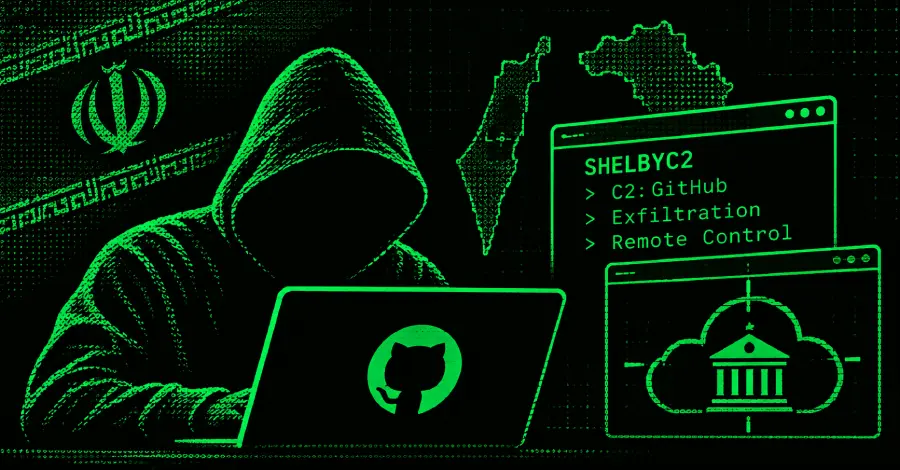
The attackers targeted high-value individuals, specifically those in the aviation and technology sectors, by offering lucrative job opportunities. This bogus recruitment scheme, which was first detected in March 2026, involved a multi-stage psychological manipulation of the target. Evidence suggests that the infrastructure for this campaign was being staged as early as November 2025, indicating a long-term commitment to the operation.
The recruitment lure began with a self-contained application that mimicked a professional career portal. The victim was instructed to complete a questionnaire—a harmless decoy designed to build rapport and establish the legitimacy of the "recruiter." Once the victim felt comfortable, the attackers delivered the second stage: a Microsoft Visual Studio project archive presented as a "coding assessment" or technical challenge.
For a developer or an IT professional, opening a Visual Studio project is a standard part of a job application process. However, this specific archive was weaponized. It utilized a malicious C# project (.csproj) file to trigger an advanced technique known as AppDomainManager injection. This allowed the attackers to execute code early in the application’s startup process, bypassing security monitoring tools like Event Tracing for Windows (ETW).
The successful execution of the coding challenge resulted in the delivery of ShelbyLoader V2, an updated version of the group’s primary loader. This version then launched SHELBYC2 and a specialized tunneling utility called Blackwood, which provided the attackers with a stable, encrypted tunnel into the victim’s internal network.
Diversification of Delivery Methods
The latest findings from Dream Research Labs indicate that DarkBlinders is not relying solely on recruitment lures. The group has been observed creating a variety of decoy brand domains to facilitate credential phishing and malware delivery. Among these are counterfeit government portals and webmail service lookalikes designed to harvest login credentials from unsuspecting officials.

A notable recent addition to their toolkit is a fake videoconferencing application named "StarkMeet." The threat actor registered multiple domains, such as stark-meet[.]com and stark-meet[.]online, to host the application. In an era where remote work and virtual meetings are ubiquitous, a request to download a specific conferencing tool for a "government meeting" or "business consultation" carries a high degree of credibility. Once the victim installs StarkMeet, the application functions as a Trojan, executing ShelbyLoader V2 and establishing a connection to the SHELBYC2 infrastructure.
The transition from job offers to counterfeit software demonstrates a high level of operational flexibility. By diversifying their delivery methods, DarkBlinders ensures that if one tactic becomes widely known or blocked, they have several other avenues to maintain their intelligence-gathering mission.
Technical Overlaps and the APT34 Connection
Attribution in the world of cyber espionage is often complex, but researchers have noted significant technical overlaps between DarkBlinders and other known Iranian clusters. Dream Research Labs assessed with medium confidence that DarkBlinders, along with clusters tracked as UNC5795 and Dust Specter, are sub-clusters operating under the broader umbrella of APT34 (OilRig).
 Cybersecurity Basics & Security News
Chainalysis Targeted in Cybersecurity Breach Involving Advanced AI-Driven Offensive Techniques
In a disclosure that underscores the escalating sophistication of the modern threat...
 Cybersecurity Basics & Security News
Security Flaw in Anthropic’s Claude Code Exposes Sensitive Developer Secrets on Public GitHub Repositories
The rapid integration of artificial intelligence into the software development lifecycle has...
 Cybersecurity Basics & Security News
ShinyHunters Suspect Rey Reportedly Detained in Jordan, Helping FBI Identify Group Members
Khader, who also operated under the moniker ReyXBF, is far from an...