
For many, the morning ritual is a simple, three-point checklist: phone, wallet, and keys. It is a minimalist philosophy that has served the average person for decades. However, within the growing subculture of "Everyday Carry" (EDC), these three items are merely the foundation of a much larger, more complex architecture of personal preparedness. For Joe Fedewa, a veteran technology journalist with more than a decade of experience documenting the shifts in the Google and Android ecosystems, the fascination with EDC gear has always been a constant hum in the background of his professional life. Despite his deep interest, his personal inventory remained stubbornly "boring" for years—until he decided to bridge the gap between enthusiast interest and practical utility using the power of 3D printing.
The journey into the "rabbit hole" of custom EDC design is one of trial, error, and the eventual realization that in the world of pocket-sized tools, less is almost always more. Fedewa’s transition from a passive observer to an active maker highlights a broader trend in the tech community: the use of rapid prototyping to solve hyper-specific personal problems. His goal was straightforward yet notoriously difficult to achieve: find a way to carry a suite of utility tools—screwdrivers, pencils, tape measures, and knives—without the bulk that usually accompanies a traditional multi-tool or a dedicated toolbox.
Cool, But Not Pocketable
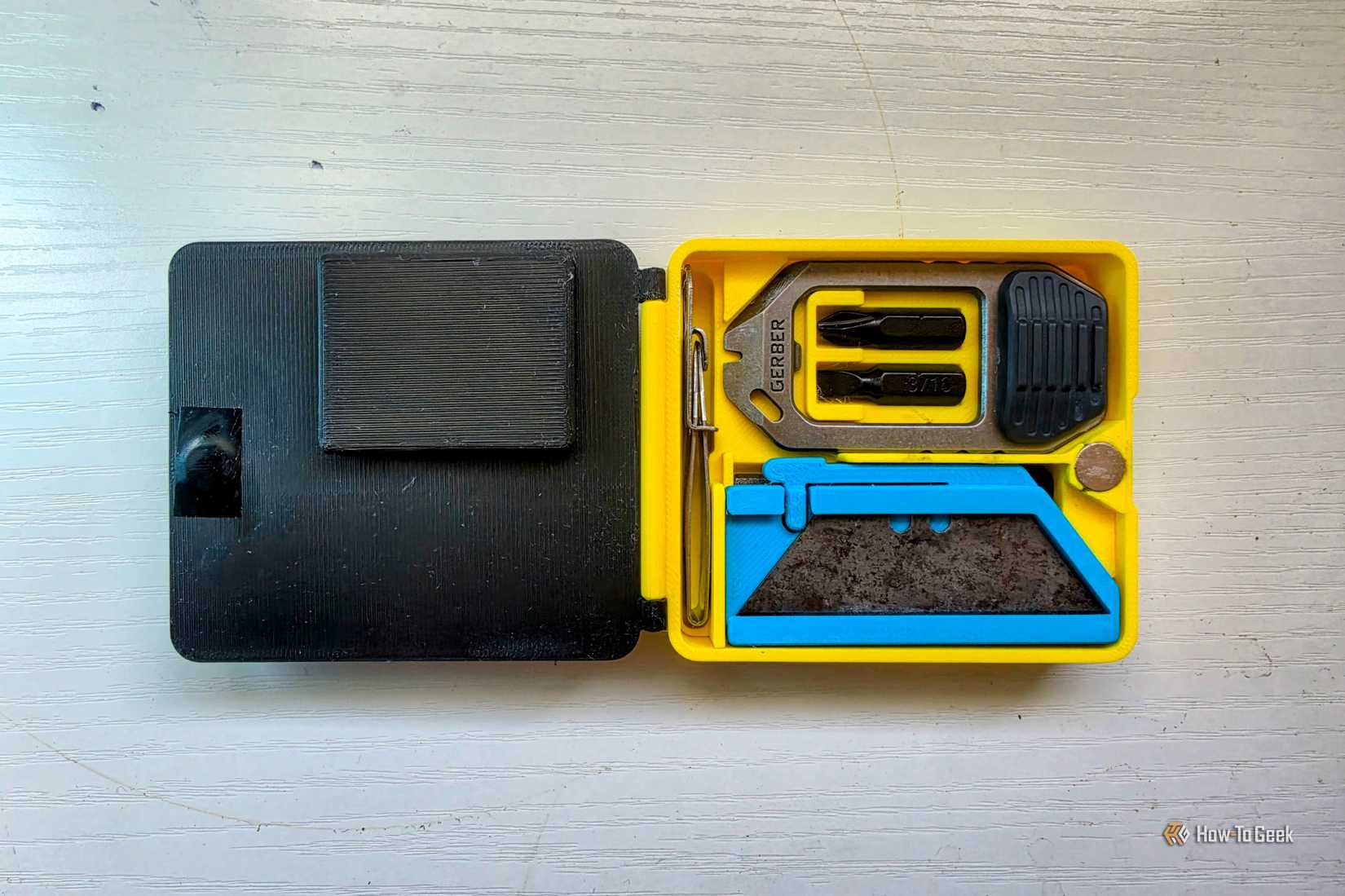
The catalyst for this design experiment was a viral concept within the maker community: the "Altoids tin toolbox." The idea of cramming a functional set of tools into a small peppermint tin is a staple of DIY culture, offering a nostalgic yet functional aesthetic. Inspired by this, Fedewa sought to modernize the concept. Rather than a loose tin floating in a pocket, he envisioned a 3D-printed chassis that could serve as a modular toolbox, specifically designed to attach to the back of a smartphone using MagSafe-style magnets.
The initial design phase involved an exhaustive search for the smallest possible versions of essential tools. Fedewa scoured local hardware stores and online retailers like Amazon for "micro" versions of everyday items. The final selection for the first prototype was ambitious, including a screwdriver with multiple interchangeable bits, a pair of tweezers, a mini pencil, a utility knife, and even a functional tape measure.
On paper, the design was a triumph of organization. The 3D-printed housing kept every item in its place, and the magnetic attachment meant the "toolbox" could travel wherever the phone went. However, the transition from digital model to physical object revealed the first major hurdle of EDC design: the difference between "portable" and "pocketable."
The inclusion of the tape measure, while technically impressive, became the design’s undoing. Fedewa had designed the lid so that the tape measure’s button protruded through the top, a tactile feature he found particularly satisfying. Yet, this single tool occupied nearly a third of the total internal volume. When attached to the phone, the resulting package was far thicker than anticipated. It was a functional kit, certainly, but it lacked the streamlined profile required for daily pocket wear. As Fedewa noted, the final product was perhaps better suited for a magnetic surface like a refrigerator than the slim confines of a pair of jeans. It was a "cool" object, but it failed the fundamental test of EDC—it was too cumbersome to actually carry every day.
Much Better, But Still Too Cumbersome
Refusing to abandon the project, Fedewa returned to the drawing board for a second iteration. This phase was defined by the "kill your darlings" philosophy of design. He scrutinized his tool list and began stripping away anything that wasn’t strictly necessary for immediate, daily tasks. The tape measure and the pencil—items that are useful but perhaps not vital for a sudden, on-the-go repair—were the first to go.
The second prototype focused on a core quartet: a screwdriver, two bits, tweezers, and a utility knife. This version was significantly slimmer and abandoned the MagSafe magnets in favor of a more traditional pocket-slip design. By removing the magnetic interface, Fedewa was able to reduce the thickness of the housing even further, bringing the model closer to the dimensions of a standard minimalist wallet.
Despite these improvements, a new issue emerged: friction of use. The design utilized a hinged lid to secure the tools. While this kept the items safe and organized, it added a layer of complexity to their deployment. In the world of EDC, the "speed to task" is a critical metric. If a user has to pull a container out of their pocket, unlatch a lid, and then extract a tool, they are less likely to use it for quick tasks. The "toolbox" feel, while organized, felt more like a miniature version of a bag-carried kit rather than a true pocket essential. Fedewa eventually shared this model on MakerWorld, allowing other enthusiasts to download and print it, but for his own personal needs, the search for the "winner" continued.

Attempt #3: The Winner
Simplest Is Best
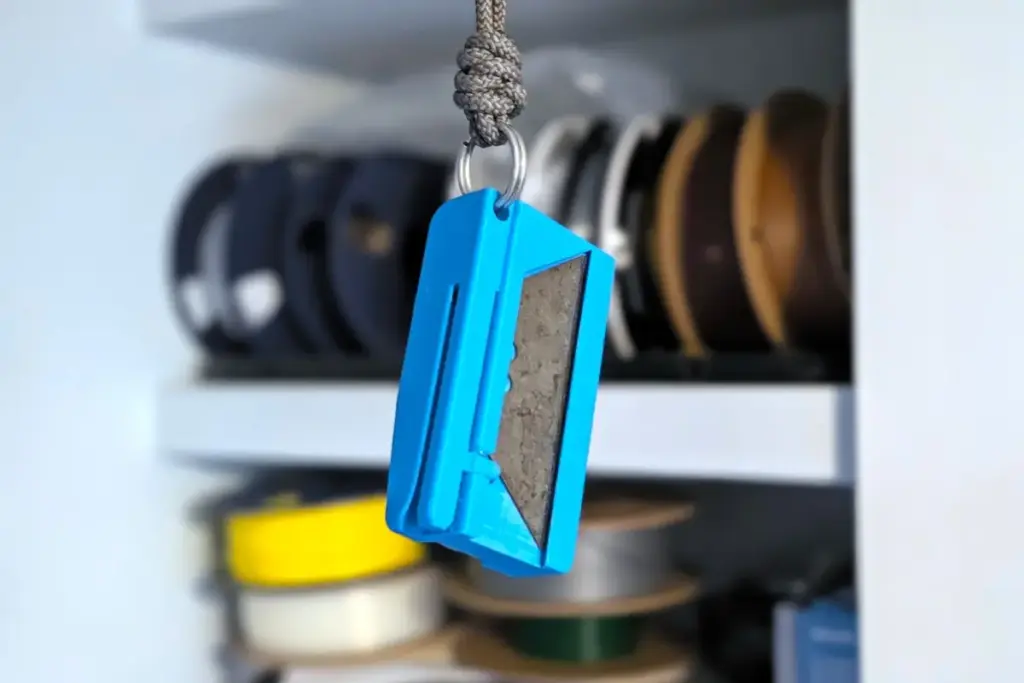
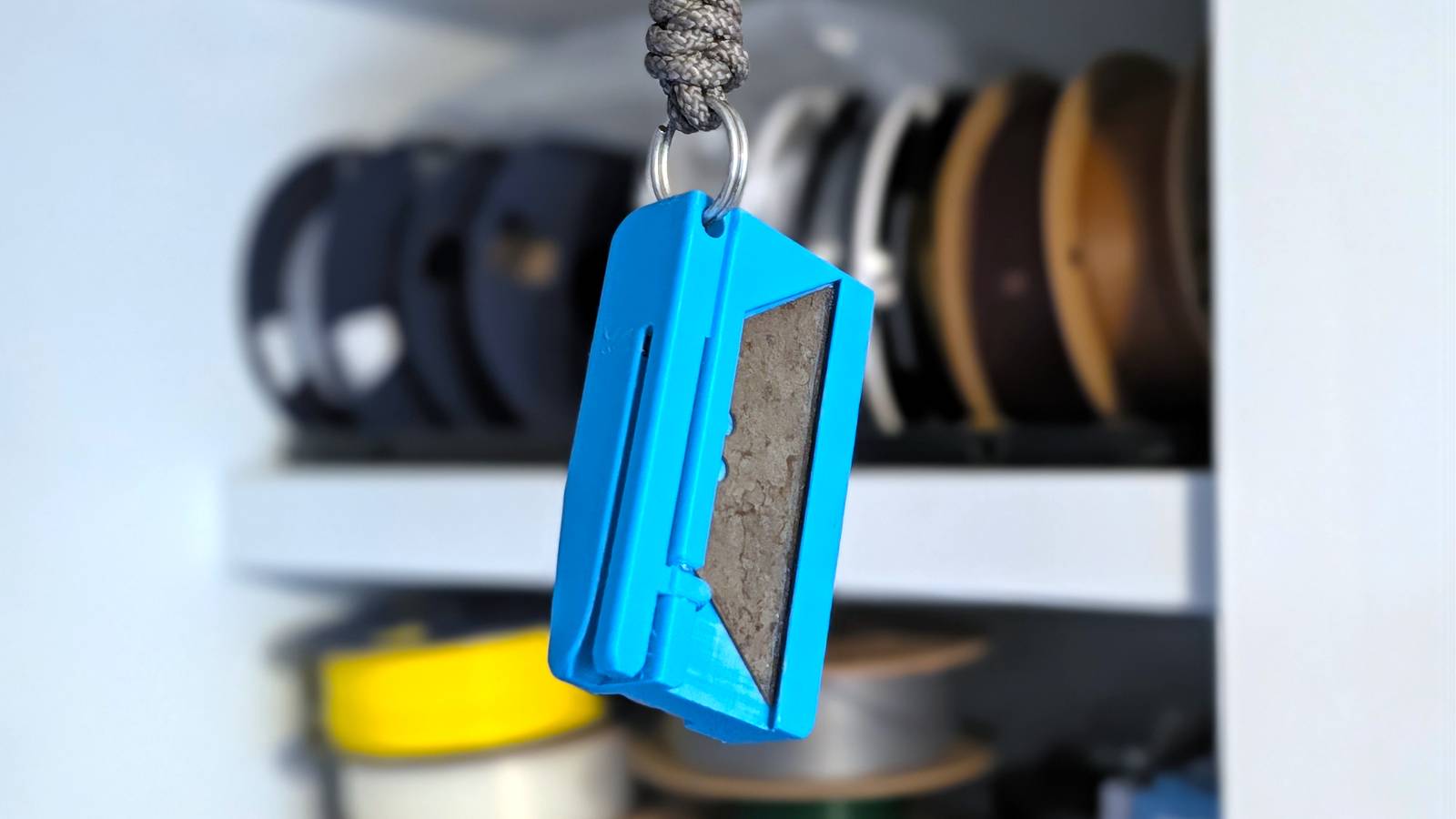
The breakthrough came when Fedewa stopped trying to build a "box" and started building a "holder." After weeks of carrying various prototypes, he realized that his actual daily needs were much narrower than his theoretical needs. The two tools he reached for most frequently were the compact utility knife and the screwdriver.
By focusing solely on these two items, the design constraints changed. Instead of creating a hollow space to house tools, he could design a solid, ergonomic frame that the tools integrated into directly. This third and final version utilized a 3D-printed utility knife design as the foundation. He then engineered a custom slot on the side to accommodate a standard keychain-style screwdriver.
The result was a masterpiece of minimalist utility. On one side, the screwdriver slides into a snug, form-fitting channel. To ensure the tool wouldn’t slide out during movement, Fedewa integrated a small magnet—not for mounting the device to a phone, but as a safety catch for the tool itself. On the opposite side, the utility knife is held in place by a mechanical catch. By pressing down on the lever, the blade carrier can be slid out for immediate use.
This final version achieved the "Goldilocks" dimensions of EDC gear. Measuring less than 1.5 inches wide, 2.5 inches long, and a mere 3/4 of an inch thick, it occupied no more space than a standard car key fob. It even included a lanyard hole, allowing it to be integrated into a larger keychain setup or carried as a standalone "worry stone" style tool. For the first time in the process, the gear felt like it belonged in a pocket rather than a drawer.
I Was Trying to Do Too Much
EDC Is All About the Essentials
The journey from a bulky, magnetic toolbox to a slim, two-tool carrier provided Fedewa with a profound lesson in product design and personal productivity: the trap of "just in case" thinking. In the early stages of the project, the desire to be prepared for every possible scenario—measuring a piece of furniture, jotting down a note, or extracting a splinter—led to a design that was too heavy to be useful.
The reality of EDC is that it is a highly personal reflection of an individual’s environment. For a professional who spends their time reviewing hardware and testing gadgets, the most common physical tasks are opening shipping boxes and tightening loose screws on device housings. By identifying these "high-frequency" tasks, Fedewa was able to discard the "low-frequency" tools that were cluttering his pockets.
This philosophy mirrors the broader evolution of technology. Just as smartphones consolidated cameras, maps, and music players into a single device, effective EDC design consolidates the most vital physical functions into the smallest possible footprint. The success of the final 3D-printed tool was not just in its physical dimensions, but in its accessibility. Because the tools are accessible directly from the exterior of the holder, the "cost" of using them—in terms of time and effort—is virtually zero.
Ultimately, the experiment serves as a reminder that the best gear is the gear you actually have with you. While a full toolbox in an Altoids tin is a fascinating engineering challenge, its utility is negated if it is left at home because it is too bulky to carry. By leveraging 3D printing to iterate rapidly, Fedewa was able to move past the fantasy of total preparedness and arrive at a solution that fits the reality of his daily life. For those looking to upgrade their own "phone, wallet, keys" routine, the lesson is clear: identify your most frequent needs, ignore the "just in cases," and build—or buy—around the essentials.
 Tech Tutorials & How-To Guides
The Digital Sanctuary: Why Linux Is Ironically the Best Haven for Classic Windows Enthusiasts
For many technology users who came of age during the late 1990s...
 Tech Tutorials & How-To Guides
Netflix Expands November Library With High-Stakes Thrillers and Award-Winning Classics
As the autumn chill settles in and the entertainment industry shifts its...
 Tech Tutorials & How-To Guides
From Satire to Slapstick: A Curated Selection of Netflix Comedies to Cure the Workday Blues
In the modern professional landscape, the transition from a high-stress office environment...







