

Furthermore, the 3.5mm jack is a "dumb" port in the best possible sense. It requires no pairing process, no firmware updates, and no batteries. It provides a high-fidelity signal that does not suffer from the lossy compression inherent in most Bluetooth connections. In a world where "planned obsolescence" is the norm, the 3.5mm jack remains a symbol of "it just works" technology, bridging the gap between a vintage stereo and a modern laptop.
RCA Ports: The Enduring Simplicity of the 1930s
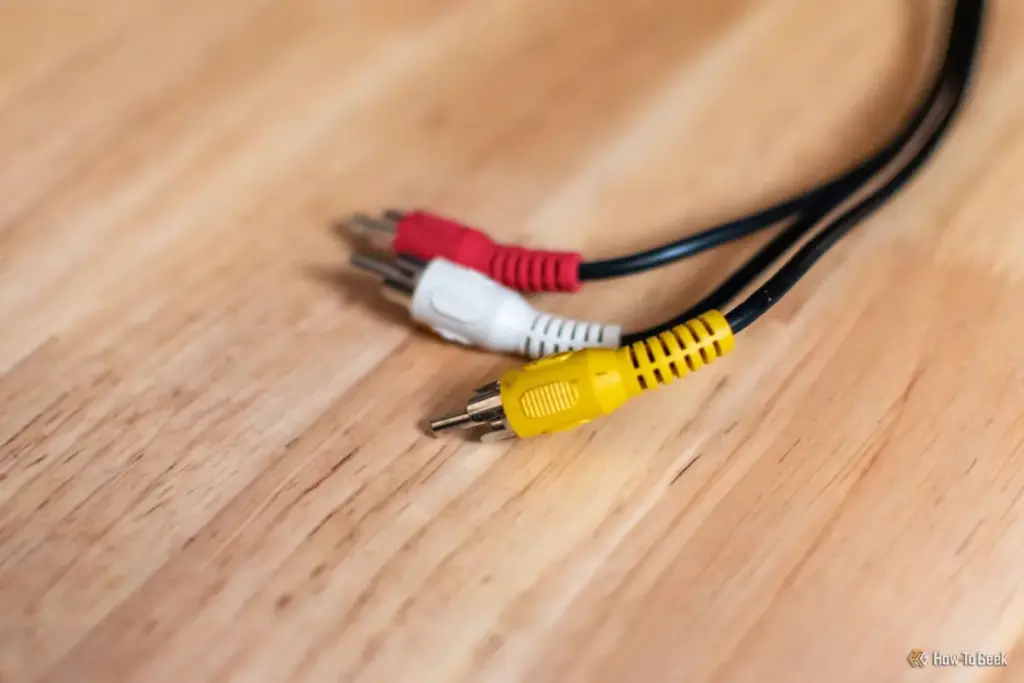
Named after the Radio Corporation of America, which introduced them in the late 1930s, RCA connectors were originally designed to allow phonographs to be connected to radio receivers. For decades, they were the primary way we connected VCRs, DVD players, and gaming consoles to our televisions, typically color-coded in yellow, red, and white.
While HDMI has largely taken over the video duties of the RCA cable, the port remains indispensable in the world of high-end audio. You will still find RCA jacks on the back of modern subwoofers, mixers, and high-fidelity receivers. Their design—a simple friction-fit plug with a central signal pin and an outer grounding ring—is practically indestructible.
RCA ports survive because they are inexpensive to manufacture and provide a reliable connection for "line-level" audio. In the audiophile community, where the purity of the signal path is paramount, the simple analog connection of an RCA cable is often preferred over digital alternatives that require complex processing.

The XLR Port: The Professional’s Choice
Introduced in the 1950s by James H. Cannon, the XLR port (originally the "Cannon X" series) is the gold standard for professional audio. Its three-pin design is not just a matter of aesthetics; it allows for "balanced" audio. By sending two copies of the audio signal out of phase with one another, any electromagnetic interference picked up along the cable can be cancelled out at the receiving end. This makes XLR essential for long cable runs in noisy environments like concert stages or recording studios.
The XLR port also features a mechanical latch, ensuring that a cable cannot be accidentally unplugged—a critical feature during a live broadcast or performance. Additionally, the port supports "Phantom Power," a 48V DC current sent through the cable to power condenser microphones. This eliminates the need for external power supplies or batteries for high-quality recording equipment. Even as digital recording becomes the norm, the physical interface between the microphone and the interface remains firmly rooted in the 1950s.
TOSLINK Optical: Isolation Through Light
In 1983, Toshiba introduced TOSLINK (Toshiba Link), a fiber-optic connection designed to carry digital audio signals. It is easily recognized by its trapezoidal shape and the eerie red glow of the LED inside the port. While it has been partially eclipsed by HDMI’s ability to carry high-bandwidth formats like Dolby Atmos, TOSLINK remains a critical tool for audio enthusiasts.
 Tech Tutorials & How-To Guides
The Great Big-Box Battle: Evaluating the Power Tool Ecosystems of Ryobi, Craftsman, and Hyper Tough
For the modern homeowner or the burgeoning DIY enthusiast, the walk down...
 Tech Tutorials & How-To Guides
Haiku OS R1/Beta 6: A Compelling Case for Breathing New Life into Aging Hardware
For years, the standard recommendation for any computer deemed too slow for...
 Tech Tutorials & How-To Guides
Unlocking the Hidden Diagnostic Power of Amazon Fire TV: A Deep Dive into Developer Tools and System Transparency
The Amazon Fire TV ecosystem has evolved from a simple portal for...







