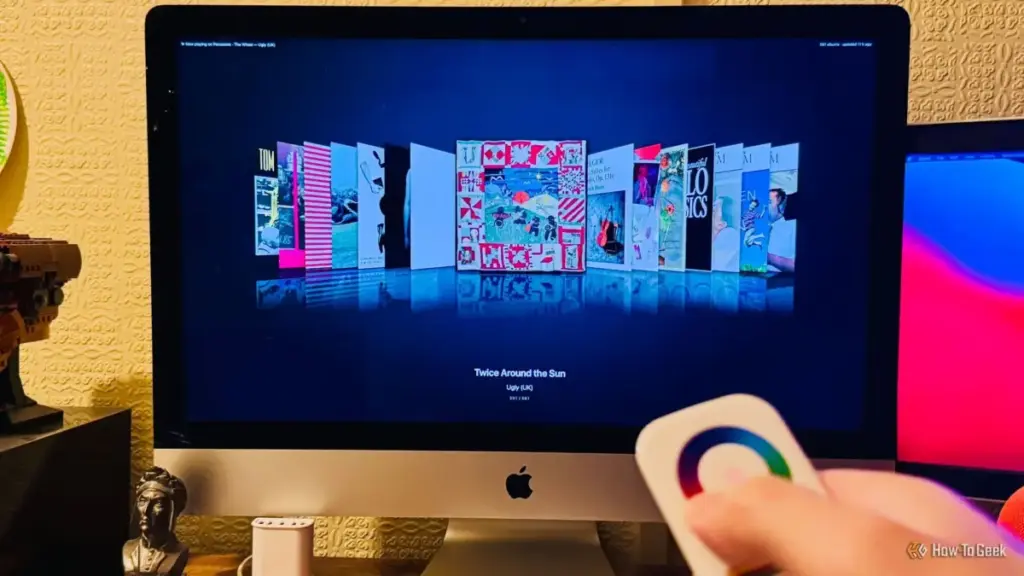
In the annals of personal technology, few interfaces have evoked as much tactile joy as the original Apple iPod click wheel. For a generation of music lovers, the act of navigating a library was as much a part of the experience as the music itself. While the world has largely moved on to the utilitarian efficiency of streaming lists and glass touchscreens, the nostalgia for that physical connection remains potent. For Adam Davidson, an engineer and long-time technology writer, that nostalgia recently served as the catalyst for a unique hardware hacking project that bridges the gap between mid-2000s aesthetics and modern smart home power.
By repurposing a forgotten Zigbee remote and leveraging the capabilities of Home Assistant and generative AI, Davidson has managed to recreate the legendary "Cover Flow" experience on a grand scale. The result is what he describes as the "world’s biggest iPod"—a 27-inch 5K display that brings the physical sensation of the click wheel back to life.
The Lasting Legacy of Cover Flow
To understand the motivation behind the project, one must look back at what made the iPod era so distinctive. Before it was a standard feature in iTunes and macOS Finder, Cover Flow was a third-party innovation designed to browse digital files with the same visual flair as flipping through a physical crate of vinyl records. When Apple integrated it into the fifth-generation iPod and subsequent iPhones, it became a hallmark of the company’s "skeuomorphic" era—a time when digital interfaces mimicked the physical world.
Cover Flow presented a three-dimensional carousel of album art. A single cover stood front and center, while others were stacked at an angle to the left and right, complete with subtle reflections that made the screen look like a polished glass surface. For many, the highlight was the synergy between the software and the hardware. Spinning a thumb around the iPod’s click wheel allowed users to "flick" through their collection, watching the art fly past with a smoothness that felt almost magical at the time.
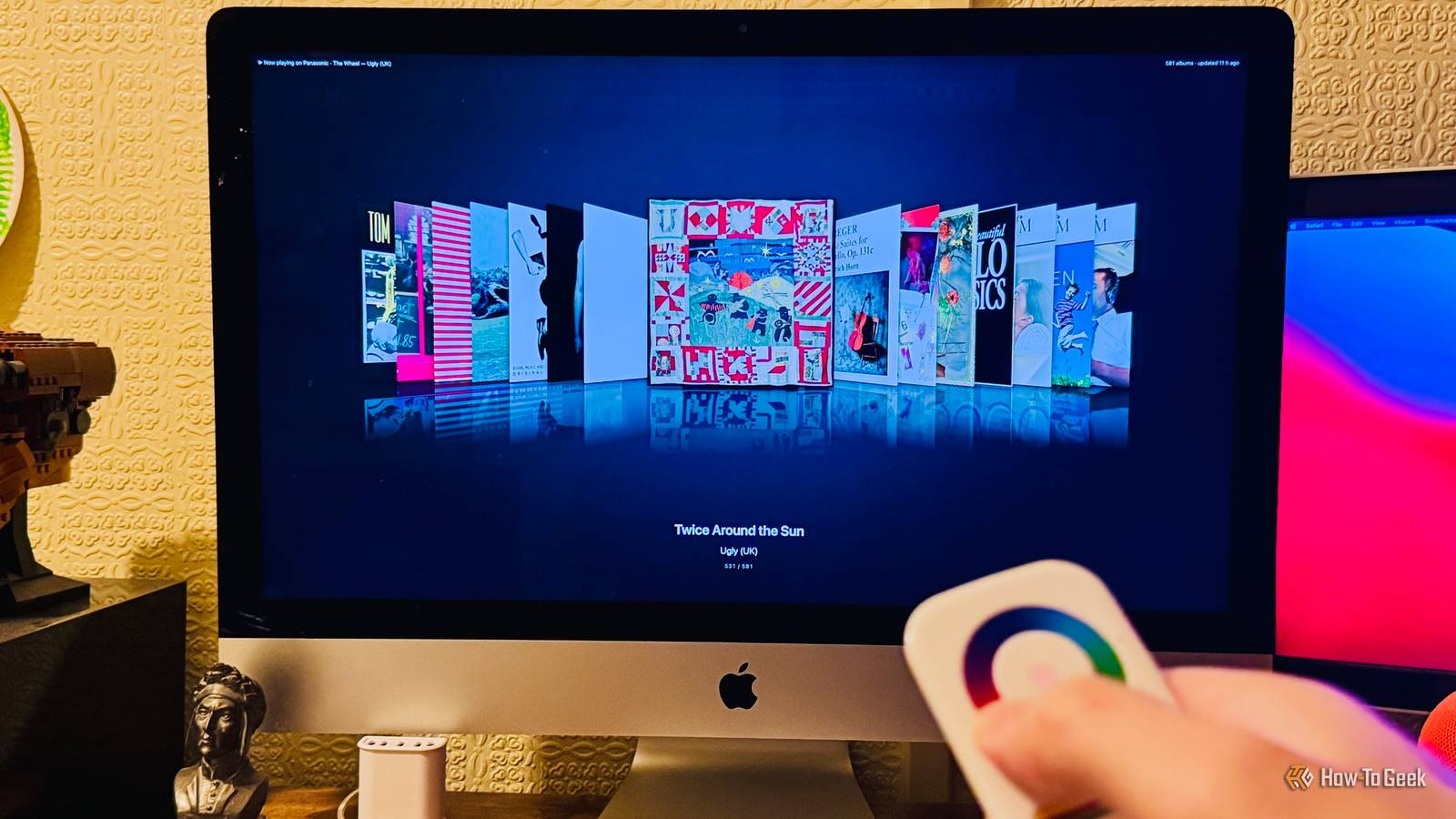
However, as Apple shifted toward the flatter, more minimalist design language of iOS 7 and beyond, Cover Flow was gradually phased out. Today, Apple Music users navigate through static grids and vertical lists. The click wheel is a relic of the past, replaced by the haptic but fundamentally different experience of the modern smartphone. For Davidson, this loss was more than just aesthetic; it was a loss of the "joy" of discovery.
An Unexpected Discovery in a Desk Drawer
The path to resurrecting this interface began not with a dedicated plan, but with a piece of "junk" hardware. While cleaning out a drawer, Davidson rediscovered an old Zigbee smart home remote manufactured by MIBOXER. Originally purchased during an attempt to build a DIY universal remote to replace a Logitech Harmony setup, the device had been relegated to storage because it lacked the specific buttons needed for television control.
The remote was designed primarily for smart lighting. It featured standard buttons for power, brightness sliders, and color temperature toggles. However, its most prominent feature was a large, circular touch-sensitive ring at the top—a color wheel intended to let users dial in specific hues for RGB light bulbs.
"When I spotted the remote in my drawer, the color wheel immediately made me think of the click wheel on an old iPod," Davidson noted. The physical similarity sparked a question: Could a device meant for changing light colors be remapped to navigate a digital music library?
 Tech Tutorials & How-To Guides
Paramount+ Strengthens Its Streaming Position with a Curation of Definitive Modern Film Epics
In the increasingly crowded landscape of digital streaming, the competition for subscriber...
 Tech Tutorials & How-To Guides
Exploring the Frontiers of the Unknown: Three Essential Science Fiction Films to Stream on Netflix This Weekend
As the autumn of 2026 unfolds, the digital landscape of the American...
 Tech Tutorials & How-To Guides
The Case for the Cathode Ray Tube: Why Your Old Monitor is a Treasure, Not Trash
In an era defined by ultra-thin OLED panels, 4K resolutions, and refresh...