
The Technical Foundation: Home Assistant and Zigbee2MQTT
The bridge between the physical remote and the digital interface was Home Assistant, the open-source platform that has become the gold standard for advanced smart home automation. Davidson connected the remote to his server using Zigbee2MQTT, a bridge that allows Zigbee devices to communicate with a home automation network with high levels of granularity.

The first step was determining exactly what kind of data the remote was sending. By monitoring the device’s output, Davidson discovered that the color wheel produced a numerical value ranging from 0 to 254, representing the specific position of a finger on the ring. As a thumb moved around the wheel, the remote sent updated readings approximately three times per second.
This data provided the "raw materials" for a click wheel. By calculating the difference between two consecutive readings, Davidson could determine the direction and speed of the user’s scroll. There were technical hurdles, of course—such as handling the "wrap-around" point where the value jumps from 254 back to 0 at the top of the wheel—and the remote’s tendency to go silent after 29 readings to preserve battery life. However, for a stationary desk setup, these were manageable constraints.
Engineering the Interface with AI Collaboration
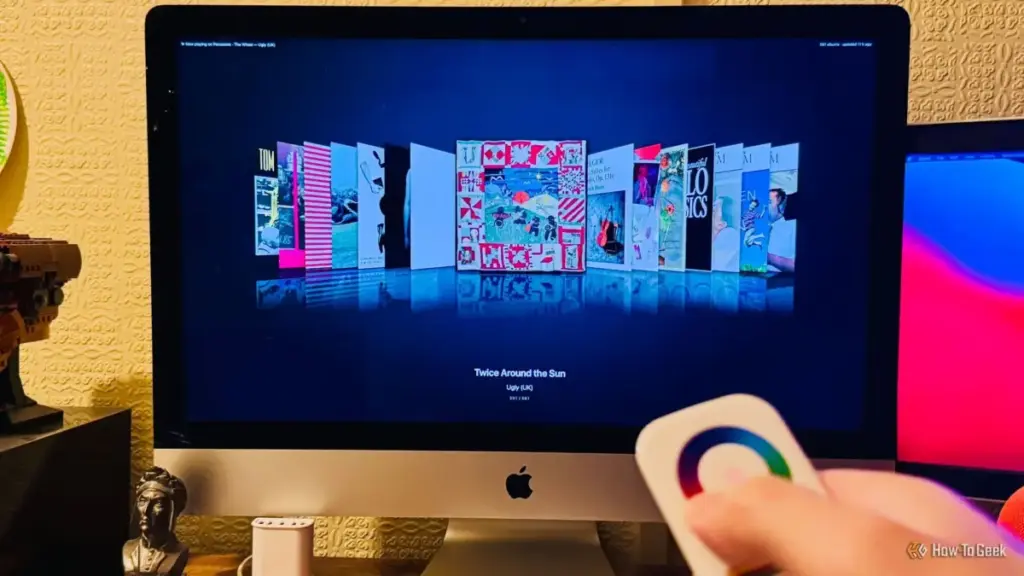
While the hardware side was functioning, the software side required a custom dashboard that could replicate the specific look and feel of Cover Flow. Rather than spending weeks coding a custom solution from scratch, Davidson turned to Claude Code, an AI development tool.
The collaboration highlights a growing trend in the "maker" community: using generative AI to handle the heavy lifting of complex coding tasks. Davidson provided the vision and the parameters, while the AI generated the logic. The system was designed to pull album data from Music Assistant, a popular Home Assistant integration that aggregates music from various streaming services and local libraries. To ensure a premium look, the code was instructed to filter out any albums lacking high-resolution cover art or those containing fewer than five tracks.
The development process was iterative. The initial version, which relied on Home Assistant to process the math for each scroll movement, resulted in a "jumpy" experience. To solve this, the logic was moved directly into the dashboard card itself. This allowed the interface to read the remote’s data and move the album covers by tiny fractions, creating the illusion of fluid motion.
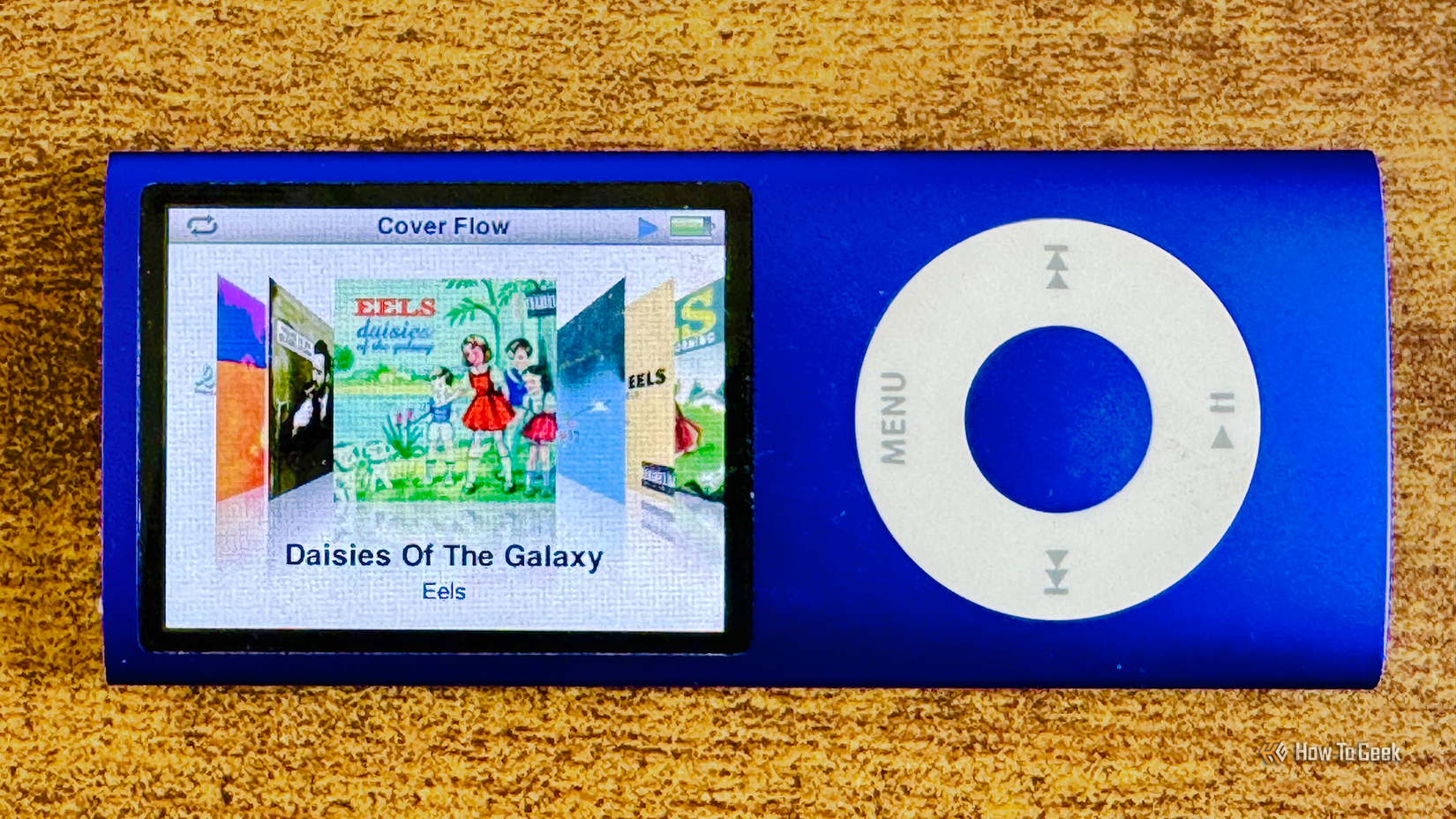
Perhaps the most impressive addition was the implementation of "momentum." Much like the original iPod, if a user spins the wheel quickly and lets go, the albums on the screen continue to glide past, gradually slowing to a stop. This level of polish transformed the project from a simple remote-control hack into a professional-grade interface.
 Tech Tutorials & How-To Guides
The Profanity Protocol: How One Engineer Used AI and Smart Home Tech to Break a Sedentary Habit
For many remote workers, the transition from a traditional office to a...
 Tech Tutorials & How-To Guides
Open-Source Innovation: Transforming Modern Living Through Versatile ESP32-Based Smart Home Integrations
The landscape of the modern smart home is often dominated by a...
 Tech Tutorials & How-To Guides
From Pixels to Plastic: How Major Game Studios are Embracing the Official 3D Printing Movement
The relationship between video games and 3D printing has long been defined...







