
As the autumn of 2026 unfolds, the digital landscape of the American streaming giant Netflix remains a fascinating mirror of contemporary tastes and historical curiosities. While the current domestic "Top Five" list is largely grounded in the gritty realities of Earth—led by Jacob Tremblay’s transformative performance as a young Ted Kaczynski in the biographical drama Unabomber and the relentless momentum of Tyler Perry’s Doing Life—there is a growing appetite for stories that look beyond our immediate horizon. While true-crime aficionados are currently captivated by the mesmerizing nonfiction narrative of The Widower: ‘Til Death Do Us Part, a different kind of escapism is quietly trending among genre enthusiasts.
For those seeking to trade the claustrophobia of true crime for the expansive, often haunting vistas of the future, Netflix has curated a trio of science fiction titles that represent the genre’s versatility. From the psychological depths of deep-space exploration to the high-concept collision of Western tropes and extraterrestrial threats, these selections offer more than just visual spectacles; they provide a profound look at the human condition through the lens of the "what if."
Ad Astra: A Melancholy Journey Through the Silent Void
Writer-director James Gray, a filmmaker long celebrated for his meticulous attention to character and atmosphere in works like The Lost City of Z, brought a singular vision to the 2019 psychological epic Ad Astra. In a landscape often dominated by the bombast of space operas, Ad Astra stands as a quiet, introspective outlier. It shares a thematic DNA with what critics have occasionally dubbed the "sadstronaut" subgenre—films like Robert Pattinson’s High Life or Christopher Nolan’s Interstellar—where the vastness of the cosmos serves as a backdrop for profound personal isolation and the search for paternal closure.

The narrative centers on Major Roy McBride, portrayed with a disciplined, simmering intensity by Brad Pitt. McBride is an astronaut whose pulse famously never rises above 80 beats per minute, even in the face of mortal peril. This stoicism is put to the ultimate test when he is informed that a series of catastrophic power surges threatening the stability of life on Earth may be linked to the "Lima Project." This was a deep-space mission led by his father, Clifford McBride (Tommy Lee Jones), who disappeared sixteen years prior while searching for intelligent life near the orbit of Neptune.
The journey that follows is as much a psychological descent as it is a physical ascent. Roy is dispatched on a clandestine mission that takes him from a commercialized Moon—complete with tourist traps and lunar pirates—to a desolate, subterranean base on Mars, and finally into the lonely reaches of the outer solar system. Along the way, he is aided by figures who represent the ghosts of his father’s past, including an aging Colonel Pruitt (Donald Sutherland) and the daughter of a former crew member (Ruth Negga), each providing pieces of a puzzle that Roy isn’t entirely sure he wants to solve.
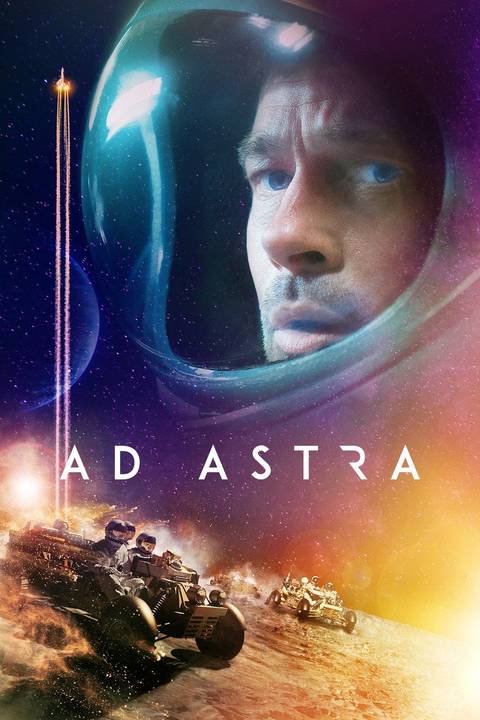
Ad Astra is a visual feast, captured with haunting clarity by cinematographer Hoyte van Hoytema. It eschews the "brain-melting" interdimensional complexities of Interstellar in favor of a more linear, though no less demanding, emotional arc. The film’s technical achievements were recognized with an Academy Award nomination for Best Sound Mixing, a testament to its ability to use the silence of the vacuum as a powerful narrative tool. With a critics’ score of 83% on Rotten Tomatoes, it remains a high-water mark for "hard" science fiction that prioritizes the internal life of its protagonist over the mechanics of the starships he inhabits.
 Tech Tutorials & How-To Guides
Netflix Expands October Streaming Lineup With High-Stakes Sports Dramas and Darkly Humorous Animation
As the autumn chill settles in and the evening air turns crisp,...
 Tech Tutorials & How-To Guides
Beyond the Command Line: How btop is Redefining System Monitoring for the Modern Linux User
The terminal has long been the sanctuary of the Linux power user—a...
 Tech Tutorials & How-To Guides
Low-Cost Innovation: How DIY ESP32 Projects are Transforming Smart Home Economics and Sustainability
The landscape of home automation has undergone a radical shift over the...







