In the current landscape of digital transformation, every modern enterprise operates on a foundation of credentials. These digital keys—ranging from API tokens and database passwords to SSH keys and certificates—are the connective tissue of the modern tech stack. They allow humans, automated systems, and increasingly, artificial intelligence agents to connect securely to data and services. However, as the infrastructure supporting these connections grows more complex, the layer of credentials protecting them is expanding faster than most security teams can monitor.
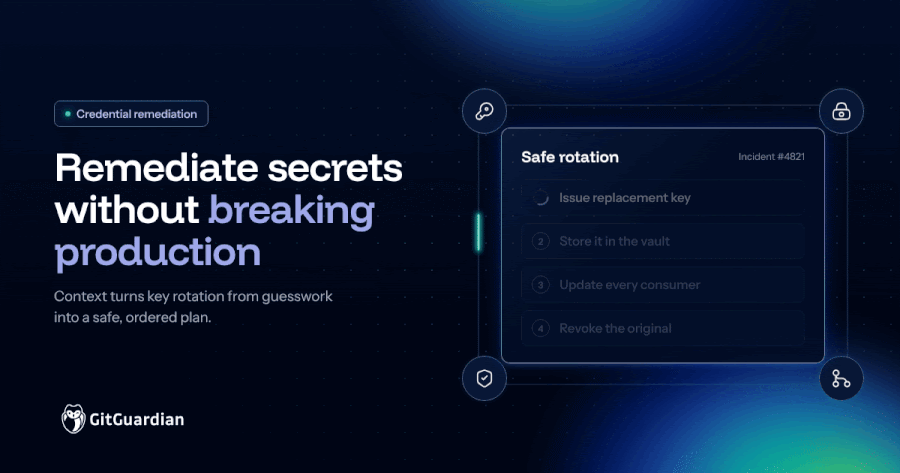
GitGuardian, a leader in the secrets security space, identifies three pillars essential to securing this layer: Detection, Remediation, and Prevention. While many organizations have made significant strides in the first phase—detecting when a secret has been exposed—the journey often stalls at the second phase. Credential remediation remains the stage where security programs frequently bog down, paralyzed by a lack of context and the fear of operational disruption.
The challenge is not merely knowing that a secret exists in the wrong place, but understanding the implications of its removal. This difficulty is underscored by recent research from GitGuardian’s State of Secrets Sprawl 2026 report, which revealed a staggering statistic: 64% of valid secrets discovered in 2022 were still active in January 2026. This four-year window of exposure highlights a systemic failure in the remediation process that leaves organizations vulnerable to exploitation long after a leak has been identified.
Why Credential Remediation is So Hard for So Many Teams
The primary reason remediation proves so difficult is a fundamental disconnect between those who find the problem and those who have the power to fix it. A security engineer monitoring a scanning platform might receive an alert that a sensitive API key has been committed to a public repository. They can verify that the key is valid and poses a high risk, but they rarely possess the granular knowledge of the production environment to know exactly what that key does.
In most large-scale organizations, the security engineer cannot immediately determine which microservices will fail or which customer-facing features will break if a credential is revoked. Because breaking production is often viewed as a higher immediate risk to the business than the theoretical possibility of a breach, decision paralysis sets in. Security teams find themselves embarking on time-consuming internal investigations just to answer basic questions about ownership and impact.
The developers, who are the natural owners of these keys, are often insulated from these security concerns by their own high-pressure workflows. Tasked with shipping new features and maintaining uptime, a developer receiving a vague security alert—often containing little more than a file path—may view it as a distraction. Without immediate, actionable context, these requests frequently sink to the bottom of the engineering backlog.
Furthermore, the sheer scale of modern enterprises exacerbates the issue. In a mature organization, information about a single credential may be siloed across multiple departments. Application security (AppSec) teams monitor the code where keys are utilized; Identity and Access Management (IAM) teams govern the identities that were issued those keys; and Platform Engineering teams manage the vaults where the secrets should have been stored in the first place. Adding to this complexity, endpoint security teams are now tracking secrets stored on individual workstations, as software supply chain attacks increasingly target plaintext credentials on developer machines. When these disparate groups do not communicate, the remediation process slows to a crawl.
Action Before Investigation Invites Downtime
The tension between security and availability is at the heart of the remediation struggle. Mature organizations recognize that addressing leaks before they become active breaches is the ideal path, yet the average time to remediate remains measured in weeks rather than hours. This delay is largely a function of how quickly responders can gather and verify information.
Before any action can be taken, responders must determine the scope of the credential’s access. For instance, consider two different cloud credentials. The first might grant read-only access to a single, non-sensitive storage bucket. The second could be a root-level administrative key with the power to delete production databases. While both are "leaked secrets," the urgency and the response strategy for each are vastly different.
 Cybersecurity Basics & Security News
AI vs. AI: How Researchers Used Claude Opus 5 to Breach OpenAI’s Internal Systems
In a sophisticated demonstration of the "double-edged sword" nature of generative artificial...
 Cybersecurity Basics & Security News
LiteLLM Supply Chain Breach: How a Leaked Master Key Led to the Distribution of Malicious Python Packages
The cybersecurity landscape has been served a stark reminder of the long-tail...
 Cybersecurity Basics & Security News
Cybersecurity Researchers Identify New Wave of Targeted Attacks Against Qlik Sense Servers
In a significant escalation of activity targeting enterprise data visualization infrastructure, cybersecurity...