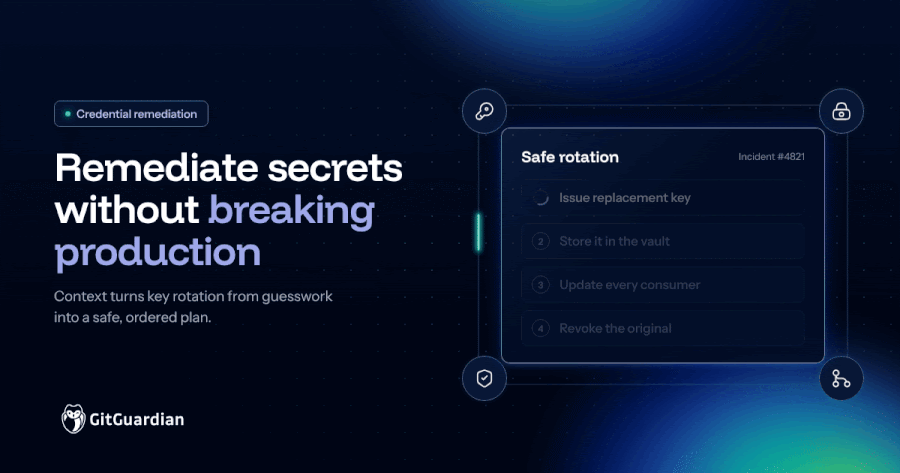
However, many organizations are still in the process of transitioning to vaulted environments. In these cases, the order of operations is vital. The team must first issue a replacement credential and store it securely. Then, every occurrence of the plaintext secret must be replaced with a call to the vault or the new credential value across all consumers. Only after the new code has been deployed and the system’s health has been verified should the original, compromised key be revoked. Reversing these steps—revoking the key before the new one is fully deployed—turns a routine security fix into a self-inflicted incident.
Verify the Fix and Keep the Evidence
The remediation process is not complete until there is verifiable proof that the danger has been removed. This means confirming that the old credential no longer authenticates with the service provider. Closing a ticket simply because a developer said they "fixed it" is a common pitfall.
In some cases, a team might rotate a key in one system while the old key remains active in another. This often happens when teams operate in silos and lack a unified view of where a single credential might be used. A robust remediation program requires a final verification step to ensure that no "ghost" credentials remain active in the environment.
Maintaining a detailed incident record is also essential for long-term security health. These records show auditors and leadership how long remediation took, who was involved, and what patterns are emerging. If a specific team or user is repeatedly leaking credentials, it may point to a need for better training or a more fundamental change in how that team handles configuration files.
One Credential, Start to Finish with GitGuardian
To illustrate the complexity of this process, GitGuardian points to a common real-world scenario involving a Kubernetes application. In this instance, a developer troubleshooting a connection issue might copy an API key from a secrets manager into a local configuration file for testing. If that local file is accidentally committed to a repository, the secret is now exposed.
Using GitGuardian’s platform, the leak is detected the moment the commit is made. An automated validity check is triggered, and a Secret Analyzer identifies the permissions associated with the key. For organizations using full platform integrations, a "Fingerprint Matching" feature can even tie the committed value back to the specific vaulted copy in the enterprise’s secrets manager.
With this context, the security team can approach the developer with a complete picture: "This key is valid, it has administrative access to our external service, and it is currently being used by our production Kubernetes cluster." This level of detail eliminates the guesswork and allows the rotation to proceed with confidence. Everyone involved can track the progress of the replacement PR, ensuring that the old key is only revoked once the new system is stable.
From Fixing to Preventing
While remediation is about reducing the risk of current exposures, it also serves as a diagnostic tool for the organization. By analyzing why and where secrets are leaking, companies can identify the systemic weaknesses in their development lifecycle.
The process of remediation, though difficult, is the bridge between reactive security and proactive prevention. As organizations refine their ability to rotate and revoke secrets with minimal friction, they build the resilience necessary to handle the ever-expanding credential layer. The final stage of this journey involves moving security further "left," stopping leaks before they ever reach a repository—a topic that remains the ultimate goal for modern DevSecOps teams.
 Cybersecurity Basics & Security News
The Invisible Attack Surface: Why Comprehensive Detection is the New Baseline for Credential Security
In the modern enterprise, credentials have become the fundamental currency of operations....
 Cybersecurity Basics & Security News
OpenSSH "SSHole" Vulnerability and the Persistence of Simple Misconfigurations Lead Weekly Cybersecurity Briefing
The cybersecurity landscape in late 2026 continues to demonstrate a paradoxical truth:...
 Cybersecurity Basics & Security News
Critical Cryptographic Flaw in GoBalance Load Balancer Exposes Dark Web Sites to Takeover Attacks
A significant security vulnerability discovered in GoBalance, a specialized load-balancing tool widely...