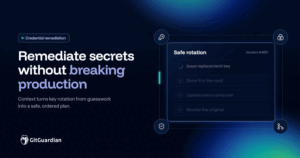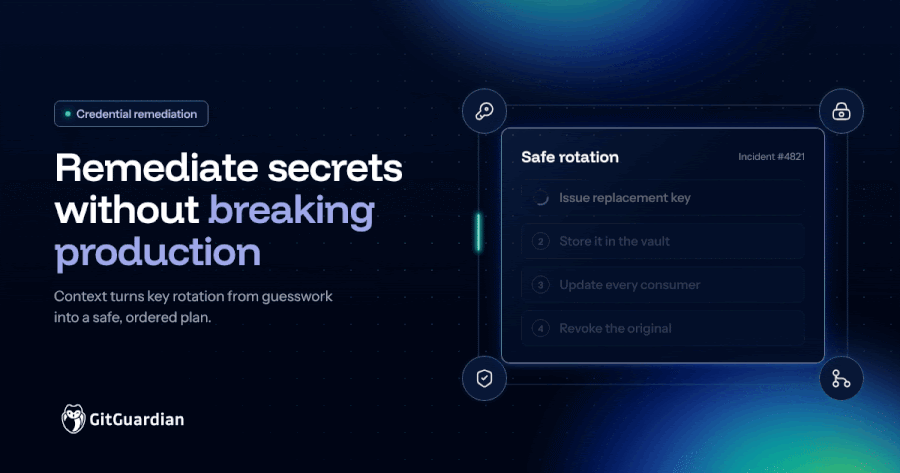
The ultimate goal is the rapid removal of the leaked key, but this must be done without interrupting the production pipeline. If a security team causes a major outage by revoking a key without proper coordination, they will face significant internal resistance the next time they request a rotation. This "once bitten, twice shy" dynamic can severely damage the security culture of a company, making it even harder to enforce safety standards in the future.
Prioritize by Impact, Not Just Validity
Traditionally, the first step in triage is checking if a credential is valid. While validity is a critical signal, it is an incomplete one. Relying solely on validity can lead to a false sense of security. GitGuardian’s research indicates that validity-only triage misses approximately 46% of critical secrets, such as custom API tokens and SSH keys, because these specific types of credentials often cannot be verified through automated calls to a central provider.
Effective remediation requires a living risk score that accounts for multiple factors: What can the secret access? Where was it exposed? Was it leaked on the public internet or just an internal Slack channel? As new information is gathered, this risk score must be adjusted in real-time. Much like a CVSS score for a software vulnerability, the initial assessment is just a starting point; the actual risk to the organization depends on the specific context of the deployment.
By centralizing this information, security teams can move away from manual spreadsheets and toward a more automated, high-velocity response. Having a unified view allows responders to see the boundaries of the systems they are touching and make informed decisions about whether a secret needs to be rotated in the next sprint or revoked within the next minute.
Route the Work to the Right People Who Can Push the Change
A major hurdle in the remediation workflow is the "over the fence" mentality, where security teams send a ticket to developers and consider their job done. For remediation to be successful, the request must be routed to the specific individual or team with the authority to change the code.
Any request sent to a developer or platform team should be "pre-triaged." It should include the validity status, the known locations of the exposure, and a list of dependencies. If the person receiving the ticket understands the business impact and the technical requirements for the fix, they are far more likely to act quickly.
In large organizations, finding the right person can be a challenge. It requires leveraging commit attribution, source metadata, and integration with existing IAM systems. Once the work is routed, communication must be a two-way street. Developers may need guidance on how to rotate a specific type of key without causing a service interruption. Centralizing the tracking of these tickets ensures accountability and provides a clear audit trail for compliance and insurance purposes.
Rotate, Revoke, and Vault: The Order Matters
Security is often described through the CIA triad: Confidentiality, Integrity, and Availability. In the context of credential remediation, maintaining "Availability" is just as important as protecting "Confidentiality." To achieve this, organizations must follow a specific, disciplined order of operations when fixing a leak.
For organizations with high security maturity, the process is streamlined by the use of secrets managers or vaults. If a production application is already configured to consume credentials from a vault, rotating the secret is straightforward. Once the new secret is updated in the vault, the old, leaked version can be revoked at the source, rendering any plaintext copies in the codebase harmless.
 Cybersecurity Basics & Security News
Cursor Identifies Stolen Fireworks AI Credentials as Root Cause of Malicious Extension Incident
In a detailed post-mortem that highlights the growing complexities of AI supply...
 Cybersecurity Basics & Security News
CERT-UA Issues Urgent Warning Over Massive Compromise of Dahua Video Surveillance Systems via P2P Vulnerabilities
The Computer Emergency Response Team of Ukraine (CERT-UA) has issued a critical...
 Cybersecurity Basics & Security News
OpenSSH "SSHole" Vulnerability and the Persistence of Simple Misconfigurations Lead Weekly Cybersecurity Briefing
The cybersecurity landscape in late 2026 continues to demonstrate a paradoxical truth:...