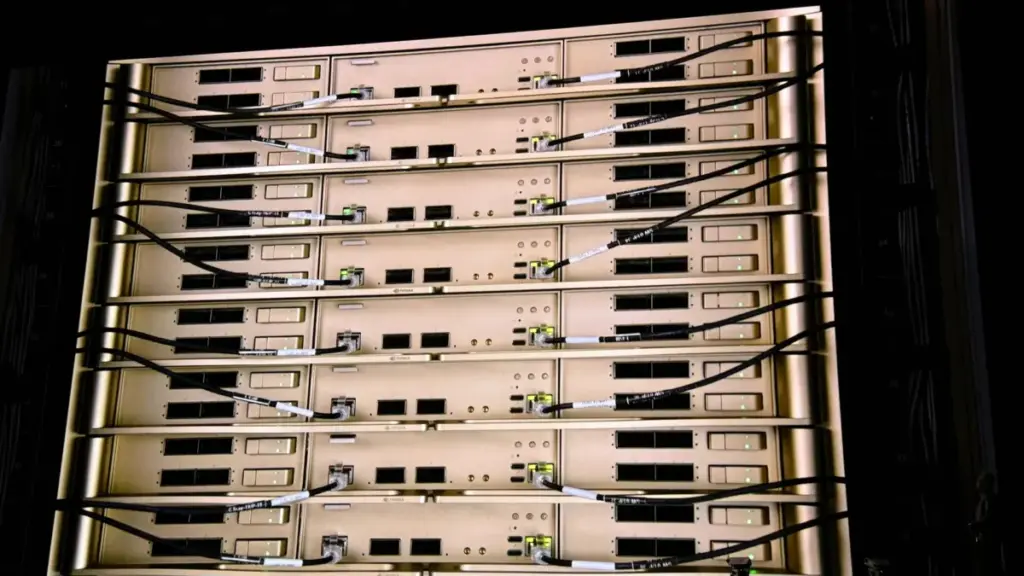
As Nvidia prepares to roll out the Rubin platform to the wider market, the Kessel project serves as a high-profile example of the platform’s versatility. While most of Nvidia’s customers will opt for the standard NVL72 configurations to power their cloud services and enterprise AI applications, the existence of a SpaceX-specific variant demonstrates that the Rubin architecture can be adapted for the most demanding and unconventional environments imaginable. For Nvidia, supporting such a deep level of customization for a high-profile client like Musk provides valuable insights into the limits of their own technology, potentially influencing future iterations of the NVLink interconnect and rack designs.
The broader implications for the tech industry are significant. If SpaceX successfully deploys Rubin-class AI hardware in orbit, it could trigger a new era of space-based services. This isn’t just about training LLMs in the stars; it’s about the infrastructure of the future. From autonomous satellite maintenance to real-time global surveillance and advanced weather forecasting, the combination of high-performance AI and orbital deployment opens doors that were previously closed by the limitations of hardware durability and processing power. The Kessel project, with its 84-layer PCB and solid-state ambitions, is a clear signal that the boundaries between aerospace engineering and high-end data center design are blurring.
Ultimately, the development of the Kessel system reflects the intersection of two of the most transformative technologies of the 21st century: reusable rocketry and generative AI. By re-engineering Nvidia’s top-tier hardware to survive and thrive in the vacuum of space, SpaceX and xAI are not just building a faster computer; they are building a new platform for intelligence that is untethered from the Earth. As the project moves from the design phase toward actual implementation, the tech world will be watching closely to see if this radical departure from traditional interconnect architecture becomes the new standard for specialized, high-reliability AI compute. The success of the 84-layer PCB and the solid-state Kessel rack could very well determine the pace at which the next generation of AI is scaled, both on the ground and in the heavens.
 Hardware Reviews & PC Building
Asus ROG Xbox Ally X20 tested: Same performance, more comfortable, and a glorious OLED screen
This milestone release comes at a time when the Republic of Gamers...
 Hardware Reviews & PC Building
Apple Unveils First Touchscreen MacBook Pro Models with OLED XDR Displays and M5 Series Silicon
In a move that marks one of the most significant architectural and...
 Hardware Reviews & PC Building
Corsair HX1000i Shift Crystal: A High-Performance Digital Power Supply That Puts Its Internals on Display
In the modern landscape of enthusiast PC building, the power supply unit...