
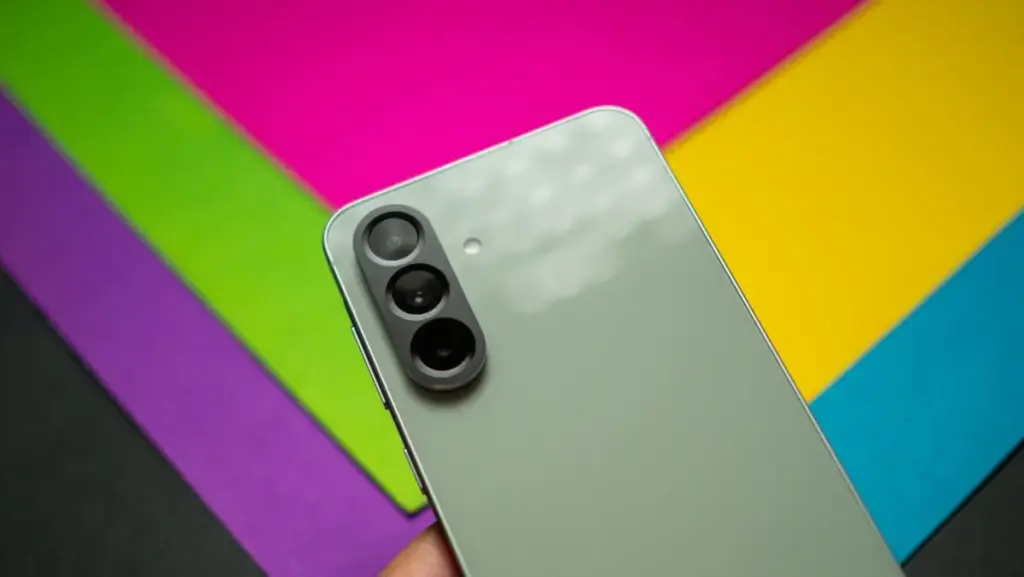
The primary driver of this cost spike is the semiconductor industry, specifically the price of memory chips. Reports indicate that memory prices have skyrocketed in recent months, with DRAM and NAND flash components now accounting for more than half of the total production cost for some of Samsung’s more affordable models. In the past, memory was a manageable expense, but the global surge in demand for high-performance hardware—largely driven by the boom in artificial intelligence—has redirected supply and pushed prices to historic highs.
The Impact of the AI Boom on Mobile Components
The rise of artificial intelligence has had an unintended side effect on the consumer electronics supply chain. Manufacturers of essential components, including printed circuit boards (PCBs) and multilayer ceramic capacitors (MLCCs), are increasingly prioritizing the production of hardware destined for AI servers and high-end data centers. These components are far more lucrative than the ones used in entry-level smartphones, leading to a supply squeeze for the mobile industry.
Samsung, which is both a device manufacturer and a major semiconductor producer, is in a unique position to see these trends firsthand. Even with its internal supply chain, the mobile division must compete for resources. If the company can make a higher profit by selling a memory chip to an AI server client or by putting it into a $1,200 Galaxy S24 Ultra, there is little incentive to allocate that same chip to a $200 Galaxy A series phone that yields minimal profit.
By steering these scarce and expensive components toward its higher-margin devices, Samsung is choosing quality of earnings over quantity of shipments. The Galaxy S and Galaxy Z series offer significantly higher average selling prices (ASPs), allowing Samsung to maintain its research and development budgets and satisfy shareholders even if total unit sales decline.
A Lowered Production Target for 2026
The reported 20% cut in A-series production is part of a broader trend of cautious manufacturing at Samsung. Earlier rumors suggested that the company might reduce its overall smartphone output by as much as 20% to 30% in the final quarter of the year. If these reports hold true, Samsung’s total production for 2026 will fall well short of its original target of approximately 270 million units.
Missing a production target of this magnitude is a rare occurrence for Samsung, a company that has historically used its massive scale to dominate the market. However, the current economic environment—characterized by inflation, high interest rates, and cautious consumer spending—has changed the calculus. Selling 270 million phones is less impressive if a large portion of those sales results in "break-even" or negative margins.
This shift also reflects a cooling of the overall smartphone market. While premium devices continue to see steady demand from affluent consumers, the "value" segment is increasingly crowded. Samsung is facing intense pressure not just from Apple at the top, but from Chinese manufacturers like Xiaomi, Oppo, and Transsion in the budget space. These competitors often operate with different cost structures and are aggressive in their pursuit of market share in emerging regions.
 Mobile Device Management (MDM) & Mobile OS
The Evolution of Ultra-Compact Power: UGREEN and Rolling Square Redefine the 65W GaN Charger Market
The landscape of mobile power and charging accessories has undergone a radical...
 Mobile Device Management (MDM) & Mobile OS
T-Mobile Rejects Deeper SpaceX Partnership, Citing Satellite’s Limitations and Strategic Misalignment
In the rapidly evolving landscape of global telecommunications, the intersection of terrestrial...
 Mobile Device Management (MDM) & Mobile OS
Samsung Galaxy Buds 4 Pro See Significant Price Cut in Early Black Friday Promotion as Sales Reach New Milestones
In the modern mobile landscape, the purchase of a flagship smartphone is...







