In the rapidly evolving landscape of global telecommunications, the intersection of terrestrial cellular networks and satellite-based connectivity has long been hailed as the next great frontier. However, during T-Mobile’s third-quarter 2026 earnings call, the carrier’s leadership made it clear that while they may be looking at the stars, their feet—and their business strategy—remain firmly planted on the ground. CEO Srini Gopalan delivered a definitive rebuff to the idea of transforming the company’s existing relationship with SpaceX into a more comprehensive wireless partnership, signaling a cautious approach toward Elon Musk’s ambitious Starlink expansion.
While SpaceX has made no secret of its desire to transition from a niche satellite internet provider into a mainstream mobile powerhouse, T-Mobile appears unconvinced that such a move would benefit its shareholders or its subscribers. Gopalan’s remarks were notable not just for their clarity, but for their lack of subtlety regarding the perceived value of satellite technology in the current mobile market. According to the CEO, a deeper integration with SpaceX would offer "little value" to T-Mobile’s established business model, effectively putting a lid on speculation that the two companies might merge their service offerings in a more significant way.
T-Mobile Thinks Satellite Has Some Catching Up to Do
Central to T-Mobile’s hesitation is a fundamental disagreement over the efficacy of satellite technology as a replacement for terrestrial infrastructure. During the earnings call, Gopalan reiterated that T-Mobile has no intention of entering into a mobile virtual network operator (MVNO) agreement with SpaceX. In the telecommunications industry, an MVNO deal is a standard mechanism that allows a company without its own physical towers to "rent" capacity from a major carrier and sell wireless services under its own brand. For SpaceX, such a deal would be a golden ticket, providing an immediate and streamlined entry point into the lucrative U.S. mobile market by piggybacking on T-Mobile’s expansive 5G network.
Gopalan explained that T-Mobile’s criteria for such partnerships are rigorous. The company evaluates potential MVNO deals based on three primary metrics: whether they open up new addressable markets, whether they provide access to new distribution channels, or whether they offer unique technical capabilities that T-Mobile does not already possess. In the case of SpaceX, Gopalan argued that none of these boxes are checked. While T-Mobile remains open to "straight commercial or resale arrangements," which are more transactional in nature, it is drawing a hard line against the deep structural access required by an MVNO partnership.
The carrier’s skepticism is rooted in a technical assessment of satellite performance. Gopalan described satellite internet as an "inferior alternative" to fixed wireless access (FWA), T-Mobile’s flagship home broadband solution. From a performance standpoint, satellite signals often struggle with latency and reliability issues that terrestrial 5G networks have largely overcome. While satellite remains a vital lifeline for remote rural locations where traditional cellular coverage is geographically or economically impossible to deliver, T-Mobile does not see it as a viable competitor for the vast majority of its customer base.
 Mobile Device Management (MDM) & Mobile OS
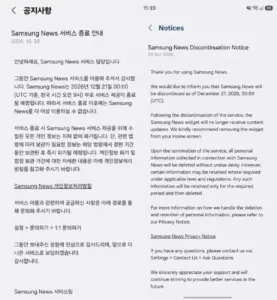
Samsung to Discontinue Native News App in 2026 as Part of Ongoing Software Streamlining
Samsung has officially confirmed that it will be discontinuing its native news...
 Mobile Device Management (MDM) & Mobile OS
Motorola Signals Potential Revival of Moto One Series Following Recent Regulatory Filings
Motorola appears to be reaching into its archives to breathe new life...
 Mobile Device Management (MDM) & Mobile OS
Meowdoku: How a Cat-Themed Logic Puzzle Became a Viral Sensation Despite an Exhausting Ad Experience
In the modern digital landscape, the mobile gaming market is increasingly saturated...