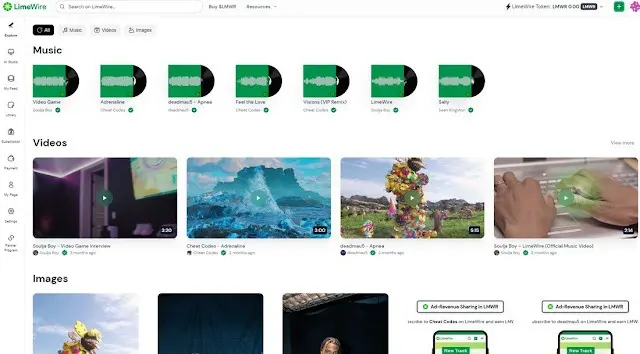
In the rapidly shifting landscape of artificial intelligence and digital innovation, a familiar name from the early days of the internet has re-emerged with a radically different mission. LimeWire, once synonymous with the peer-to-peer file-sharing revolution of the early 2000s, has undergone a comprehensive transformation. No longer a lightning rod for copyright debates, the brand has been reimagined as a sophisticated generative AI content publishing platform. This new iteration of LimeWire aims to bridge the gap between complex AI technology and the burgeoning creator economy, offering a suite of tools that allow users to generate, share, and monetize digital content in ways that were previously inaccessible to the average creator.
The contemporary LimeWire platform stands out in a saturated market of AI tools by focusing not just on the act of creation, but on the long-term value of the content produced. It provides a holistic ecosystem where the power of generative AI is paired with blockchain technology, enabling creators to retain ownership and generate sustainable revenue from their work. As the digital world moves toward a more decentralized and AI-integrated future, LimeWire’s pivot represents a significant case study in brand evolution and technical adaptation.
The Transformation: From File-Sharing to AI Content Hub
The name LimeWire carries a heavy legacy. For a generation of internet users, it was the primary gateway to digital music and media. However, the new LimeWire is an entirely different entity, having moved far beyond its origins. Today, it functions as a cutting-edge AI content publishing platform that invites creators to register and unleash their creativity through original AI-generated assets. This shift is not merely cosmetic; it is a fundamental change in the platform’s architecture, moving from a distribution model to a creation and ownership model.
This revamped identity has already gained significant traction within the creative community. Acclaimed artists and musicians, including industry heavyweights such as Deadmau5, Soulja Boy, and Sean Kingston, have embraced the platform. These artists are utilizing LimeWire Studio to publish exclusive content in the form of NFT music, videos, and images. By attracting high-profile talent, LimeWire is signaling that its platform is not just for hobbyists, but a serious professional tool for established creators looking to explore the intersection of AI and Web3.
Beyond providing a space for content creation, LimeWire introduces robust monetization models designed to empower users. Unlike traditional social media platforms where the bulk of revenue often remains with the service provider, LimeWire emphasizes a creator-first approach. This includes avenues for earning advertising revenue and participating in the growing market for Non-Fungible Tokens (NFTs). This dual-pronged strategy ensures that creators have multiple streams of income, whether through passive views or the direct sale of digital collectibles.
The LimeWire AI Studio: A Creative Hub for the Future
At the heart of this new ecosystem is the LimeWire AI Studio. Currently, the studio is primarily focused on AI image generation, offering a spectrum of creative possibilities to its user base. The platform has been designed with accessibility in mind, ensuring that both seasoned designers and newcomers can navigate the complexities of generative art. However, the company’s ambitions extend far beyond static imagery. LimeWire has confirmed a strategic roadmap that includes the introduction of AI-powered music and video generation tools in the near future.
This expansion is intended to position LimeWire Studio as a comprehensive, multi-modal creative suite. By integrating various forms of media generation into a single platform, LimeWire aims to provide a one-stop shop for digital creators. The flexibility of the studio is further evidenced by its publication options. Creators have the autonomy to decide how their work is consumed; they can share their creations freely with the public to build a following, or they can implement a premium subscription model. The latter grants exclusive access to specialized content, allowing creators to build a dedicated community of supporters who are willing to pay for unique digital experiences.
 Tech News & Digital Trends
The Evolution of Performance Marketing: A Comprehensive Analysis of the CJ Affiliate Ecosystem
In the rapidly shifting landscape of digital commerce, affiliate marketing has emerged...
 Tech News & Digital Trends
The Digital Vanguard: How Ten AI Innovations are Redefining Content Creation in 2025
The digital landscape of 2025 has reached a pivotal turning point, where...
 Tech News & Digital Trends
The Artificial Intelligence Revolution in Marketing: 11 Essential Tools Powering the Next Generation of Data Strategy
The global marketing landscape is currently undergoing a fundamental transformation, driven by...