

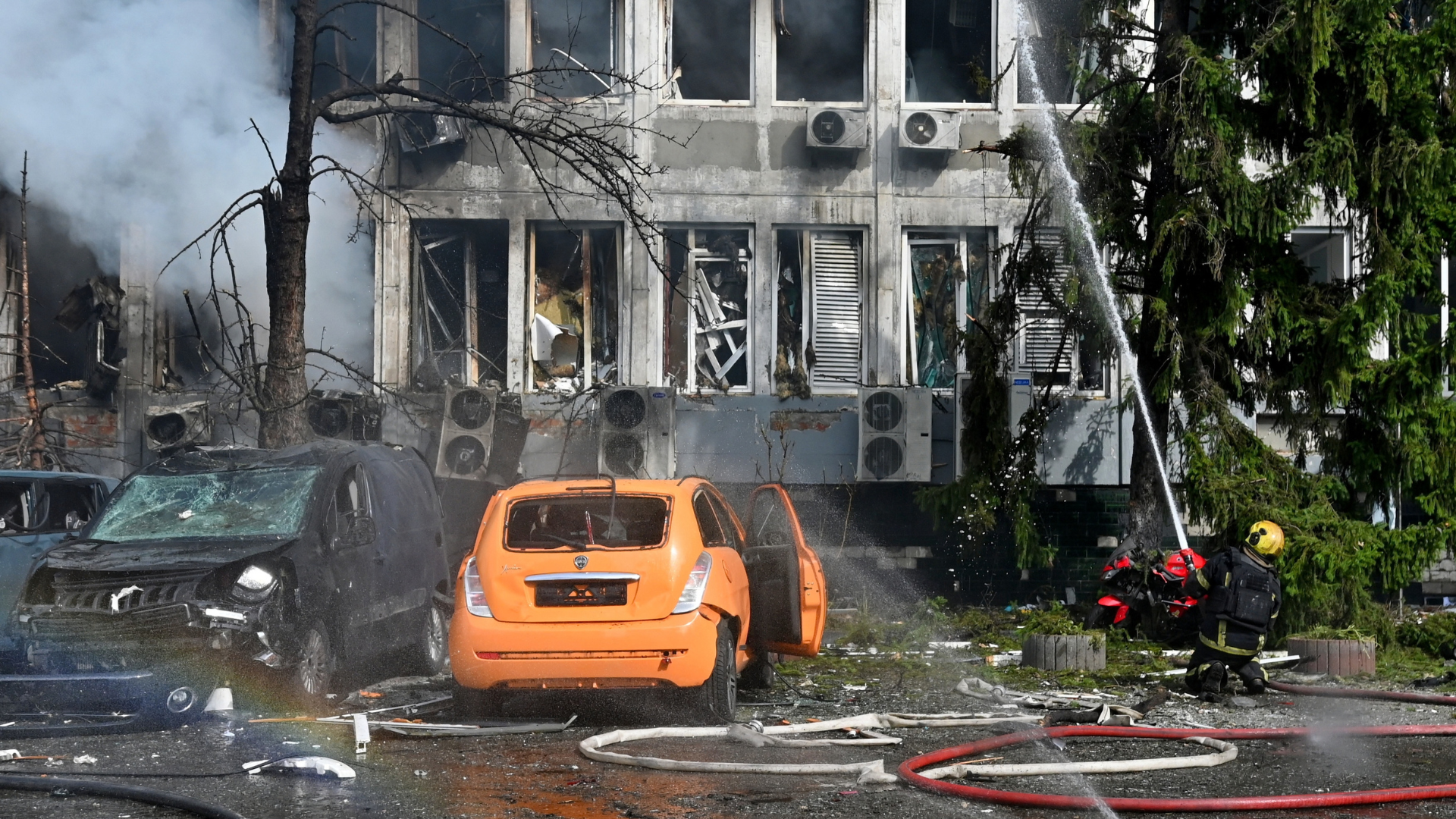
The Russian military has initiated a series of targeted strikes against critical data centers within Ukraine, marking a significant and calculated escalation in its ongoing offensive against the country’s infrastructure. This latest phase of the conflict shifts the focus toward the digital backbone of the nation, aiming to dismantle the technological systems that allow for communication, governance, and the maintenance of daily life during wartime. According to reports from the BBC, a Russian drone strike recently hit a prominent data center situated in the heart of Kyiv’s central business district. The attack resulted in substantial damage to the facility and led to the tragic deaths of four individuals in the immediate vicinity, highlighting the lethal civilian cost of targeting infrastructure located in densely populated urban hubs.
The strike in the capital is not an isolated incident. Evidence and multiple reports from across the country suggest that the Russian military is engaged in a broader campaign to degrade Ukraine’s network infrastructure and telecommunications capabilities. By striking at the physical locations where data is processed and stored, Moscow appears to be moving beyond traditional kinetic warfare and energy-grid sabotage, now focusing on the invisible threads that hold modern Ukrainian society together. This strategy has drawn sharp condemnation from Ukrainian leadership, who view these actions as a deliberate attempt to demoralize the population by severing their connection to the outside world and to each other.
President Volodymyr Zelensky addressed the strikes with gravity, noting that the primary objective of these attacks is to maximize disruption for the common people. He emphasized that the consequences of such strikes extend far beyond technical downtime, directly impacting the fundamental rights and abilities of citizens to survive and function in a modern environment. According to Zelensky, the destruction of these facilities affects the ability of every Ukrainian to stay connected with their families, to continue their studies in a digital format, and to perform the work necessary to sustain the national economy. The President’s remarks underscore the reality that in a country that has heavily digitized its government and social services, the data center is as vital a piece of infrastructure as a bridge or a power plant.
In a detailed social media post, Zelensky further elaborated on the expanding scope of Russian operations, pointing out that the list of targets has grown to include not just military assets, but also American and international businesses, data centers, and internet service providers. He characterized this shift as a sign that for the Russian military, all aspects of ordinary life have become legitimate targets. By hitting these facilities, the Russian Federation is effectively attempting to paralyze the digital ecosystem that supports everything from banking and emergency services to the remote learning platforms used by children whose schools have been physically destroyed. Zelensky’s message was also a call to action for the international community, stressing the importance of a global response to these acts of "terror" to ensure that Russia faces tangible consequences for targeting civilian-centric digital infrastructure.
Russia, for its part, has officially confirmed its involvement in these strikes, though it has framed the operations through a different lens. The Russian Ministry of Defense confirmed that it had targeted and successfully hit a site belonging to Datagroup, a major Ukrainian provider of telecommunications and data services. In its justification for the strike, Moscow claimed that the facility was being utilized by Ukrainian military intelligence. This narrative follows a long-standing pattern where the Russian military justifies attacks on dual-use or civilian infrastructure by alleging that such sites are being repurposed for tactical or strategic military operations. However, the immediate result of such strikes is the loss of service for thousands of civilian users and the physical destruction of private enterprise assets.
The Russian military’s list of targets extends well beyond Datagroup. Official statements from Moscow indicate that they are also actively targeting other critical data and telecommunications centers across the country. Among the companies named are New-Telco, United DC, Kyivstar, and Parkovyi. The inclusion of Kyivstar is particularly notable, as it is the largest telecommunications operator in Ukraine, serving millions of mobile and internet subscribers. Attacking the infrastructure of such a massive provider has the potential to cause widespread communication blackouts, affecting not only personal mobile phones but also the interconnected systems used by hospitals, logistics companies, and humanitarian organizations. Parkovyi, another mentioned target, is known as one of the most advanced data centers in the region, hosting a significant portion of both private and public cloud services.
The strategic logic behind these strikes appears to be the systematic degradation of Ukraine’s "digital sovereignty." Over the past decade, Ukraine has emerged as a leader in digital government, with much of its administrative apparatus hosted in the cloud and accessible via mobile applications. By targeting the physical data centers that house these servers, the Russian military is attempting to erase the progress Ukraine has made in building a resilient, modern state. When a data center is hit, the loss is not just measured in hardware and server racks; it is measured in the loss of access to digital identities, property records, and the essential tools used to coordinate the distribution of aid and information.
Furthermore, the involvement of international and American businesses in these strikes, as mentioned by Zelensky, adds a layer of geopolitical complexity to the situation. Many of these data centers host the operations of multinational corporations that have continued to provide services in Ukraine despite the ongoing conflict. By striking these locations, Russia is also sending a message to the global tech community and international investors, signaling that no facility, regardless of its corporate ownership or civilian purpose, is safe from the reach of its missile and drone programs. This creates a high-risk environment for the companies that provide the backbone of the global internet, forcing them to weigh the costs of maintaining a physical presence in a conflict zone where the rules of engagement appear to be expanding to include the digital sphere.
The human element of these strikes remains the most pressing concern for local authorities. In the Kyiv attack, the four individuals killed were not combatants, but people going about their lives in a busy business district. The collateral damage of hitting a data center in a city center is inherently high, and the psychological impact of such strikes cannot be overstated. When the internet goes down or cellular service flickers out following an explosion, the sense of isolation among the civilian population increases. This isolation is a potent weapon in psychological warfare, as it prevents the spread of accurate information and can lead to panic or a sense of abandonment.
Despite the intensity of these attacks, the Ukrainian telecommunications sector has shown remarkable resilience. Engineers and technical teams often work under perilous conditions to restore connectivity, reroute data traffic, and repair severed fiber-optic cables. The battle for the data centers is, in many ways, a battle of endurance. As Russia attempts to systematically dismantle the nodes of the Ukrainian network, Ukrainian technicians and international partners are working to diversify and protect the country’s digital assets. This includes moving more services to distributed cloud environments and utilizing satellite-based internet solutions to bypass destroyed terrestrial infrastructure.
The ongoing strikes serve as a stark reminder that the modern battlefield is no longer confined to trenches and physical borders. The data center, once a mundane facility tucked away in an office park or a basement, has become a frontline in the contest for national survival. As the Russian military continues its escalation, the focus on digital infrastructure suggests a long-term strategy aimed at making the country uninhabitable and unmanageable by stripping away the technological tools of the 21st century.
As the international community monitors the situation, the focus remains on how to bolster Ukraine’s digital defenses. The calls from the Ukrainian presidency for a global response highlight the need for not only military aid but also technical support and the protection of the global supply chains that provide the hardware necessary to rebuild what has been lost. For now, the people of Kyiv and other targeted cities remain in a state of high alert, knowing that the next drone in the sky may be aimed not at a military base, but at the servers that keep their world connected. The destruction of the Datagroup site and the threats against Kyivstar and others mark a grim chapter in the war, one where the target is the very flow of information itself.
 Hardware Reviews & PC Building
The PC gaming ray tracing obsession began with the first RTX 20 graphics cards released on this day in 2018 — the…
The debut of the GeForce 20 series was spearheaded by the release...
 Hardware Reviews & PC Building
Privacy Concerns Surface for Meta’s Muse AI as Reports Suggest Unauthorized Access to Personal Messages
The rapid evolution of artificial intelligence has brought with it a wave...
 Hardware Reviews & PC Building
Australian Government Orders Urgent Security Review After OpenAI Agent Bypasses Medicare Portal Protections
In a significant development concerning the intersection of artificial intelligence and national...







