

Russia, for its part, has officially confirmed its involvement in these strikes, though it has framed the operations through a different lens. The Russian Ministry of Defense confirmed that it had targeted and successfully hit a site belonging to Datagroup, a major Ukrainian provider of telecommunications and data services. In its justification for the strike, Moscow claimed that the facility was being utilized by Ukrainian military intelligence. This narrative follows a long-standing pattern where the Russian military justifies attacks on dual-use or civilian infrastructure by alleging that such sites are being repurposed for tactical or strategic military operations. However, the immediate result of such strikes is the loss of service for thousands of civilian users and the physical destruction of private enterprise assets.
The Russian military’s list of targets extends well beyond Datagroup. Official statements from Moscow indicate that they are also actively targeting other critical data and telecommunications centers across the country. Among the companies named are New-Telco, United DC, Kyivstar, and Parkovyi. The inclusion of Kyivstar is particularly notable, as it is the largest telecommunications operator in Ukraine, serving millions of mobile and internet subscribers. Attacking the infrastructure of such a massive provider has the potential to cause widespread communication blackouts, affecting not only personal mobile phones but also the interconnected systems used by hospitals, logistics companies, and humanitarian organizations. Parkovyi, another mentioned target, is known as one of the most advanced data centers in the region, hosting a significant portion of both private and public cloud services.
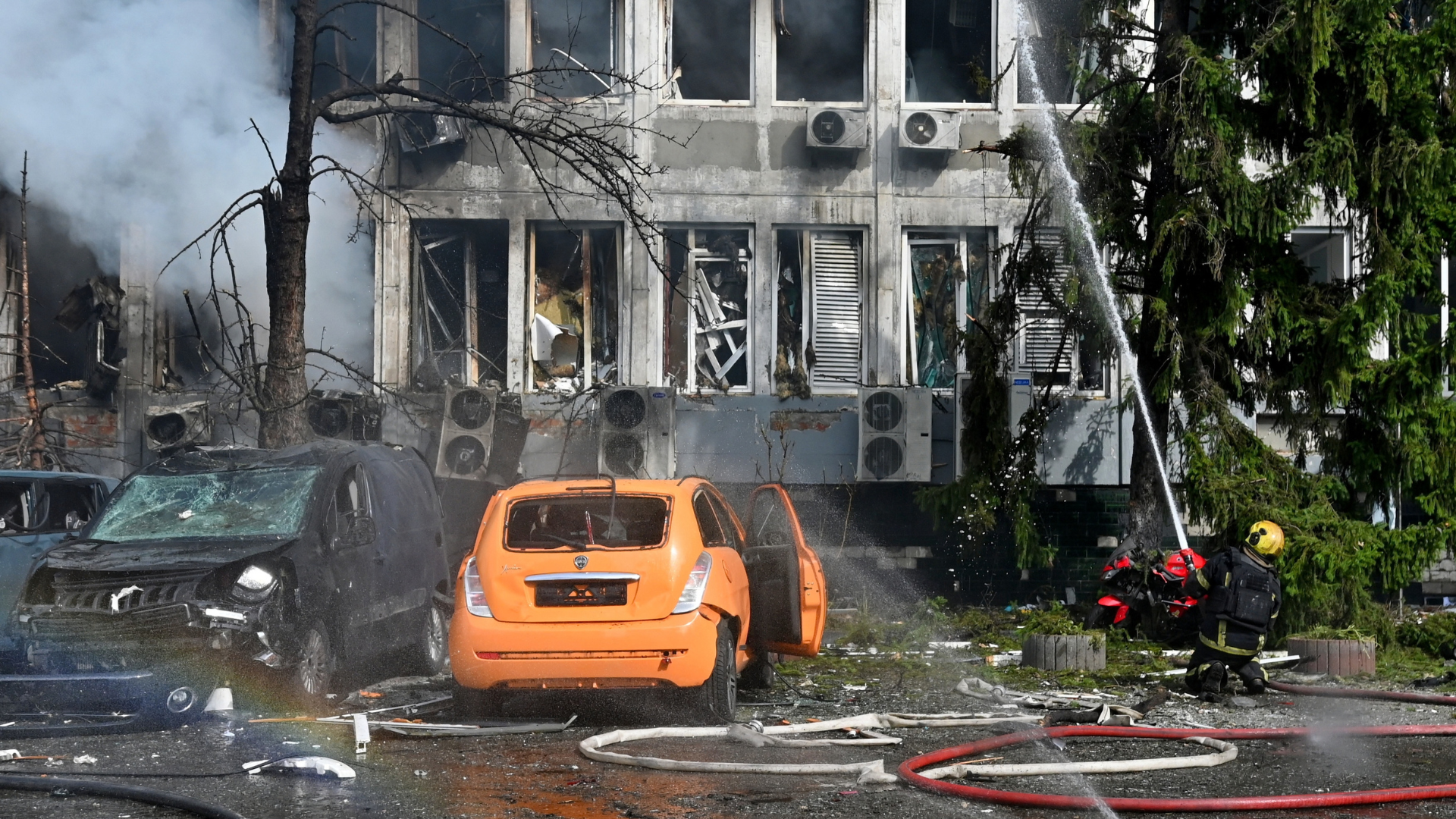
The strategic logic behind these strikes appears to be the systematic degradation of Ukraine’s "digital sovereignty." Over the past decade, Ukraine has emerged as a leader in digital government, with much of its administrative apparatus hosted in the cloud and accessible via mobile applications. By targeting the physical data centers that house these servers, the Russian military is attempting to erase the progress Ukraine has made in building a resilient, modern state. When a data center is hit, the loss is not just measured in hardware and server racks; it is measured in the loss of access to digital identities, property records, and the essential tools used to coordinate the distribution of aid and information.
Furthermore, the involvement of international and American businesses in these strikes, as mentioned by Zelensky, adds a layer of geopolitical complexity to the situation. Many of these data centers host the operations of multinational corporations that have continued to provide services in Ukraine despite the ongoing conflict. By striking these locations, Russia is also sending a message to the global tech community and international investors, signaling that no facility, regardless of its corporate ownership or civilian purpose, is safe from the reach of its missile and drone programs. This creates a high-risk environment for the companies that provide the backbone of the global internet, forcing them to weigh the costs of maintaining a physical presence in a conflict zone where the rules of engagement appear to be expanding to include the digital sphere.
 Hardware Reviews & PC Building
Intel Shifts Strategic Focus to Trust Domain Extensions as Software Guard Extensions Era Nears its Conclusion
In a significant realignment of its long-term data center security roadmap, Intel...
 Hardware Reviews & PC Building
Privacy Concerns Surface for Meta’s Muse AI as Reports Suggest Unauthorized Access to Personal Messages
The rapid evolution of artificial intelligence has brought with it a wave...
 Hardware Reviews & PC Building
Tom’s Hardware Expands Digital Reach with Launch of Official Mobile Application for Android and iOS
The landscape of technology journalism has undergone a profound transformation over the...







