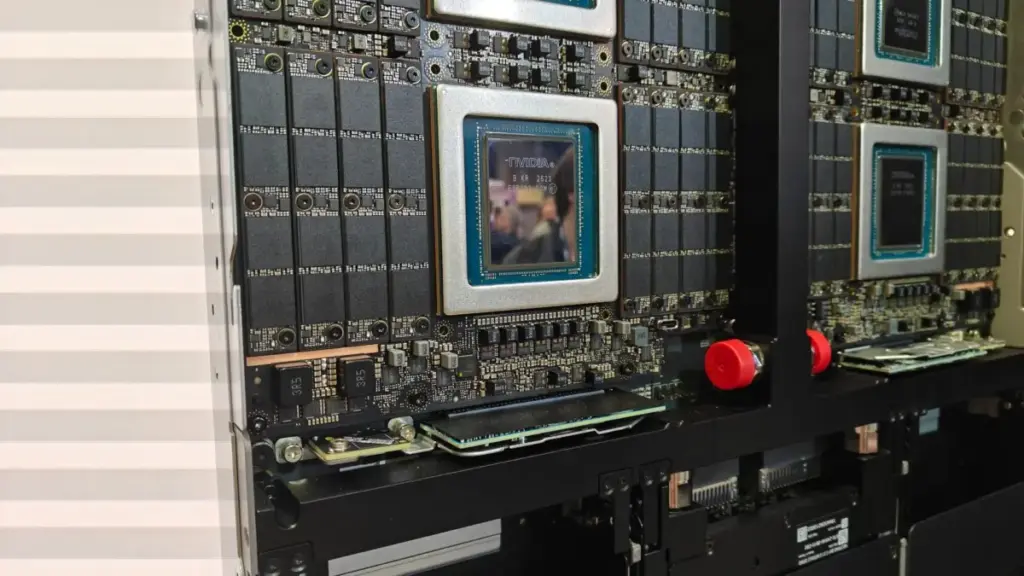
The landscape of high-performance computing and artificial intelligence is currently defined by a high-stakes race to provide the silicon backbone for the next generation of digital intelligence. At the heart of this competition is a fundamental disagreement between industry titans over whether hardware can be intentionally designed for software trends that have only recently entered the public consciousness. During the SC26 supercomputing conference, a significant debate emerged regarding Nvidia’s upcoming "Vera" CPU and its branding as a processor built specifically for the "agentic AI" era. The controversy centers on the timeline of silicon development versus the meteoric rise of autonomous AI agents, leading some competitors to question the authenticity of Nvidia’s claims.
The criticism, which has gained traction within the semiconductor industry, posits that the development cycles for complex data center CPUs are simply too long to have accounted for the specific requirements of agentic AI years ago. Silicon development typically spans four to five years from the initial architectural definition to mass production. Given that "agentic AI"—AI systems capable of reasoning, using tools, and performing multi-step tasks autonomously—only became a dominant industry focus in the last year or two, skeptics argue that any "agentic" capabilities in current or upcoming chips are a result of fortunate timing rather than clairvoyant engineering.
Leading this skepticism is AMD, whose executive leadership has publicly rebuked the idea that any company could have "magically" known four years ago that agentic workloads would become the industry’s North Star. AMD’s Vice President and Chief Zen Architect have suggested that while modern CPUs are undoubtedly powerful, labeling them as purpose-built for agents that didn’t exist during the design phase is more of a marketing triumph than an architectural reality. This critique also extends to Arm and its recent messaging surrounding "AGI CPUs," suggesting a broader industry trend of retrofitting current hardware designs with the latest AI buzzwords.
Ian Finder, the head of Nvidia’s data center CPU business, addressed these criticisms directly during a conversation at SC26. Finder did not shy away from the inherent contradictions of the silicon timeline, but he offered a nuanced defense of Nvidia’s approach. He admitted that the company does not possess a "magic crystal ball" capable of predicting specific software movements like the "agentic moment" with perfect clarity. To suggest otherwise, he noted, would be "absurd." However, Finder argued that what Nvidia does possess is a deep-seated "design intuition" that allows them to anticipate the general trajectory of compute requirements long before they are codified into specific software categories.
This "design intuition" is, according to Finder, the secret sauce that allows Nvidia to align its hardware cycles with the rapidly shifting needs of the AI market. It is not about knowing that a specific framework like AutoGPT or LangChain would exist in 2024; rather, it is about recognizing the fundamental bottlenecks in compute and data movement that would inevitably arise as models evolved from simple pattern recognition to complex reasoning and orchestration. By focusing on these foundational challenges during the Vera CPU’s inception four years ago, Nvidia claims to have built a processor that is naturally suited for the demands of agentic AI, even if the term itself wasn’t yet in their internal documentation.
To understand why this distinction matters, one must look at what agentic AI actually requires from a CPU. Unlike traditional Large Language Models (LLMs), which are largely dominated by the massive parallel processing power of GPUs, agentic AI introduces a heavy reliance on "orchestration." An AI agent must be able to break down a prompt, decide which tools to use, execute code, verify results, and iterate on its own logic. These tasks are inherently serial and branch-heavy, making them a poor fit for the massive parallelism of a GPU. Instead, they require a high-performance CPU with low latency, high single-threaded performance, and, perhaps most importantly, an extremely fast interconnect to the GPU.
Nvidia’s Vera CPU is designed to be the successor to the Grace CPU, which was paired with the Hopper and Blackwell GPU architectures. If Vera’s development began four years ago, Nvidia’s engineers were making decisions in 2020 and 2021—a time when the industry was still processing the impact of GPT-3 and the transformer architecture. At that stage, Nvidia’s "intuition" likely suggested that the future of AI would move toward more complex system-level interactions. By prioritizing high-bandwidth memory (HBM) integration and the NVLink-C2C (chip-to-chip) interconnect, Nvidia was preparing for a future where the CPU and GPU would need to work as a single, unified unit rather than as separate components separated by the bottleneck of a traditional PCIe bus.
The skepticism from competitors like AMD stems from a different design philosophy. AMD has found immense success with its Zen architecture by focusing on general-purpose excellence, providing massive core counts and industry-leading efficiency that serves a wide variety of data center workloads. From AMD’s perspective, a CPU is a tool that should be versatile enough to handle anything. When Nvidia labels a chip as "agentic," it implies a level of specialization that AMD argues is impossible to achieve without a time machine. The tension here is between the "generalist" view of the CPU and Nvidia’s "platform-centric" view, where the CPU is a specialized orchestrator for the broader AI ecosystem.
Finder’s defense highlights a broader shift in how Nvidia operates. The company no longer views itself as a mere chip designer but as a full-stack computing company. This means their hardware teams work in a tight feedback loop with their software teams, who are developing the libraries and frameworks that will run on the hardware half a decade later. This internal synergy is what Finder refers to when he speaks of a "conviction around the design philosophy." If Nvidia’s software researchers were experimenting with the precursors to agents four years ago, that knowledge would naturally bleed into the hardware specifications for Vera, even if the public marketing terminology hadn’t caught up yet.
The debate also touches on Arm’s role in this ecosystem. As Nvidia’s Vera CPU is built on the Arm architecture, the evolution of Arm’s Neoverse platforms plays a critical role. Arm has also begun using terms like "AGI CPU" to describe its high-performance cores, suggesting that the underlying instruction set and architectural features are being tuned for the logic-heavy tasks associated with artificial general intelligence. Critics argue that this is simply the natural evolution of high-performance computing being rebranded to capture the AI hype, while proponents argue that specific architectural choices—such as improved branch prediction and larger caches—are direct responses to the needs of modern AI reasoning.
At SC26, the atmosphere was one of intense scrutiny as the industry looked for signs of the next major shift. For Nvidia, the Vera CPU represents a critical component of their "Rubin" platform, which is expected to follow the Blackwell generation. If Vera fails to live up to its "agentic" billing, it could give competitors like AMD an opening to reclaim the narrative that general-purpose CPUs are the more stable and reliable foundation for the future. However, if Vera delivers the orchestration performance Nvidia promises, it will validate the "design intuition" that Finder described, proving that a deep understanding of the software-hardware interface can indeed substitute for a crystal ball.
The conversation around agentic AI is not just about the chips themselves, but about the changing nature of the data center. In the past, data centers were built around the idea of virtualization and high-density general-purpose compute. Today, they are being reimagined as "AI factories." In this new model, the CPU’s role is shifting from being the primary processor to being the "brain" that manages the "muscle" of the GPU. This shift requires a different kind of CPU design—one that prioritizes system-level throughput and low-latency communication over raw integer math performance. This is the "philosophy" Finder referenced; a belief that the future of compute is unified and specialized.
As the industry moves toward the commercial release of the Vera CPU and its accompanying architectures, the results will eventually speak for themselves. If the benchmarks show a significant leap in the ability to run autonomous agentic frameworks compared to traditional server CPUs, the "intuition" defense will be seen as a visionary strategy. Until then, the debate serves as a reminder of the immense pressure facing silicon designers who must bet billions of dollars on the state of software four years into the future.
In the end, the disagreement between Nvidia and its critics may be a matter of semantics. What AMD calls "general-purpose performance that happens to be good for AI," Nvidia calls "intentional design for the agentic era." Regardless of the terminology, the reality is that the next generation of AI will demand hardware that can handle complex, multi-step reasoning at scale. Whether that hardware was born from a lucky guess, a magic crystal ball, or a well-honed design intuition, its arrival will mark the next major chapter in the evolution of the data center. For Ian Finder and Nvidia, the conviction in their design philosophy remains unshaken, even as the industry continues to debate the origins of their "agentic" vision.
 Hardware Reviews & PC Building
Acer Predator 27-Inch QD-OLED Gaming Monitor Sees Significant Price Drop at Best Buy
The landscape of PC gaming peripherals is undergoing a fundamental shift as...
 Hardware Reviews & PC Building
VAST Data Warns of Critical Reliability Threshold as Petabyte-Scale SSDs Outpace Traditional RAID Capabilities
As the global demand for data storage continues to skyrocket, driven largely...
 Hardware Reviews & PC Building
Thermal Grizzly Unveils PhaseSheet PTM Pro with Enhanced Thermal Conductivity and Improved Application Reliability
Thermal Grizzly, the German-based manufacturer synonymous with high-performance cooling solutions for PC...