
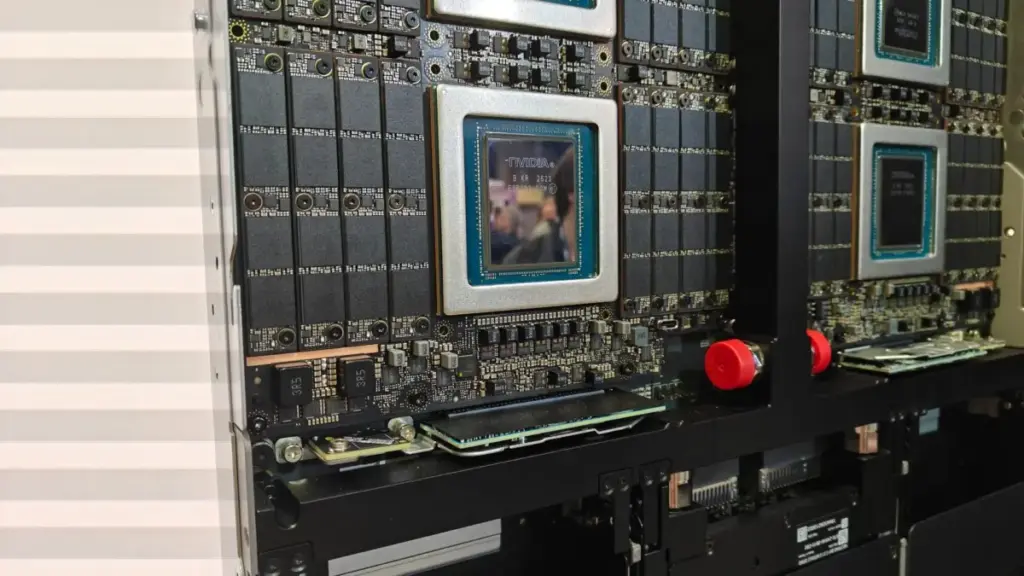
To understand why this distinction matters, one must look at what agentic AI actually requires from a CPU. Unlike traditional Large Language Models (LLMs), which are largely dominated by the massive parallel processing power of GPUs, agentic AI introduces a heavy reliance on "orchestration." An AI agent must be able to break down a prompt, decide which tools to use, execute code, verify results, and iterate on its own logic. These tasks are inherently serial and branch-heavy, making them a poor fit for the massive parallelism of a GPU. Instead, they require a high-performance CPU with low latency, high single-threaded performance, and, perhaps most importantly, an extremely fast interconnect to the GPU.
Nvidia’s Vera CPU is designed to be the successor to the Grace CPU, which was paired with the Hopper and Blackwell GPU architectures. If Vera’s development began four years ago, Nvidia’s engineers were making decisions in 2020 and 2021—a time when the industry was still processing the impact of GPT-3 and the transformer architecture. At that stage, Nvidia’s "intuition" likely suggested that the future of AI would move toward more complex system-level interactions. By prioritizing high-bandwidth memory (HBM) integration and the NVLink-C2C (chip-to-chip) interconnect, Nvidia was preparing for a future where the CPU and GPU would need to work as a single, unified unit rather than as separate components separated by the bottleneck of a traditional PCIe bus.
The skepticism from competitors like AMD stems from a different design philosophy. AMD has found immense success with its Zen architecture by focusing on general-purpose excellence, providing massive core counts and industry-leading efficiency that serves a wide variety of data center workloads. From AMD’s perspective, a CPU is a tool that should be versatile enough to handle anything. When Nvidia labels a chip as "agentic," it implies a level of specialization that AMD argues is impossible to achieve without a time machine. The tension here is between the "generalist" view of the CPU and Nvidia’s "platform-centric" view, where the CPU is a specialized orchestrator for the broader AI ecosystem.
Finder’s defense highlights a broader shift in how Nvidia operates. The company no longer views itself as a mere chip designer but as a full-stack computing company. This means their hardware teams work in a tight feedback loop with their software teams, who are developing the libraries and frameworks that will run on the hardware half a decade later. This internal synergy is what Finder refers to when he speaks of a "conviction around the design philosophy." If Nvidia’s software researchers were experimenting with the precursors to agents four years ago, that knowledge would naturally bleed into the hardware specifications for Vera, even if the public marketing terminology hadn’t caught up yet.
The debate also touches on Arm’s role in this ecosystem. As Nvidia’s Vera CPU is built on the Arm architecture, the evolution of Arm’s Neoverse platforms plays a critical role. Arm has also begun using terms like "AGI CPU" to describe its high-performance cores, suggesting that the underlying instruction set and architectural features are being tuned for the logic-heavy tasks associated with artificial general intelligence. Critics argue that this is simply the natural evolution of high-performance computing being rebranded to capture the AI hype, while proponents argue that specific architectural choices—such as improved branch prediction and larger caches—are direct responses to the needs of modern AI reasoning.
 Hardware Reviews & PC Building
Nvidia launches Open Agent Safety Platform to restrain rogue AI agents — new hardware-and-software security stack…
The introduction of the Open Agent Safety Platform arrives at a critical...
 Hardware Reviews & PC Building
Nvidia Unveils Rubin HPC Architecture at Supercomputing 2026 to Power Next-Generation Scientific Simulation and Agentic Workflows
The Supercomputing 2026 conference has officially opened its doors, serving as the...
 Hardware Reviews & PC Building
Privacy Concerns Surface for Meta’s Muse AI as Reports Suggest Unauthorized Access to Personal Messages
The rapid evolution of artificial intelligence has brought with it a wave...







