
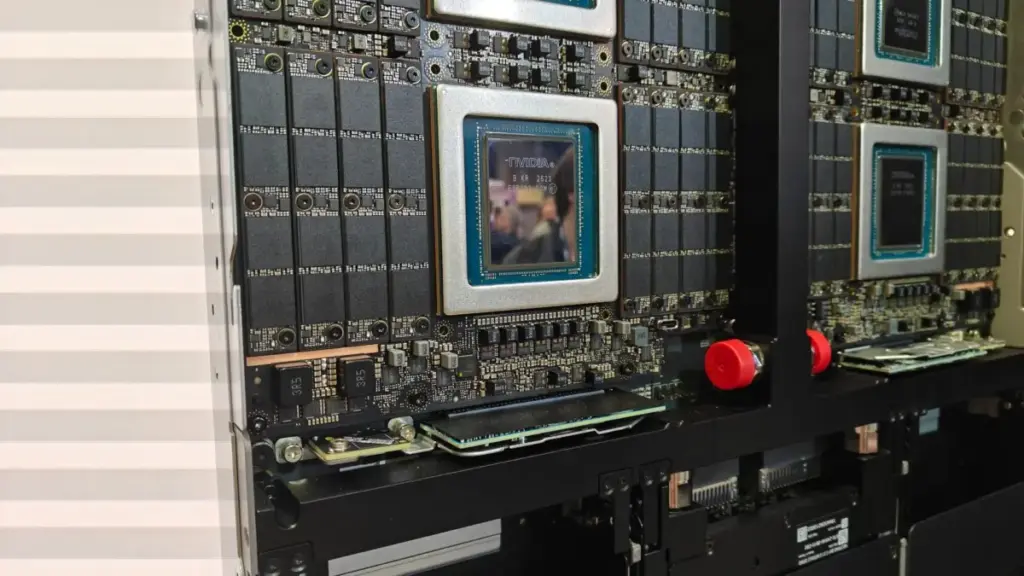
At SC26, the atmosphere was one of intense scrutiny as the industry looked for signs of the next major shift. For Nvidia, the Vera CPU represents a critical component of their "Rubin" platform, which is expected to follow the Blackwell generation. If Vera fails to live up to its "agentic" billing, it could give competitors like AMD an opening to reclaim the narrative that general-purpose CPUs are the more stable and reliable foundation for the future. However, if Vera delivers the orchestration performance Nvidia promises, it will validate the "design intuition" that Finder described, proving that a deep understanding of the software-hardware interface can indeed substitute for a crystal ball.
The conversation around agentic AI is not just about the chips themselves, but about the changing nature of the data center. In the past, data centers were built around the idea of virtualization and high-density general-purpose compute. Today, they are being reimagined as "AI factories." In this new model, the CPU’s role is shifting from being the primary processor to being the "brain" that manages the "muscle" of the GPU. This shift requires a different kind of CPU design—one that prioritizes system-level throughput and low-latency communication over raw integer math performance. This is the "philosophy" Finder referenced; a belief that the future of compute is unified and specialized.
As the industry moves toward the commercial release of the Vera CPU and its accompanying architectures, the results will eventually speak for themselves. If the benchmarks show a significant leap in the ability to run autonomous agentic frameworks compared to traditional server CPUs, the "intuition" defense will be seen as a visionary strategy. Until then, the debate serves as a reminder of the immense pressure facing silicon designers who must bet billions of dollars on the state of software four years into the future.
In the end, the disagreement between Nvidia and its critics may be a matter of semantics. What AMD calls "general-purpose performance that happens to be good for AI," Nvidia calls "intentional design for the agentic era." Regardless of the terminology, the reality is that the next generation of AI will demand hardware that can handle complex, multi-step reasoning at scale. Whether that hardware was born from a lucky guess, a magic crystal ball, or a well-honed design intuition, its arrival will mark the next major chapter in the evolution of the data center. For Ian Finder and Nvidia, the conviction in their design philosophy remains unshaken, even as the industry continues to debate the origins of their "agentic" vision.
 Hardware Reviews & PC Building
Shareholder Lawsuit Alleges Top Supermicro Executive Had Full Knowledge of Massive $2.5 Billion AI Chip Smuggling Operation
The legal storm surrounding Supermicro has intensified as new details emerge from...
 Hardware Reviews & PC Building
Neuralink trial participant ditches mouth stick to play GTA 6 with his mind — brain-computer interface maps…
The core of this breakthrough lies in the sophisticated way the Neuralink...
 Hardware Reviews & PC Building
Corsair HX1000i Shift Crystal: A High-Performance Digital Power Supply That Puts Its Internals on Display
In the modern landscape of enthusiast PC building, the power supply unit...







