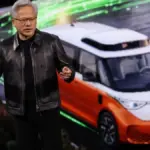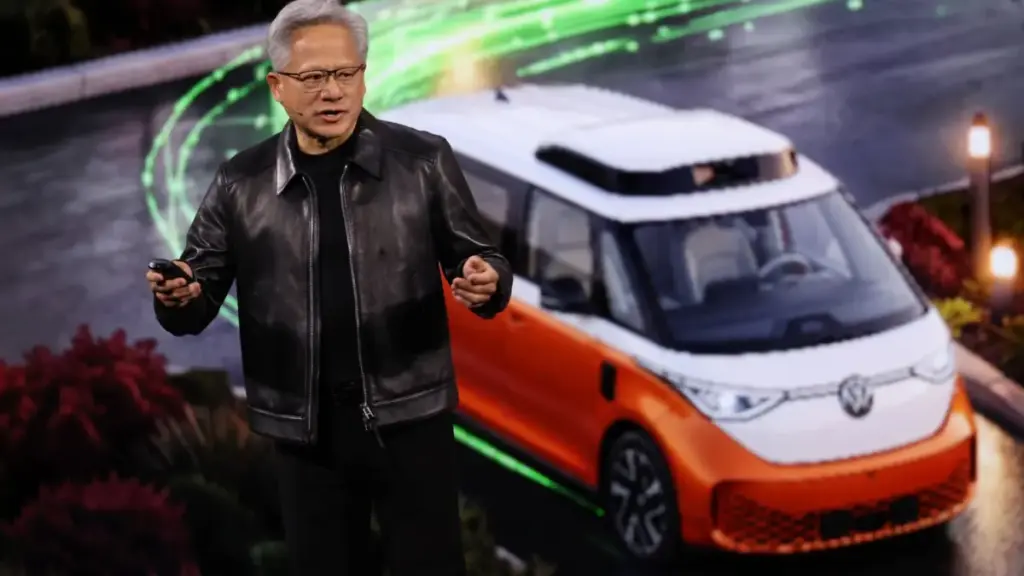
Nvidia Corporation has officially announced the return of Jensen Huang to his dual roles as President and Chief Executive Officer, ending a brief but intense period of leadership uncertainty for the world’s most prominent semiconductor and artificial intelligence company. The announcement, made on Monday, confirms that Huang has also been restored to his position as a member of the Board of Directors, effective immediately. This decision follows a comprehensive internal review and high-level consultations with federal authorities, signaling a definitive resolution to the questions that had recently surrounded the company’s executive leadership.
The company confirmed that the Board of Directors reached its decision through a unanimous vote, a move intended to project stability and confidence to shareholders, employees, and the global technology market. According to a formal statement released by Nvidia, the decision to reinstate Huang was not a mere formality but the culmination of an exhaustive process. The board reportedly engaged in a series of detailed discussions and private meetings with Huang to address specific concerns regarding his leadership and transparency. These deliberations were critical in rebuilding the board’s trust and ensuring that the executive direction of the company remained aligned with its long-term strategic goals.
In its public disclosure, Nvidia noted that the board is now fully satisfied with respect to Huang’s candor and his ongoing ability to lead the organization. The mention of "candor" is particularly significant in the context of corporate governance, suggesting that the board’s previous hesitations may have been rooted in communication or disclosure issues that have now been resolved to the satisfaction of the company’s directors. By emphasizing a unanimous vote, Nvidia is attempting to close the chapter on any internal friction and present a united front as it continues to navigate the most competitive era in the history of the computing industry.
Perhaps the most striking element of the reinstatement process was the direct involvement of the United States government. Nvidia’s statement revealed that the board sought and received input from senior levels of the federal government before finalizing its decision. This level of state involvement in the leadership structure of a publicly traded company is rare, but it underscores Nvidia’s unique position as a cornerstone of national infrastructure. Given the company’s total dominance in the production of high-end graphics processing units (GPUs) and AI accelerators, its leadership is no longer viewed solely as a matter of corporate interest, but as a factor in national economic and technological strategy.
The board explicitly stated that, based on the input received from federal officials, it is confident that Huang’s reinstatement poses no national security risk. This detail highlights the increasingly blurred lines between the private technology sector and national defense interests. As AI becomes the primary theater of global technological competition, the individuals who control the world’s most advanced hardware pipelines are subject to levels of scrutiny usually reserved for high-ranking government officials. The assurance that Huang does not represent a security risk suggests that the federal review likely touched upon international trade relations, export controls, and the protection of intellectual property that is vital to the United States’ technological edge.
 Hardware Reviews & PC Building
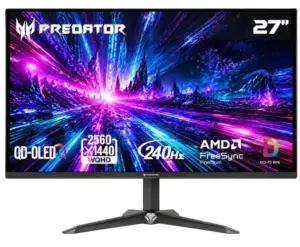
Acer Predator 27-Inch QD-OLED Gaming Monitor Sees Significant Price Drop at Best Buy
The landscape of PC gaming peripherals is undergoing a fundamental shift as...
 Hardware Reviews & PC Building
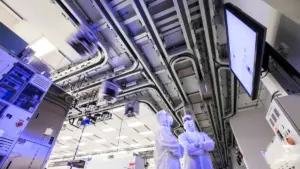
GlobalFoundries Unveils FDX Fusion: Aiming for 7nm Performance with Planar Transistors and No EUV by 2030
In a strategic move that reinforces its departure from the traditional "leading-edge"...
 Hardware Reviews & PC Building
Proton hosts Flock map revealing over 300,000 cameras, defying cease-and-desist threats against creator —…
The map in question is a visual representation of more than 335,000...