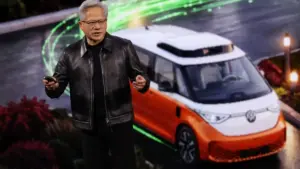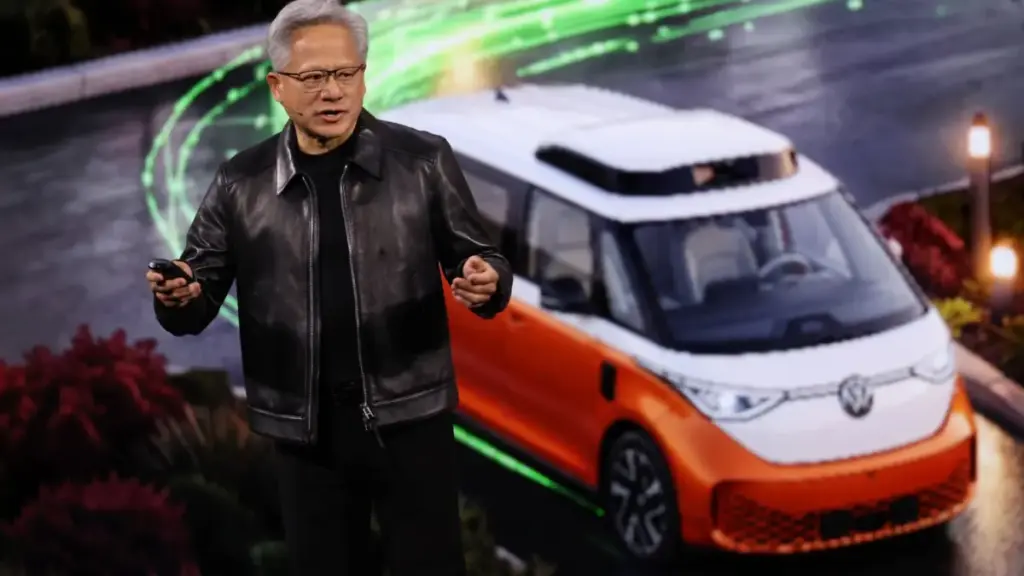
Nvidia Corporation has officially announced the return of Jensen Huang to his dual roles as President and Chief Executive Officer, ending a brief but intense period of leadership uncertainty for the world’s most prominent semiconductor and artificial intelligence company. The announcement, made on Monday, confirms that Huang has also been restored to his position as a member of the Board of Directors, effective immediately. This decision follows a comprehensive internal review and high-level consultations with federal authorities, signaling a definitive resolution to the questions that had recently surrounded the company’s executive leadership.
The company confirmed that the Board of Directors reached its decision through a unanimous vote, a move intended to project stability and confidence to shareholders, employees, and the global technology market. According to a formal statement released by Nvidia, the decision to reinstate Huang was not a mere formality but the culmination of an exhaustive process. The board reportedly engaged in a series of detailed discussions and private meetings with Huang to address specific concerns regarding his leadership and transparency. These deliberations were critical in rebuilding the board’s trust and ensuring that the executive direction of the company remained aligned with its long-term strategic goals.
In its public disclosure, Nvidia noted that the board is now fully satisfied with respect to Huang’s candor and his ongoing ability to lead the organization. The mention of "candor" is particularly significant in the context of corporate governance, suggesting that the board’s previous hesitations may have been rooted in communication or disclosure issues that have now been resolved to the satisfaction of the company’s directors. By emphasizing a unanimous vote, Nvidia is attempting to close the chapter on any internal friction and present a united front as it continues to navigate the most competitive era in the history of the computing industry.
Perhaps the most striking element of the reinstatement process was the direct involvement of the United States government. Nvidia’s statement revealed that the board sought and received input from senior levels of the federal government before finalizing its decision. This level of state involvement in the leadership structure of a publicly traded company is rare, but it underscores Nvidia’s unique position as a cornerstone of national infrastructure. Given the company’s total dominance in the production of high-end graphics processing units (GPUs) and AI accelerators, its leadership is no longer viewed solely as a matter of corporate interest, but as a factor in national economic and technological strategy.
The board explicitly stated that, based on the input received from federal officials, it is confident that Huang’s reinstatement poses no national security risk. This detail highlights the increasingly blurred lines between the private technology sector and national defense interests. As AI becomes the primary theater of global technological competition, the individuals who control the world’s most advanced hardware pipelines are subject to levels of scrutiny usually reserved for high-ranking government officials. The assurance that Huang does not represent a security risk suggests that the federal review likely touched upon international trade relations, export controls, and the protection of intellectual property that is vital to the United States’ technological edge.
The immediate nature of the reinstatement suggests that Nvidia was eager to minimize the duration of any leadership vacuum. In the fast-moving world of semiconductor design and AI software development, even a few days of perceived instability can have significant impacts on stock valuation and partner relations. By moving quickly to restore Huang, the board has prioritized continuity. Huang, a co-founder of the company who has become the face of the "AI revolution," is widely seen as the primary architect of Nvidia’s transition from a niche gaming hardware firm to a trillion-dollar titan that powers the world’s largest data centers.
Industry analysts have noted that Huang’s leadership style is deeply woven into the fabric of Nvidia’s corporate culture. Known for his vision of "accelerated computing," Huang has spent decades positioning the company to take advantage of the shift toward parallel processing. His ability to anticipate the requirements of large language models and generative AI years before they became mainstream has given Nvidia a multi-year lead over its competitors. The board’s conclusion that he remains the best person to lead the company reflects a recognition that his technical expertise and strategic foresight are currently irreplaceable.
The mention of "discussions and meetings" regarding Huang’s "ability to lead" implies that the board took the time to evaluate whether the current scale of Nvidia requires a different management approach. As Nvidia has grown into one of the most valuable companies in the world, the demands on its CEO have shifted from product development to managing complex global supply chains and navigating thorny geopolitical landscapes. The unanimous vote serves as a mandate for Huang to continue his aggressive expansion strategy, particularly as the company prepares to launch its next generation of Blackwell-architecture chips, which are expected to further solidify its lead in the AI market.
The involvement of senior government officials also points to the broader regulatory environment in which Nvidia operates. With the U.S. Department of Commerce placing increasingly stringent restrictions on the export of high-performance chips to certain foreign markets, the CEO of Nvidia must act as a bridge between the interests of the company’s global customer base and the security requirements of the American government. The fact that the board consulted with the government suggests a proactive effort to ensure that Nvidia’s leadership remains in good standing with the regulators who oversee these critical export licenses.
This reinstatement comes at a time when the semiconductor industry is under intense pressure to meet the insatiable demand for AI compute power. Cloud service providers, sovereign nations, and private enterprises are all competing for a limited supply of Nvidia’s H100 and H200 processors. Any prolonged disruption at the top of Nvidia’s hierarchy could have delayed product roadmaps or complicated negotiations with manufacturing partners like TSMC. By resolving the leadership question now, the board has cleared the way for the company to focus on its upcoming production cycles and the integration of its software ecosystems.
While the specific details of the initial concerns that led to these meetings remain confidential, the outcome is a clear endorsement of Huang’s tenure. In the world of high-stakes corporate governance, the term "candor" often refers to the openness with which a CEO shares information with the board regarding potential risks, personal conduct, or outside business interests. The board’s public affirmation of Huang’s candor suggests that whatever questions were raised have been answered with full transparency, allowing the directors to fulfill their fiduciary duties to the shareholders.
The news of Huang’s return is expected to be received positively by the broader tech ecosystem. Partners who rely on Nvidia’s hardware for their own AI initiatives often view Huang’s personal involvement as a guarantee of the company’s commitment to innovation. His "hands-on" approach to engineering and his ability to communicate complex technical concepts to a general audience have made him a unique figure in Silicon Valley—a CEO who is as much a celebrity as he is a technical visionary.
As Nvidia moves forward from this announcement, the focus will likely return to the company’s breakneck pace of development. The board’s confidence in Huang’s ability to lead suggests that there will be no significant shifts in the company’s current trajectory. Instead, the reinstatement acts as a reinforcement of the status quo, albeit one that has been tested and verified by both internal and external authorities. The company remains at the center of the most significant technological shift of the 21st century, and with Huang back at the helm, it appears poised to continue its role as the primary engine of that change.
Ultimately, the resolution of this matter reinforces the idea that Nvidia is more than just a hardware manufacturer; it is a vital component of the modern geopolitical and economic landscape. The unanimous support of the board, combined with the explicit clearance from the federal government, provides Huang with a reinforced platform from which to lead. As the company continues to push the boundaries of what is possible with silicon and software, the stability of its leadership will remain a key factor in its ability to maintain its dominant market position. The effective immediate reinstatement ensures that the company does not miss a beat in its mission to power the next generation of global computing.
 Hardware Reviews & PC Building
Big Tech is cashing in on AI while the rest of corporate America sees no financial returns — report outlines how…
The disparity highlights a growing tension in the financial markets. On one...
 Hardware Reviews & PC Building
Acer Predator Helios Neo 16S AI Review: Balancing Next-Gen Power with the Constraints of Portability
The landscape of high-end gaming laptops is currently undergoing a significant transformation....
 Hardware Reviews & PC Building
Nvidia’s Strategic "Design Intuition": Ian Finder Addresses Skepticism Over Vera CPU’s Agentic AI Roots
The landscape of high-performance computing and artificial intelligence is currently defined by...