
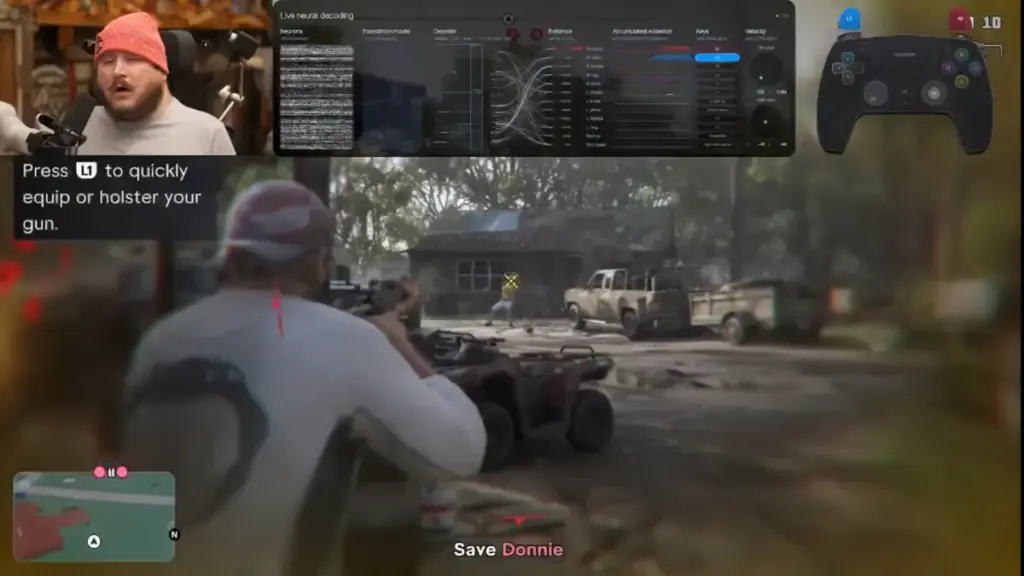
The clinical trial currently underway is part of what Neuralink calls the PRIME Study, which stands for Precise Robotically Implanted Brain-Computer Interface. The study aims to evaluate the safety of the N1 implant and the R1 surgical robot, while also testing the initial functionality of the BCI for enabling people with paralysis to control external devices. The fact that patients are already seeing such "impressive results" within the first few years of clinical testing suggests that the hardware and software iterations are moving at a speed rarely seen in the medical device industry. Neuralink’s approach differs from many of its competitors by opting for a fully implantable, cosmetically invisible device that transmits signals wirelessly. The N1 implant contains 1,024 electrodes distributed across 64 threads, which are thinner than a human hair. These threads are placed by the R1 robot into the specific area of the brain that controls movement intention, allowing for a high density of signal collection.
As the trial progresses, the team continues to refine how these signals are decoded. The mapping of the PlayStation 5 controller is a strategic choice, as it allows the patient to tap into a vast ecosystem of existing software without requiring developers to create bespoke BCI-compatible versions of their games or applications. By emulating a standard input device, Neuralink effectively "tricks" the console into seeing a regular controller, when in reality, the inputs are being generated by the user’s thoughts. This "plug-and-play" potential could eventually extend to other devices, such as smartphones, tablets, and personal computers, allowing users to navigate the digital world with the same fluidity as an able-bodied person using their hands.
The success of the unnamed patient in the GTA demonstration also points to the rapid learning curve associated with the device. In traditional BCI setups, patients often had to undergo months of training to move a simple cursor across a screen. However, the integration of advanced machine learning algorithms allows the Neuralink system to adapt to the user’s neural patterns more quickly. As the patient "practices" imagining movements, the software becomes better at distinguishing between different intentions, reducing the cognitive load required to operate the interface. The mention of mapping a foot movement alongside hand and finger movements is particularly telling, as it indicates a move toward "multi-modal" control, where a user could theoretically perform multiple actions simultaneously, such as steering a vehicle with their "hands" while accelerating with their "feet," all within the digital space.
 Hardware Reviews & PC Building
30 must-have PC tool gifts for hobbyists and makers — essential bench upgrades for enthusiasts with a project,…
The AI boom has created an insatiable demand for high-performance silicon, particularly...
 Hardware Reviews & PC Building
Tom’s Hardware Premium Explores Apple’s Long-Awaited Transition to OLED and Touch-Enabled MacBooks
In an era where hardware specifications often plateau, the deeper narrative behind...
 Hardware Reviews & PC Building
Amazon Prime Day 2026: Final 24 Hours of Big Deal Days Feature Massive Savings on RTX 5070 Systems, Ryzen 9800X3D, and Premium Gaming Peripherals
As the clock winds down on the 2026 iteration of Amazon’s Big...






