


Depth and Breadth of Use
As the underlying technology matures, the way organizations utilize Copilot is becoming both deeper and more expansive. Internal telemetry from Microsoft 365 indicates that the number of conversations per user has nearly doubled over the past year. Furthermore, the number of users engaging with multiple Copilot features simultaneously has seen triple-digit growth. Currently, average weekly engagement with Copilot has reached parity with foundational workplace tools like Microsoft Outlook and Teams, suggesting that AI has successfully integrated into the daily routine of the modern information worker.
The nature of these interactions is also changing. Microsoft reported a significant rise in requests that span multiple complex steps, such as analyzing a raw data set and then drafting a contextualized email to explain the findings. When these multi-step workflows are factored in, analysis-related work now accounts for 49% of all tasks performed by the AI, a sharp increase from the 29% observed when analysis was treated as a standalone, one-off request.
While early adopters were concentrated in the banking, software, and manufacturing sectors, the adoption of AI agents is now spreading into more traditional industries. Automotive and healthcare have emerged as some of the fastest-growing sectors for agent adoption. This momentum is further reflected in the scale of deployment; the number of Microsoft customers with more than 50,000 seats has increased more than sevenfold year-over-year. Additionally, the time required for an organization to reach "high usage"—defined as more than 80% monthly active usage across the user base—has plummeted from several months to just a few days.
What AI Makes Possible
The true value of this technological shift is increasingly measured not just by speed, but by the expansion of organizational capability. Companies that have successfully integrated AI are moving beyond "efficiency for efficiency’s sake" to redefine the parameters of their work.
Microsoft’s own Cloud Supply Chain team recently implemented a "lean before agents" strategy, mapping and simplifying six end-to-end workflows before deploying over 70 purpose-built agents to handle planning, sourcing, and fulfillment. This methodical approach resulted in a 75% reduction in cycle time. The core lesson, according to the team, was the importance of fixing broken processes before layering automation on top of them.
In the manufacturing sector, Eaton is utilizing an AI-powered quality agent to assist experts in root cause analysis. By reviewing thousands of reports on manufacturing quality issues, the agent can quickly surface trends and supplier insights that might have taken human investigators weeks to identify. This has accelerated analysis and allowed for earlier risk identification while keeping human experts at the center of the final decision-making process.
In the healthcare space, Premera Blue Cross has empowered its employees to build their own AI agents using Copilot Studio. By providing staff with the tools to automate repetitive manual work within clear safety guardrails, the organization has seen the creation of over 900 agents. One specific agent designed for document processing reduced a manual workflow that previously took 45 minutes down to just three minutes, allowing employees to focus more time on member care.
 Productivity Software & Office Suites
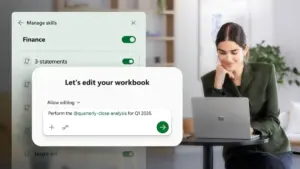
Microsoft Unveils Specialized AI Capabilities for Finance Professionals in Excel to Address Sector-Specific Complexity
The trajectory of transformative technology has followed a consistent, predictable rhythm for...
 Productivity Software & Office Suites
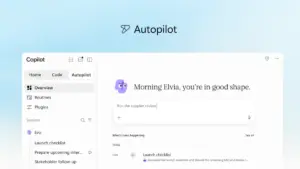
Microsoft Reimagines Copilot as a Central Hub for AI-Driven Work and Autonomous Agents
In a significant shift for the future of digital productivity, Microsoft has...
 Productivity Software & Office Suites
Microsoft Unveils Microsoft 365 G7: A New Frontier for AI-Driven Governance in the Public Sector
In a move designed to redefine how the public sector interacts with...







