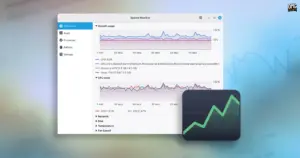
The "Code" capability allows any employee to describe a needed application, tracker, or automation in natural language. Copilot then selects the appropriate technical approach and builds the solution. These can range from persistent desktop widgets for quick data reference to interactive dashboards and cloud-hosted internal apps that can be shared across a team.
Powered by the same underlying technology as GitHub Copilot, "Code" operates within a secure, sandboxed environment hosted within the organization’s own tenant. This ensures that while the building process is simplified for the end-user, it remains governed by IT standards. By utilizing Microsoft IQ, every solution created is grounded in the specific context of the user’s work, with plugins syncing automatically to provide the necessary data connections.
To support this surge in user-generated solutions, the company is introducing the Microsoft Copilot Managed Runtime. This hosting infrastructure allows code to run safely within the Microsoft 365 environment. It is designed to be "IT-governed but user-friendly," enabling employees to connect their apps to live data and access them from any location. This runtime serves as the foundation for apps built in Cowork and Copilot Studio, and Microsoft is also opening the infrastructure to third-party and professional developers.
The Rise of Autopilot: A Proactive Digital Teammate
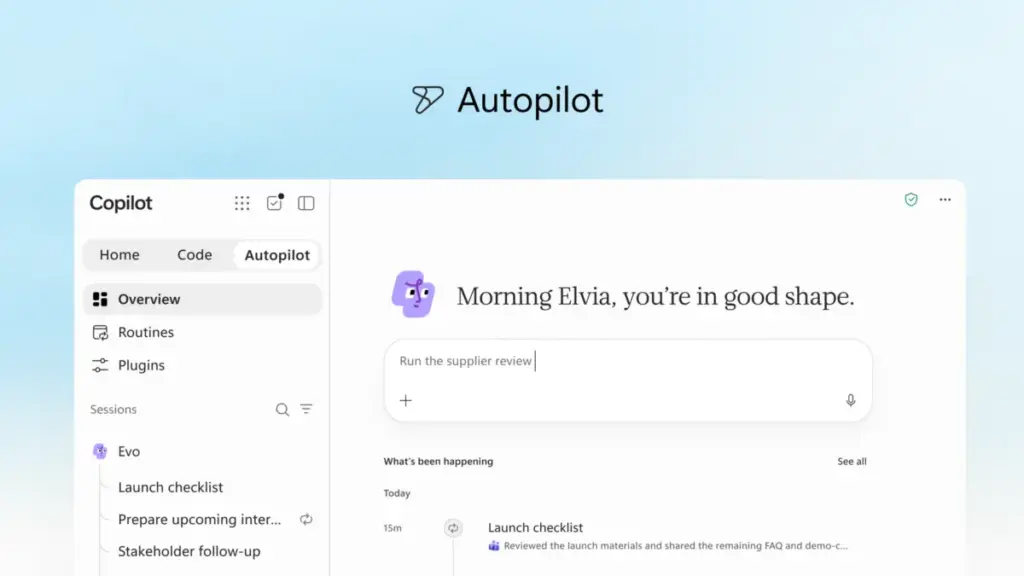
While Chat and Cowork require user initiation, the new "Autopilot" feature (previously known as Scout) represents a leap toward autonomous AI. Autopilot is described as a persistent, proactive personal agent that continues to work even when the user is offline.

By assigning Autopilot a name, a role, and a specific goal, users can set it to monitor communication channels, follow up on email threads, and manage recurring workflows. For instance, Autopilot could be tasked with overseeing a full supplier review process. It would independently build a schedule, manage the workback plan, handle meeting preparations, and reach out to stakeholders for necessary updates.
Because it is cloud-hosted and possesses its own identity and memory within the organization’s tenant, Autopilot does not require constant monitoring. It functions as a digital colleague that understands the nuances of how an organization operates, thanks to its integration with Microsoft IQ. Users can interact with it in familiar environments like Microsoft Teams and Outlook, @mentioning it just as they would a human teammate. Despite its autonomy, Autopilot remains under the user’s control, operating within defined boundaries and providing regular status updates to ensure transparency and accountability.
Expanding Business Context and Governance
The effectiveness of any AI is dependent on the quality and depth of the data it can access. Microsoft is addressing this through Microsoft IQ, a unified intelligence platform that connects an organization’s operational data with its accumulated knowledge.
A major update to this framework is the introduction of Fabric IQ, which brings context from over 20 million semantic models in Power BI directly into Copilot. This allows Chat and Cowork to be grounded in the most accurate and up-to-date business data. Furthermore, Copilot is now gaining the ability to pull context from Dynamics 365 and the Power Platform. For a sales professional, this means Copilot can automatically incorporate deal histories or customer support tickets into a proposal without the need to switch between different enterprise applications.
 Productivity Software & Office Suites
Microsoft Reimagines Copilot as a Centralized Engine for the Future of AI-Driven Work
In a major strategic shift aimed at redefining the intersection of human...
 Productivity Software & Office Suites
Microsoft Reimagines the Future of Productivity with a New Generation of Copilot and Autonomous Agents
Microsoft has announced a significant evolution of its artificial intelligence strategy, unveiling...
 Productivity Software & Office Suites
Microsoft Unveils Microsoft 365 G7: A New "Frontier Suite" Aimed at Transforming AI Adoption for Government Agencies
In an era where public sector leaders are increasingly pressured to modernize...