
As organizations scale their use of AI, managing costs and understanding value have become paramount concerns. Microsoft is addressing this through a dual-pronged pricing strategy and the introduction of "FinOps for AI."
For standard, everyday tasks like drafting and summarization, Microsoft offers a User Subscription License (USL) at a fixed cost. At the heart of this subscription is "Auto," an intelligent routing system that weighs the accuracy, speed, and cost of each request to determine which AI model is best suited for the specific job. This ensures that users get the best quality without the organization incurring unnecessary expenses.
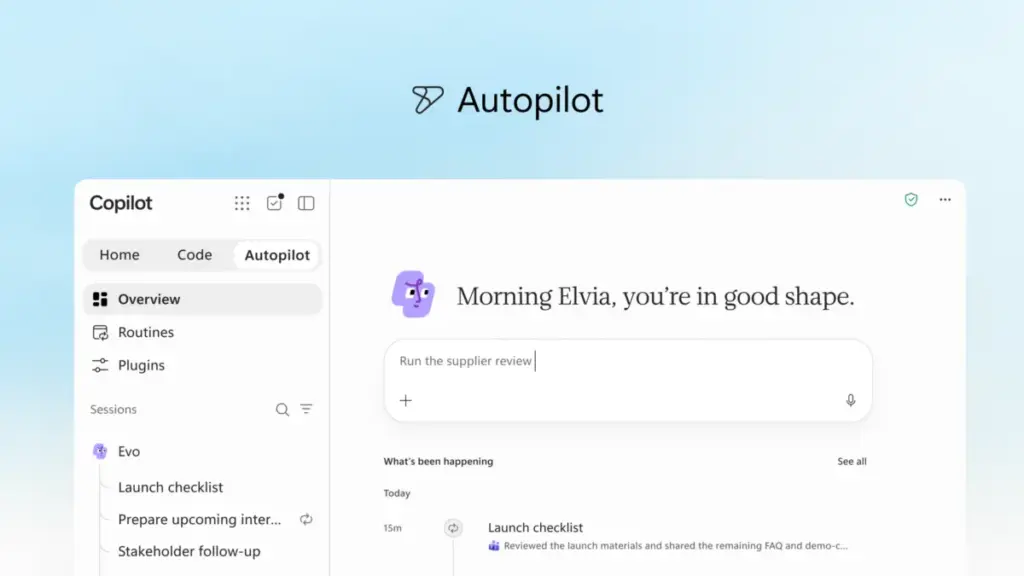
For more complex, long-running "agentic" work—such as the tasks performed by Cowork, Code, and Autopilot—Microsoft is utilizing Usage-based billing (UBB). This model provides organizations with full control, allowing them to match the cost of the AI’s work to the actual value it delivers.

To help administrators navigate this new economic landscape, Microsoft is introducing new cost management capabilities. These tools allow IT leaders to manage spending policies at scale, route credit requests through automated approval workflows, and set which model families are available to different user groups. End users will also have visibility into their own credit usage and history directly within the Copilot interface, encouraging a culture of responsible AI consumption within organizational guardrails.
A Glimpse into the Proactive Future
Looking ahead, Microsoft provided a "sneak peek" at upcoming features designed to make Copilot even more personalized. "Today" is a forthcoming proactive command center that will live within Copilot, Outlook, and Teams. It is designed to act as a digital chief of staff, surfacing what the user missed, what requires immediate attention, and what can be deferred. "Today" goes beyond simple notification; it prepares drafts, proposes schedule changes, and provides the context for forgotten follow-ups so the user can take action immediately.
Additionally, the company is enhancing collaboration through "@Copilot in Teams." This capability allows an entire team to invoke Copilot within a channel or group chat, where the AI has access to the shared context and permissions of that specific group. It can answer questions about past decisions by pulling from previous conversations and can even offer to prepare cross-functional reviews that track dependencies and owners across different departments.
These advancements are currently rolling out through Microsoft’s Frontier program, with broader availability expected in the coming weeks and months. As the tech giant prepares for its annual Microsoft Ignite conference in November, the "new Copilot" stands as a testament to the company’s vision of a future where AI is not just a tool we use, but a platform upon which all modern work is built.
 Productivity Software & Office Suites
Microsoft and ESPC Announce 2026 Microsoft 365 and AI Conference in Amsterdam
The European tech landscape is preparing for a significant milestone in the...
 Productivity Software & Office Suites
Microsoft Shifts Focus to Enterprise AI Utility: A New Strategic Framework for Agents, Economics, and Partnership
In an era defined by a relentless cycle of artificial intelligence breakthroughs,...
 Productivity Software & Office Suites
Microsoft Announces Fifth Annual Power Platform Community Conference in Las Vegas to Bridge the Gap Between AI Innovation and Business Process
As the global enterprise landscape continues to evolve, the fundamental machinery of...







