
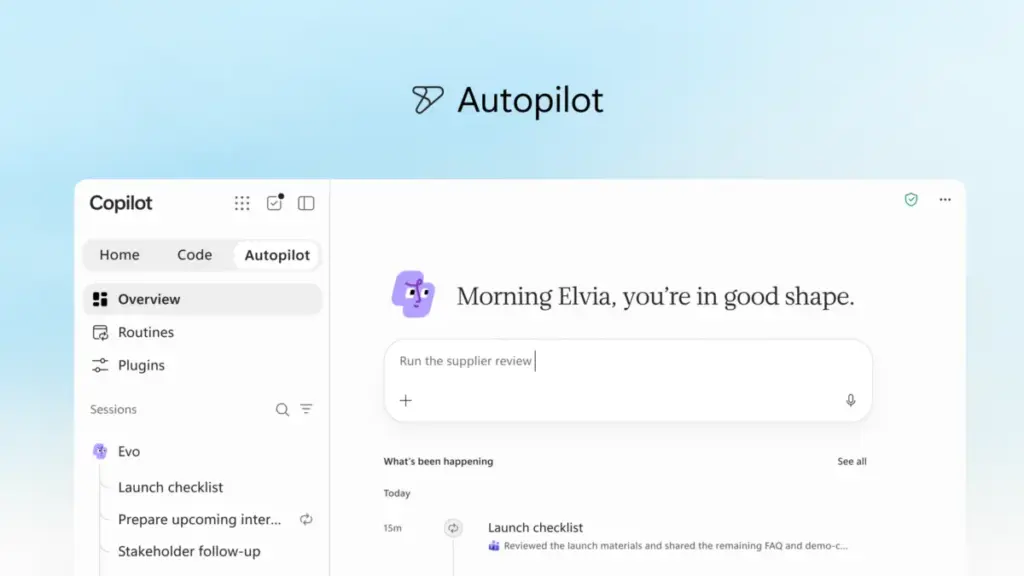
To manage this expanding ecosystem of capabilities, Microsoft is introducing a new unified "plugin registry." This catalog will bring together plugins from Microsoft, third-party partners, and custom-built solutions into one place. This allows IT administrators to centrally approve and govern which tools are available to their workforce, while developers can publish a plugin once and see it extended across all supported Copilot experiences.
Managing AI Spend with FinOps for AI
As organizations scale their use of AI, managing costs and ensuring value has become a primary concern for leadership. Microsoft is addressing this through a disciplined approach called "FinOps for AI." The company is evolving its pricing models to match the different ways AI is utilized in the workplace.
For "everyday AI"—tasks like summaries, drafts, and quick analysis—Microsoft offers a User Subscription License (USL) at a fixed cost. Within this model, a feature called "Auto" intelligently weighs accuracy, speed, and cost for every request, routing the task to the most efficient model for the job.
For more complex "agentic" work, such as the long-running tasks performed by Cowork, Code, and Autopilot, Microsoft is utilizing usage-based billing (UBB). This allows organizations to match their spending directly to the value generated by advanced frontier models like Astra and Fable.

New capabilities within "Agent 365" and "Insights" will allow administrators to manage these spending policies at scale. Business leaders can now track which AI tasks are generating the strongest outcomes, while end-users can view their own credit usage and history directly within the Copilot app. These guardrails are intended to help organizations stay in control of their budgets while maximizing the impact of their AI investments.
A Sneak Peek at the Future: Today and @Copilot in Teams
Looking beyond the immediate rollouts, Microsoft provided a glimpse into upcoming features aimed at further personalizing the AI experience. A new feature called "Today" is set to enter private preview in October. Described as a proactive command center, Today will aggregate information across mail, calendar, Teams, and tasks to show users what requires their immediate attention. Rather than just listing tasks, Today is designed to prepare the work in advance—drafting emails, proposing schedule changes, and providing context for follow-ups so the user can act quickly.
Additionally, Microsoft is introducing "@Copilot in Teams," a feature that grants the AI the shared context of an entire channel or group chat. This allows any member of a team to ask the AI for the background on a specific decision or to prepare cross-functional reviews that identify dependencies and owners across different departments. By pulling information from across multiple conversations, @Copilot aims to keep entire teams aligned without the need for manual data retrieval.
These updates represent a significant step in Microsoft’s long-term strategy to integrate AI into every facet of the professional experience. As these features begin to roll out through the Frontier program and move toward broad availability, the company is positioning Copilot not just as a tool, but as the primary interface through which modern work is accomplished. More details on these innovations and their real-world applications are expected to be shared during the Microsoft Ignite conference in November.
 Productivity Software & Office Suites
Microsoft Unveils Specialized AI Capabilities for Finance Professionals in Excel to Address Sector-Specific Complexity
The trajectory of transformative technology has followed a consistent, predictable rhythm for...
 Productivity Software & Office Suites
Microsoft Unveils Advanced AI ‘Skills’ and Data Connectors to Transform Excel for Finance Professionals
The evolution of modern computing has historically followed a predictable trajectory, moving...
 Productivity Software & Office Suites
Microsoft Unveils Natural Language App Creation in Copilot Studio, Bridging the Gap Between AI Innovation and Enterprise Governance
The landscape of software development is undergoing a fundamental transformation, driven by...






