
The Code feature allows users to describe an application, an automation, or a data dashboard using natural language. Powered by the same underlying technology as GitHub Copilot, the system then selects the best approach and builds the solution. These can range from persistent desktop widgets for quick reference to cloud-hosted internal applications that can be shared across a department.
To ensure these user-generated solutions are enterprise-ready, Microsoft is introducing the "Microsoft Copilot Managed Runtime." This hosting infrastructure allows code to run safely within a company’s existing Microsoft 365 environment. While it is designed to be easy for non-technical users to deploy and share, it remains under the governance of IT departments. Everything created within this environment is grounded in "Microsoft IQ," a unified intelligence platform that ensures the AI understands the specific context of the user’s work and organization.
Software developers are not left behind in this transition. They will continue to utilize GitHub Copilot for their primary coding tasks, but with increased connectivity to the broader Copilot platform. The Code capability is currently rolling out to participants in Microsoft’s Frontier program, with broader availability expected for Microsoft 365 Premium and Pro subscribers later this year.
The Rise of the Persistent Digital Teammate: Autopilot
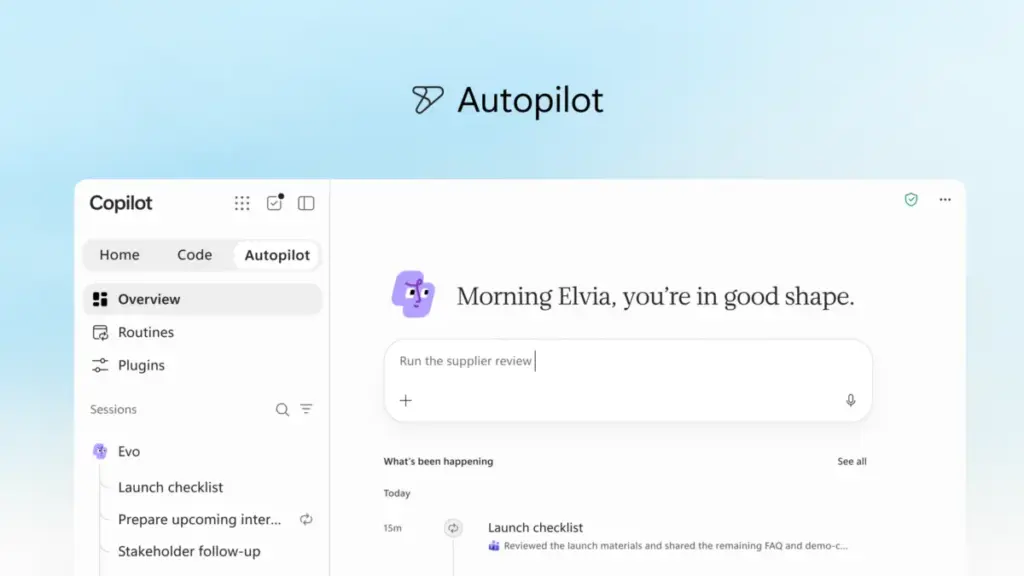
One of the most ambitious elements of the announcement is "Autopilot," a feature formerly known by the internal codename "Scout." Microsoft describes Autopilot as a proactive, persistent digital teammate that continues to work even when the user is offline. Unlike traditional AI assistants that require a constant stream of prompts to function, Autopilot is designed to be goal-oriented and autonomous.
Users can assign Autopilot a specific name, a role, and a clear objective. Once activated, the agent can monitor communication channels, follow up on email threads, and manage recurring workflows. For example, a user could task Autopilot with managing a full supplier review process. The agent would build the schedule, handle the preparation for meetings, reach out to stakeholders for updates, and manage the necessary follow-ups—all without constant human monitoring.

Because Autopilot is cloud-hosted, it operates independently of the user’s local machine. It possesses its own identity, memory, and workspace within the organization’s tenant. Built on Microsoft IQ, it understands the nuances of how a specific company operates and can be @mentioned in Teams or Outlook just like any other colleague. Microsoft emphasizes that while Autopilot handles the heavy lifting of process management, the human user remains in control, setting the boundaries and objectives while receiving regular updates on the agent’s progress.
Expanding Business Context and Governance
For AI to be truly effective in a corporate environment, it must have access to the specific data that drives the business. Microsoft is addressing this by expanding the business context available to Copilot through "Fabric IQ." This integration brings more than 20 million semantic models from Power BI into the Copilot environment, grounding the AI’s responses in trusted organizational data.
Furthermore, Copilot is now being grounded in data and workflows from Dynamics 365 and the Power Platform. This means that a salesperson drafting a proposal can have Copilot automatically incorporate deal histories or active support tickets directly into the document without having to switch applications.
 Productivity Software & Office Suites
Microsoft Announces Global Launch of Copilot Cowork, Introducing Agentic AI to the Modern Enterprise
In a move that signals a significant shift in the landscape of...
 Productivity Software & Office Suites
Microsoft Democratizes Software Development with Natural Language App Building in Copilot Studio
The landscape of software development is undergoing a fundamental transformation as artificial...
 Productivity Software & Office Suites
Microsoft Reimagines Copilot as a Central Hub for AI-Driven Work and Autonomous Agents
In a significant shift for the future of digital productivity, Microsoft has...






