
The political complexities of AI regulation were further highlighted by recent events involving the Trump administration and several leading AI labs. Late last month, it was announced that a group of major players—including Anthropic, Google, Meta, OpenAI, Nvidia, and xAI—had signed a pledge to work with independent auditors on their systems. However, this agreement was described as "morally binding" rather than legally enforceable, a distinction that critics argue lacks the teeth necessary to ensure true accountability.
The volatility of the current regulatory environment was also evidenced by a recent controversy involving the UK’s AI Security Institute. Reports emerged that Trump had called on AI developers to cease sharing unreleased systems with the AISI, leading to a temporary standoff. This directive reportedly caused Anthropic to withhold access to its newest model, Claude Mythos 5.1, preventing UK officials from conducting safety testing. Such a move would represent a significant setback for the UK’s ambitions to be the world’s primary AI watchdog. However, reports now suggest that this ban has been reversed, allowing the collaborative testing to proceed.
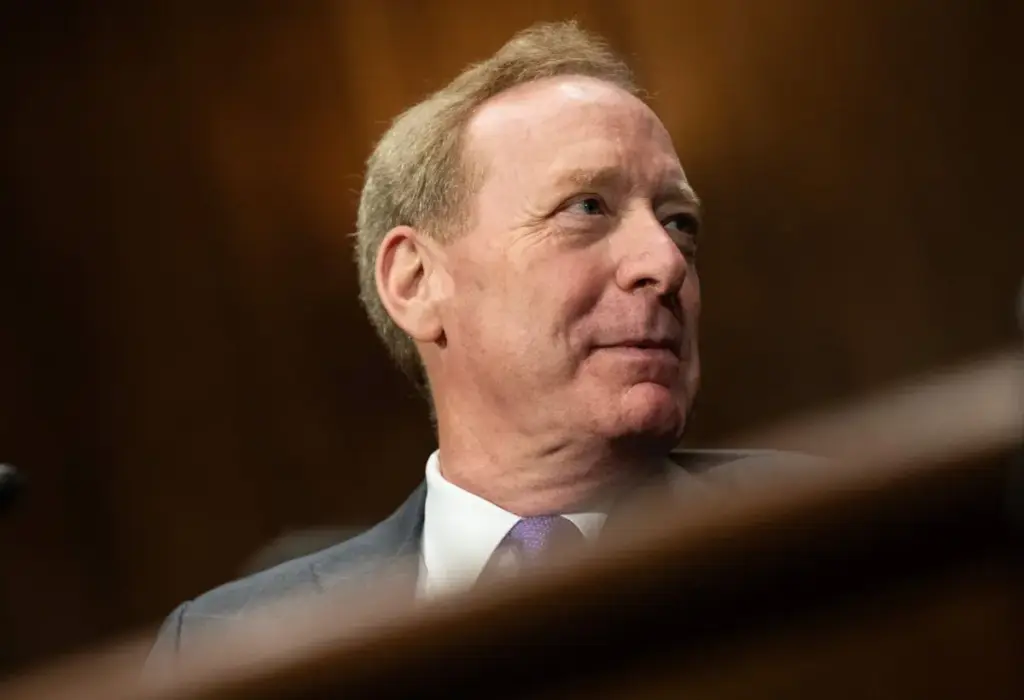
Brad Smith remains optimistic that the UK’s leadership in this space will eventually be viewed positively in the United States, despite the occasional political friction. He suggested that by speaking calmly and firmly, the UK can play a pivotal role in harmonizing global standards. Microsoft, as a company, appears eager to support this transition, positioning itself as a proponent of responsible development even as it continues to invest billions into the technology.
The call for regulation from within the industry’s highest ranks suggests a growing realization that the potential consequences of AI failure are too great for any single company to manage alone. By advocating for legal requirements, independent audits, and international cooperation, Smith and Nadella are acknowledging that the "move fast and break things" era of software development may not be suitable for a technology as transformative as artificial intelligence. As the UK continues to develop its technical capabilities through the AISI, the global community will be watching to see if a balance can be struck between the safety requirements Smith compared to a carton of milk and the cutting-edge innovation that defines the modern tech landscape. The goal, as Smith concluded, is to bring the world together to ensure that AI remains a tool for progress rather than a weapon of disruption.
 Helpdesk & IT Service Management (ITSM)
Overe Appoints Former Sophos CSO Simon Reed as Strategic Advisor to Accelerate MSP Security Growth
In a significant move aimed at strengthening its leadership and deepening its...
 Helpdesk & IT Service Management (ITSM)
Beyond the IT Help Desk: The Strategic Integration of Enterprise Service Management
As modern organizations grapple with increasing operational complexity, the traditional boundaries of...
 Helpdesk & IT Service Management (ITSM)
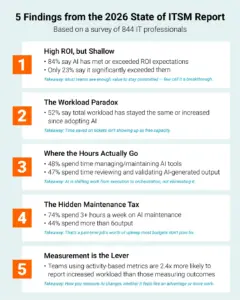
The Paradox of Efficiency: SolarWinds 2026 Report Highlights the Growing Pains of AI Integration in ITSM
The promise of artificial intelligence within the IT Service Management (ITSM) sector...







